Unlike generic blasts, automated push notifications make every message timely, relevant, and effective — turning routine outreach into real results, from higher engagement to increased revenue. In this post, we’ll explore key push notification automation use cases that deliver measurable outcomes, with real examples.
If you’re looking for a customer engagement platform to automate push notifications, Pushwoosh will help you implement this process with minimal effort.
What is push notification automation?
Push notification automation is the practice of sending messages to users automatically, based on their behavior, segment membership, or a predefined schedule — rather than manually composing and launching each campaign.
Here is how it works: you define trigger conditions (like a user abandoning a cart, completing onboarding, or entering a specific segment), pair them with a notification template, and the system does the rest. These triggered push notifications fire at exactly the right moment, making every message timely and relevant.
The difference from generic blasts is precision. Instead of sending the same message to your entire base, automation delivers personalized push notifications that match each user’s context and intent.
7 key benefits of automating push notifications
Why automate push notifications? Here are the core advantages that make automation a must-have for any app with an active user base.
- Reduces time and manual effort — set up workflows once and let them run, freeing your team to focus on strategy instead of manual sends.
- Boosts user retention and re-engagement — automated campaigns respond to inactivity signals in real time. Industry data shows 440% higher user retention rates for users receiving regular automated notifications.
- Enables precision targeting and personalization — segmentation for push notifications by behavior, preferences, or location ensures every message is relevant.
- Facilitates campaign management & A/B testing — run dozens of campaigns simultaneously and use A/B testing push notifications to optimize copy, timing, and targeting.
- Ensures well-timed and consistent messaging — real-time push notifications triggered by actual user actions arrive exactly when users are most likely to engage.
- Improves efficiency and reliability at scale — whether you’re sending automated app notifications to 10,000 or 10 million users, the system handles it without additional overhead.
- Drives measurable growth & ROI — push notifications can deliver a 3,500% ROI, and automation amplifies this by tying every notification to a measurable business outcome.
How to automate push notifications: a step-by-step guide
Understanding how push notification automation works starts with the right setup. Here is a platform-agnostic guide to push notification automation best practices — the key steps involved regardless of which tool you use.
1. Choose a robust push notification platform
Your push notification automation tools define what’s possible. Look for a platform that supports behavioral segmentation, trigger-based campaigns, rich media, dynamic content, and cross-channel orchestration. Scalability and deliverability matter just as much as features.
2. Integrate with your mobile app or website
Connect your app or site to the platform using its SDK or API. This integration enables the platform to track user events, manage opt-ins, and deliver notifications across iOS, Android, and web browsers.
3. Segment your audience based on behavior & preferences
Segmentation for push notifications is what separates effective campaigns from noise. Group users by actions they’ve taken (or haven’t), purchase behavior, preferences, location, or lifecycle stage. The more specific your segments, the more relevant your messaging.
4. Create engaging notification templates
Design templates with clear, action-driven copy, compelling visuals, and a strong CTA. Use dynamic content fields (like user name, product, or location) so each notification feels personal. Rich media — images, buttons, badges — can significantly boost click-through rates.
5. Define trigger conditions & schedule campaigns
Set the rules that determine when notifications fire. Event-based triggers (cart abandoned, purchase completed, inactivity for 7 days) deliver real-time relevance. Scheduled campaigns (weekly digest, seasonal promo) provide consistency. Combine both in a Customer Journey Builder for a comprehensive approach.
6. Test, monitor, and optimize performance
Launch with A/B testing push notifications — test subject lines, send times, content variations, and CTAs. Monitor delivery rates, open rates, and conversions with analytics dashboards. Use the data to iterate. Automation isn’t set-and-forget; it’s set-and-improve.
Push notification automation examples
Here are the most powerful push notification automation scenarios — from promotional campaigns and lifecycle flows to transactional alerts and real-time updates.
Personalized product recommendations
Suggest items based on browsing history or purchase behavior to maximize upsells and cross-sells.
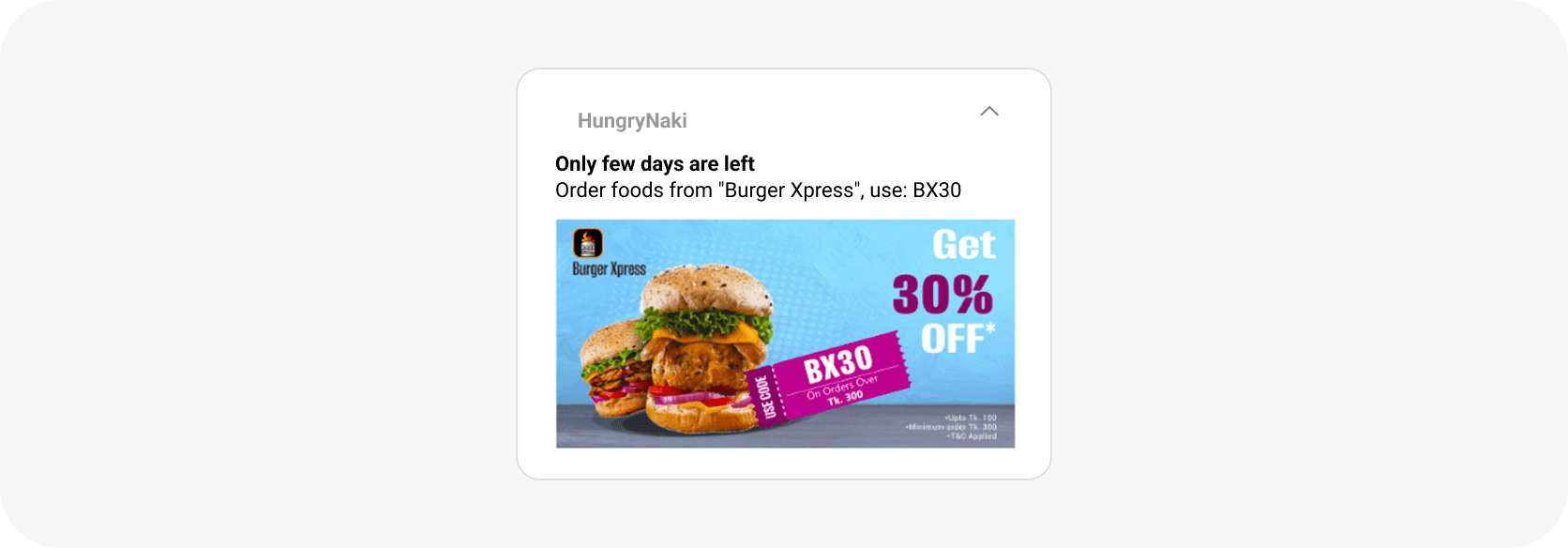
📌 Example #1: HungryNaki, a food delivery app, streamlined high-ROI push notification campaigns with personalized messaging and event-triggered recommendations.
Trigger event: 5+ orders from the Burger Xpress restaurant in the last 30 days. Content:
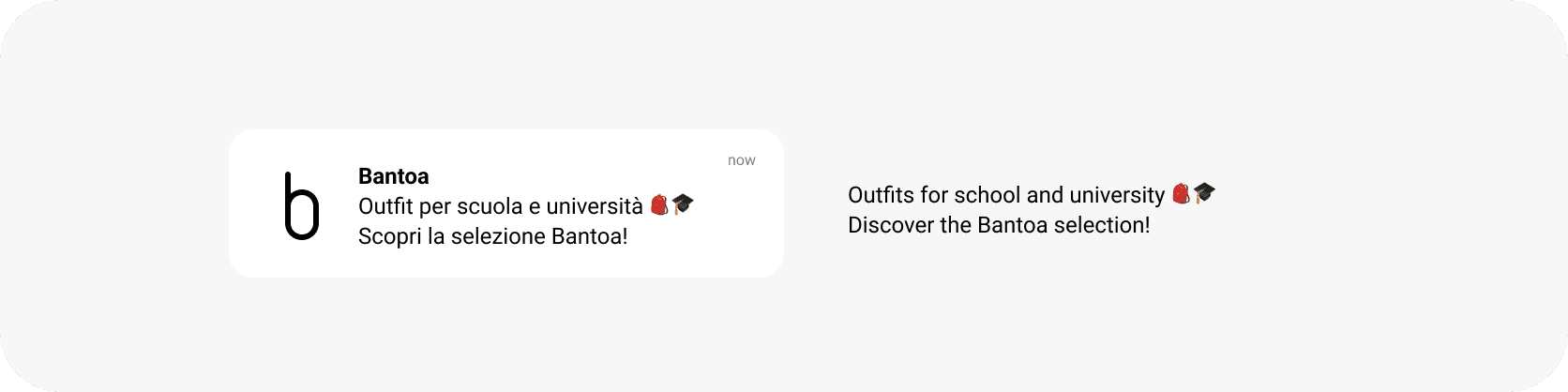
📌 Example #2: Bantoa, a fashion social e-commerce platform, sends automated, personalized push notifications that invite app users to explore products similar to those they’ve recently viewed.
Trigger event: User visited the school/university section. Content:
Abandoned cart notifications
Automated notifications can remind users of the exact items left behind, highlight product images, and offer an incentive to finish checkout.
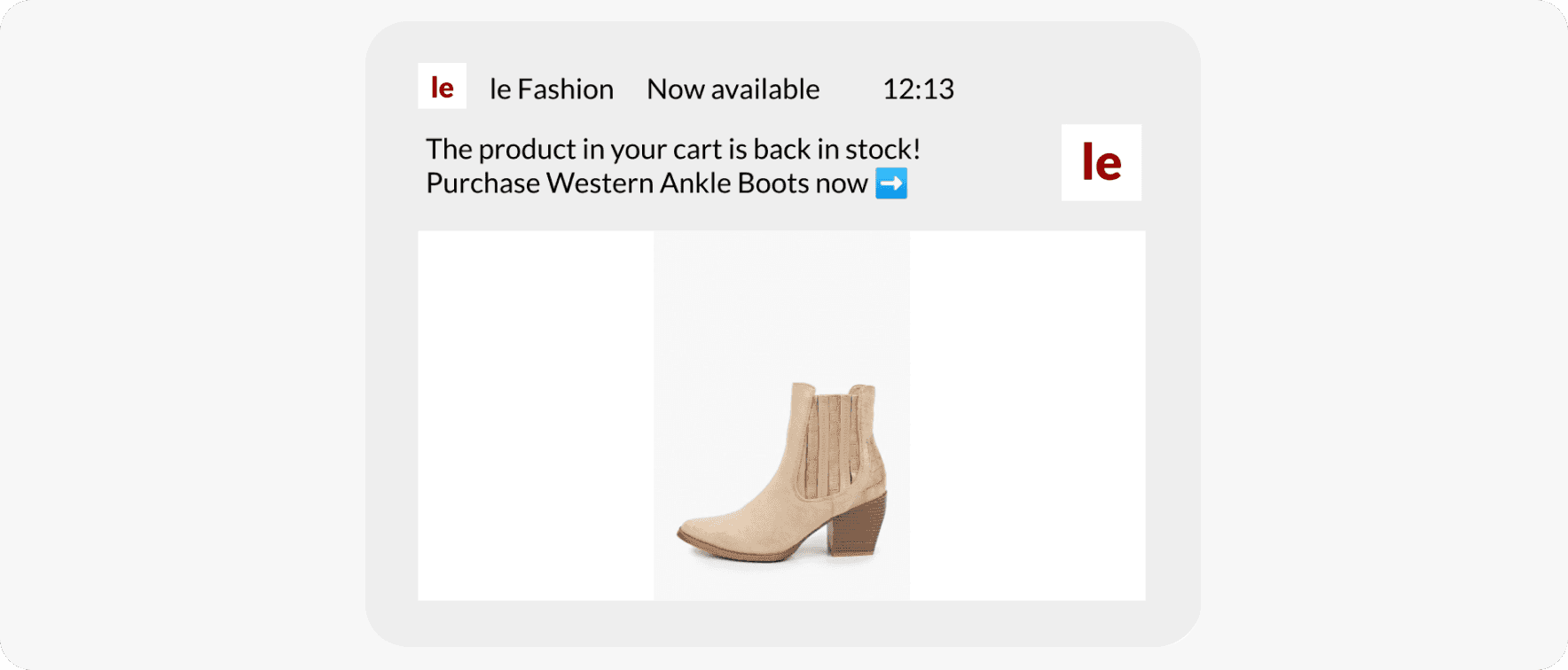
The quality of personalization largely depends on the efficiency of the engagement tool. Once you can segment the right audiences based on location and event preferences, the rest comes down to tailoring messaging and content to match their interests.

Recurring offers
Scheduled automated workflows can create urgency and excitement, motivating users to return. These recurring campaigns can run daily, weekly, or seasonally — all without extra manual work.
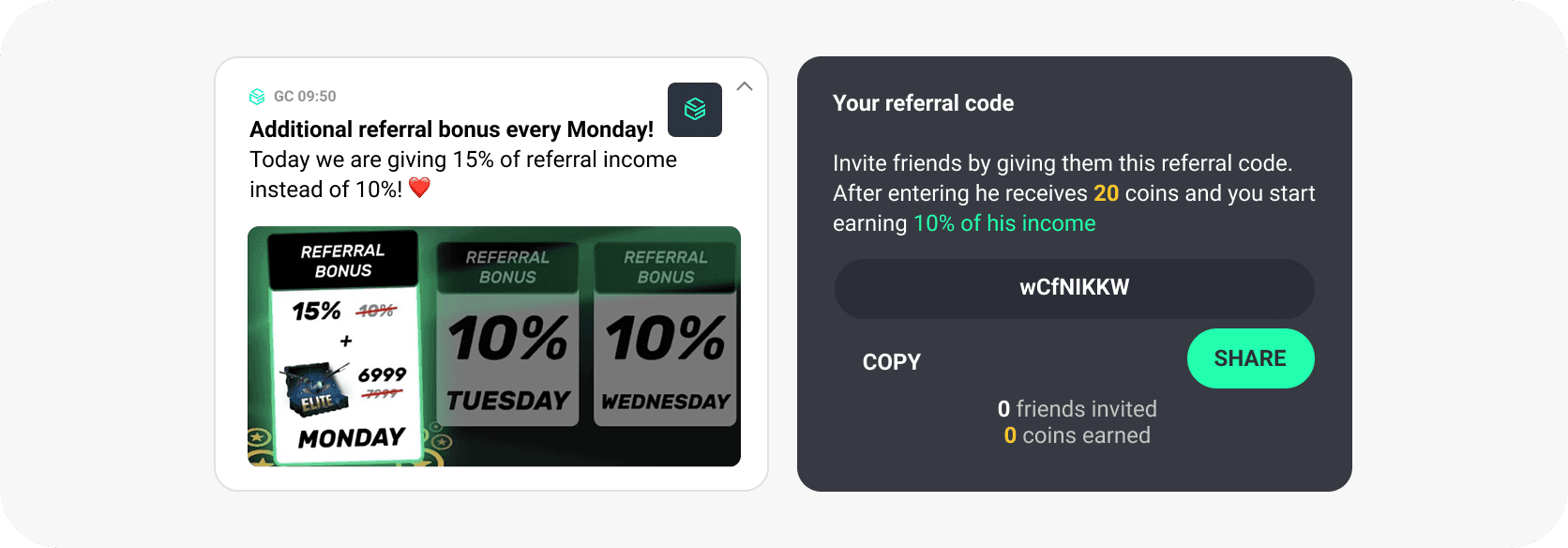
📌 Example: Bladestorm increased revenue from push notifications by 4.58% through automation. Among other automated campaigns, they send weekly recurring offers and keep players engaged with special offers.
Scheduled launch: Every week Content:
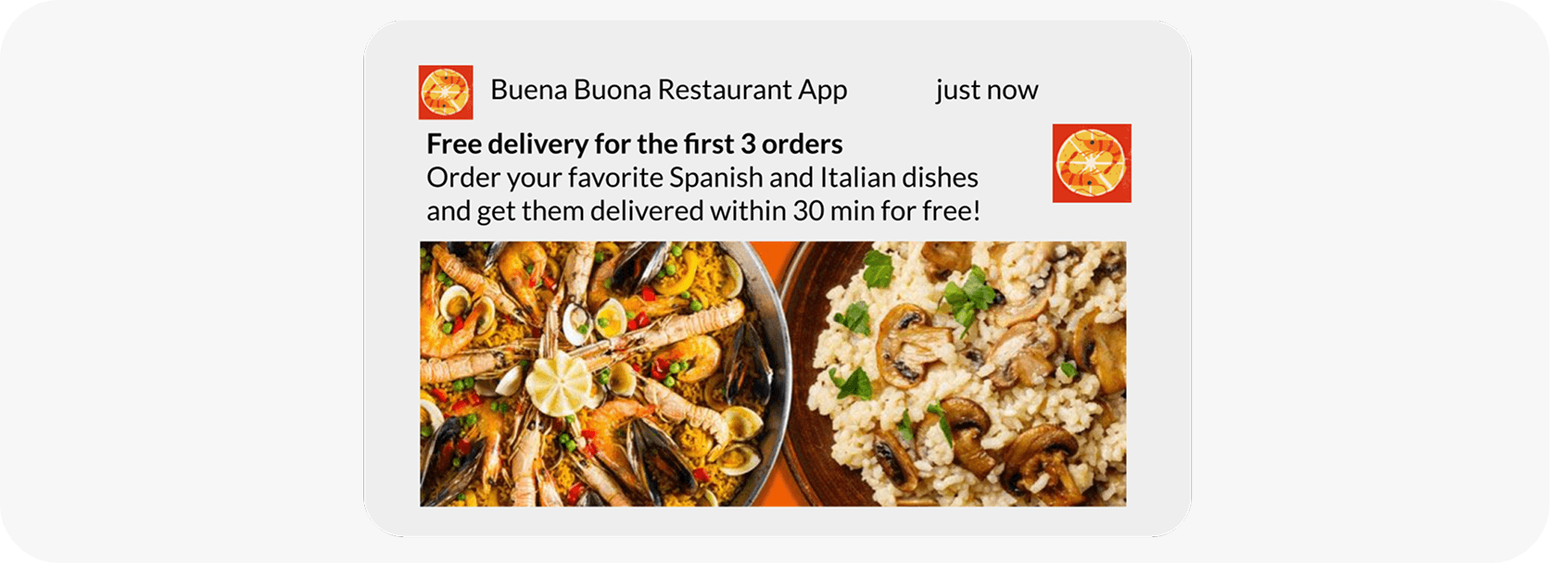
Automated welcome messages
The first few days after install are critical for activating new users and improving user retention.
A simple personalized notification sent soon after the app install can guide new users toward the activation action. If it’s the first order, nothing beats a good old welcome offer:
Step-by-step onboarding flows
Automated onboarding flows go beyond a one-time welcome message — they guide users further, helping them finish registration, explore key features, and encourage long-term usage.
📌Example: AvaTrade achieved a 12% conversion rate into registered accounts with an automated onboarding campaign highlighting product benefits and offering welcome bonuses.
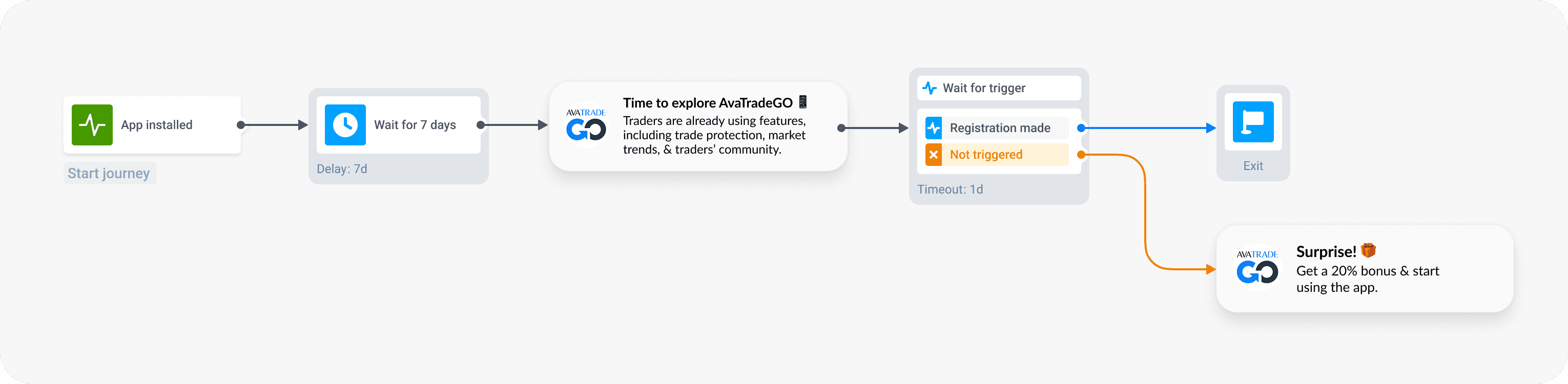
To prove the effectiveness of our automated messaging, we track all key metrics related to user activation — DAU, returning users, and conversions. We also monitor CTR to evaluate both the effectiveness of our messaging and the performance of creative content.
Re-engagement campaigns
Even the best mobile apps face churn. Automated win-back campaigns help bring users back when activity drops off. These campaigns are triggered by churn-risk signals, ensuring you target the right people with the right message.
📌Example: Beach Bum tripled its engaged audience with automated push notifications featuring emojis, custom sounds, and playful perks.
Target audience: “At-risk” users Content:
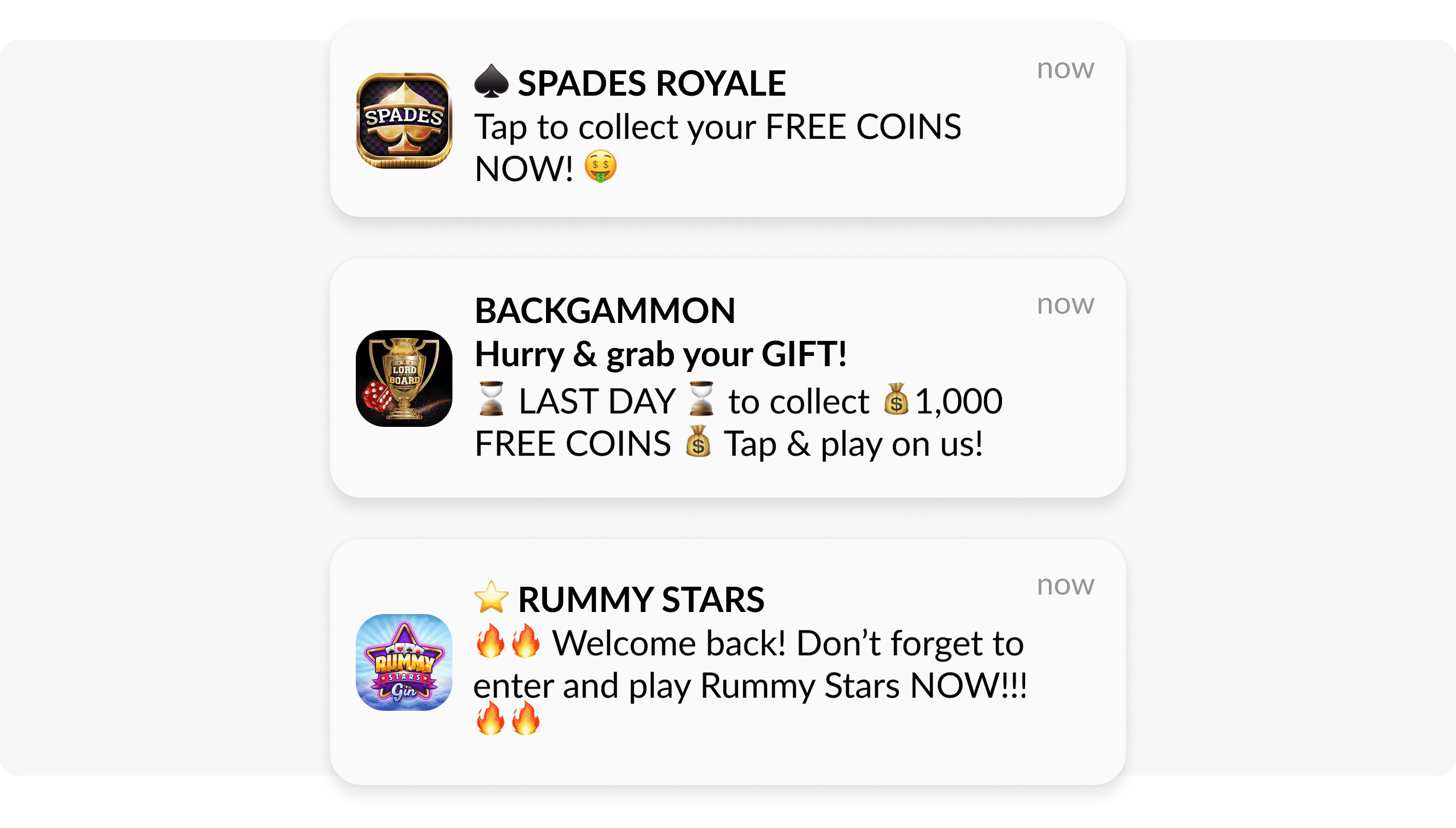
At KYN (a neighbourhood discovery and connectivity app), we use automated push notifications to keep users coming back rather than using the app just once. We segment users across multiple funnels and cautiously consider the reasons why they might drop off — price, location, or even the complexity of an event suggested in the app. To address these differences, we run A/B tests with different types of messages and act based on interaction patterns. For example, if cost is the main factor, users tend to engage more with offer-related push notifications.
Feedback requests
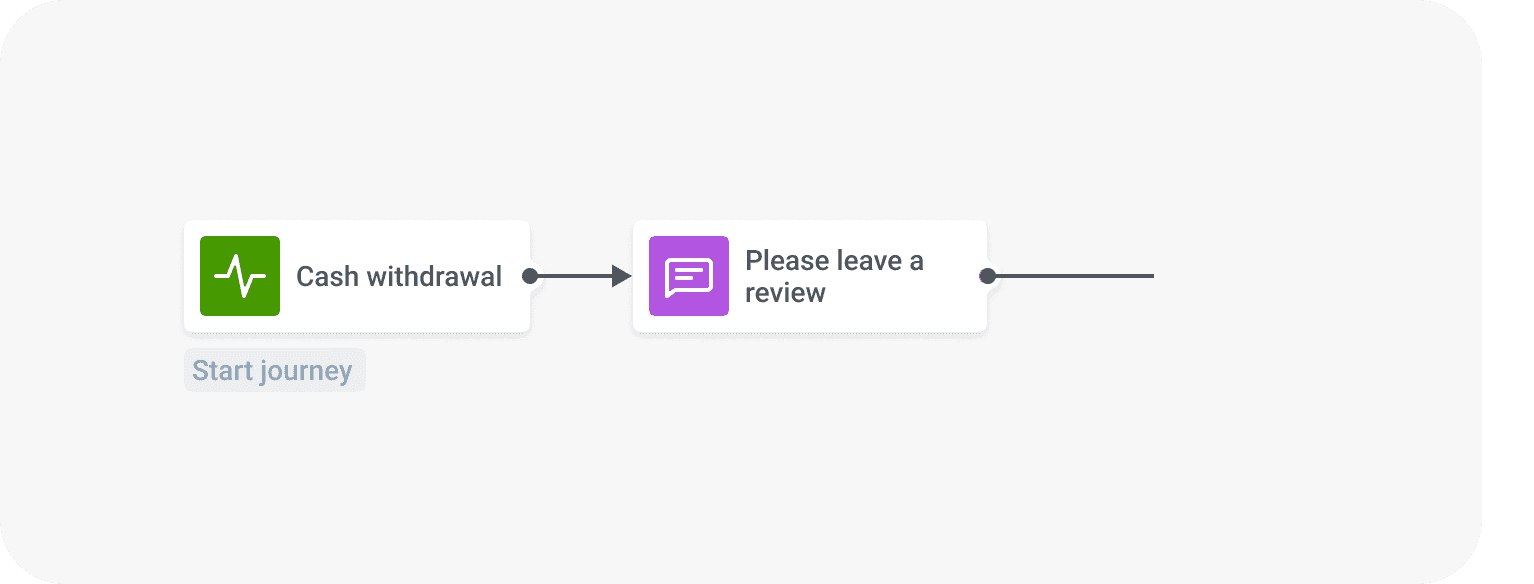
Asking for feedback is a smart way to re-engage app users while gathering valuable insights. Automated surveys sent at the right moment demonstrate your care for user experience and help improve ratings.
📌Example: Bladestorm asks for reviews after positive actions like cash withdrawals. Result: 10% of invited users participated in polls, driving both engagement and app store ratings.
Ride/trip status updates
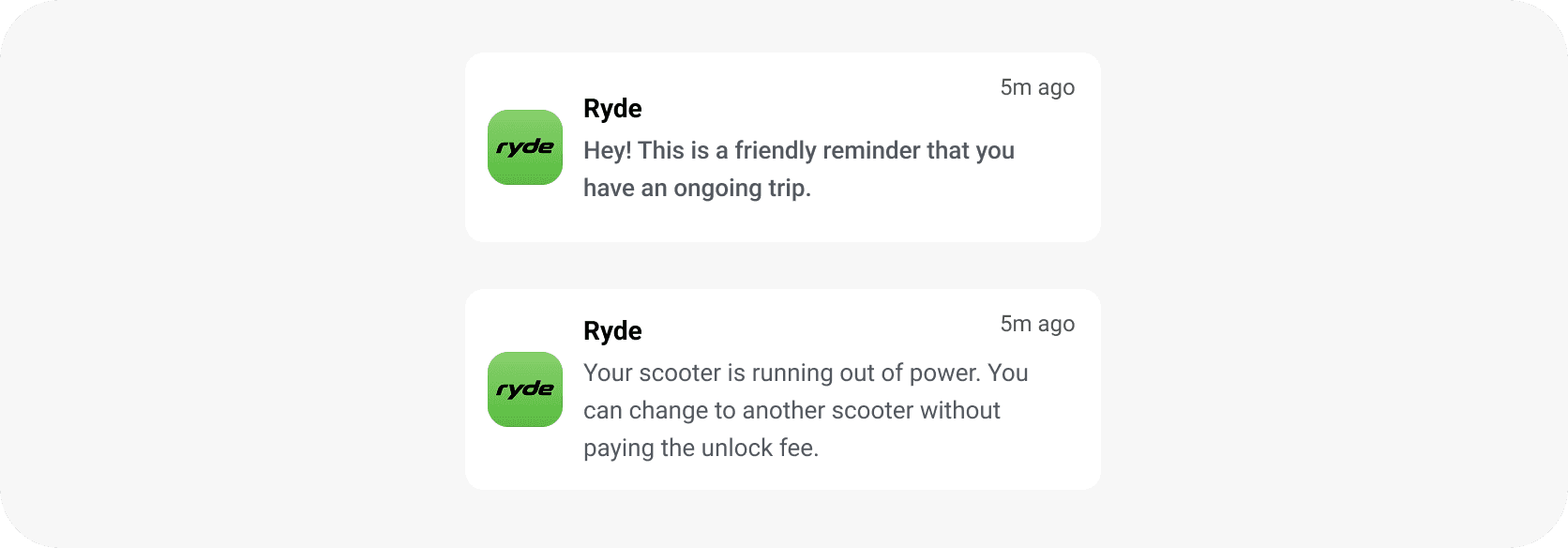
Mobility apps can send automated push notifications with real-time updates on trip progress, ride status, or service-related issues. These timely notifications reduce uncertainty and enhance trust.
📌Example: Ryde sends automated trip and scooter alerts, helping them become a Top 5 travel app in their region:
Order confirmations & delivery alerts
From retail to food delivery, order and delivery confirmations reassure users and keep them updated in real time. Automating these time-sensitive notifications improves transparency and customer satisfaction.

Subscription renewals or payment reminders
Automated billing reminders prevent failed payments, boost retention, and sustain revenue for subscription-based apps.

Sports updates
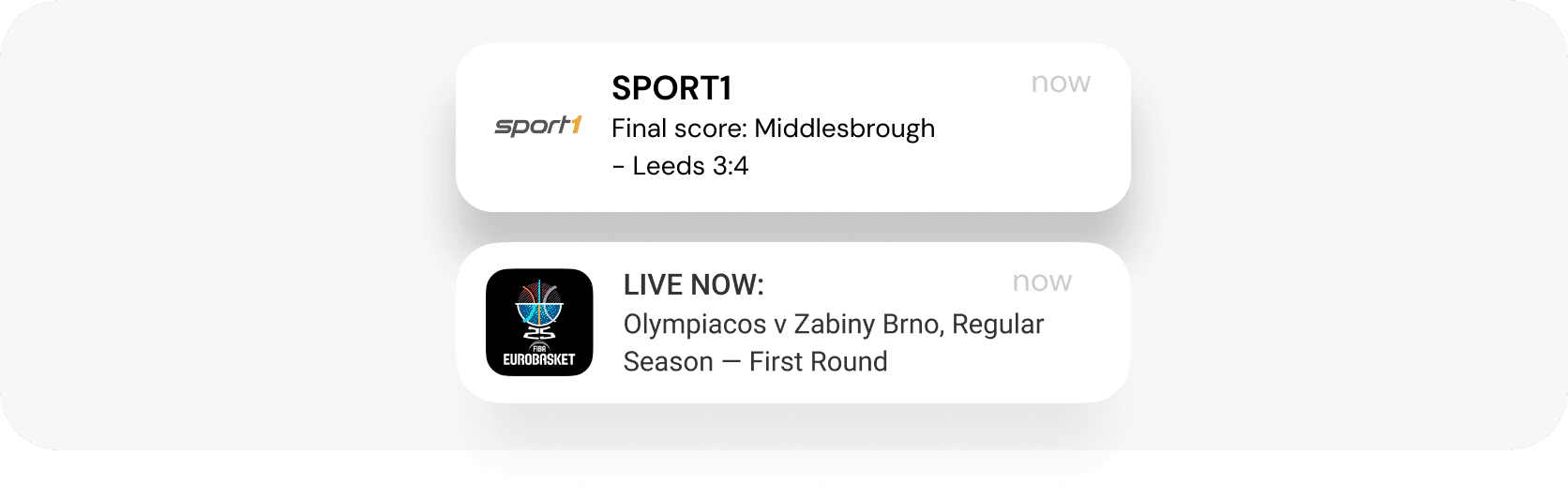
Sports fans expect live coverage. Automated push notifications deliver updates the moment they happen, driving engagement during games and improving click-through rates.
📌Example: SPORT1 and FIBA send real-time, event-triggered sports updates faster than competitors:
Breaking news
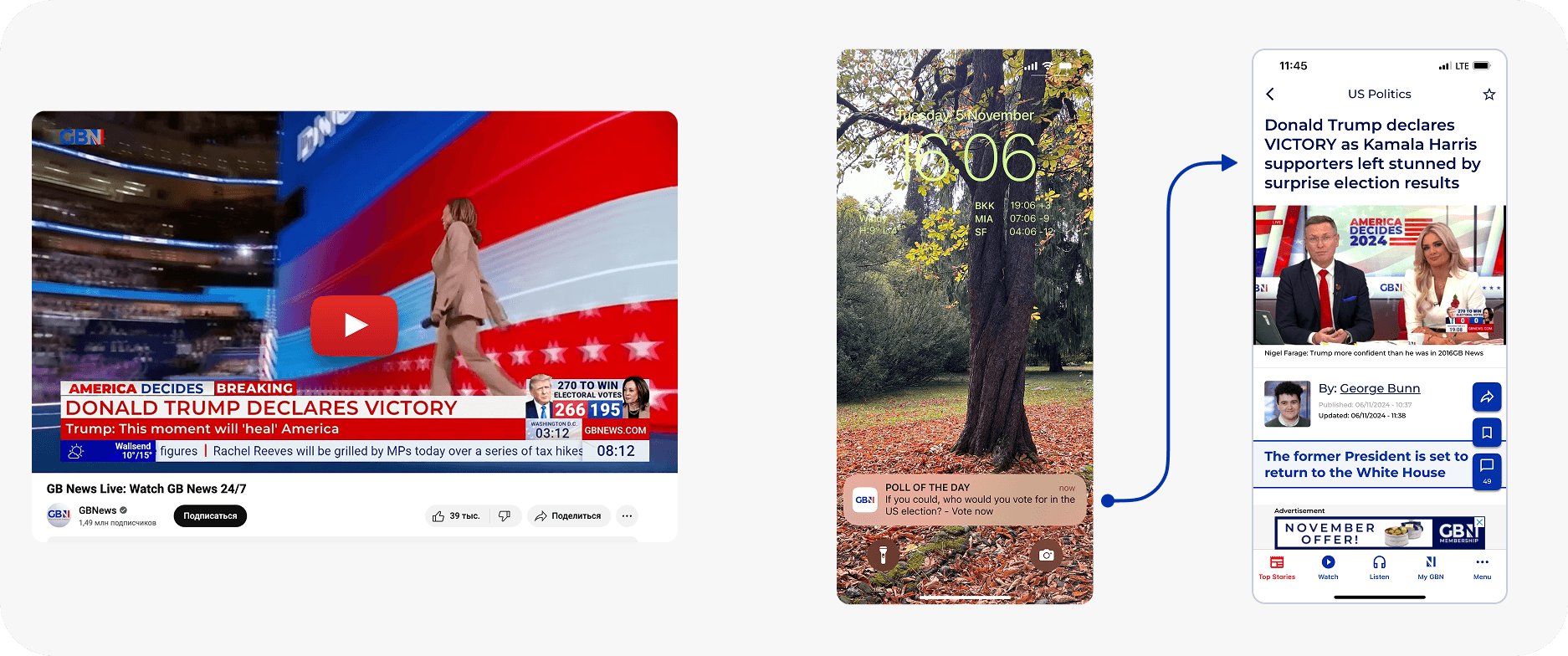
Media apps can become indispensable by pushing breaking stories directly to users’ lock screens. Fail-proof automation ensures you’re always first.
📌 Example: Real-time automation helps GB News deliver updates faster than competitors and automatically trigger push notifications inviting viewers to join broadcasts:
Stock/market updates
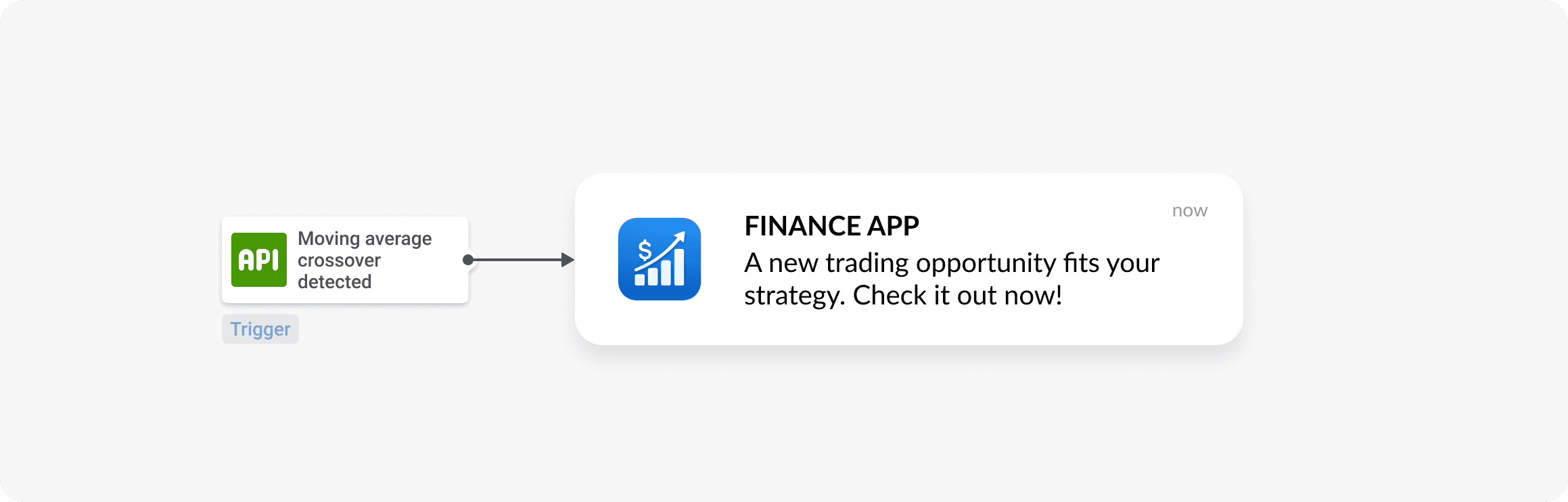
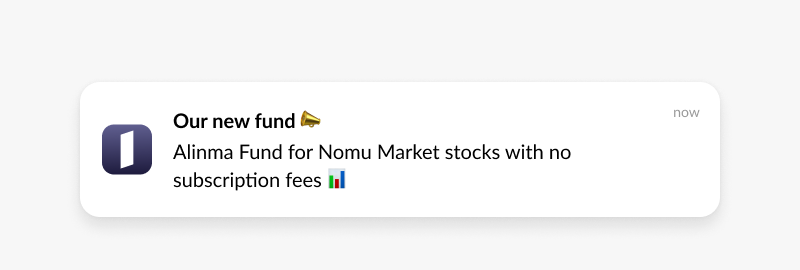
Finance apps can increase engagement and retention by sending real-time trading or market alerts tailored to each user’s needs and behaviors.
Automated pushes can be triggered by API events, like trading signals, that keep users informed and encourage immediate action:
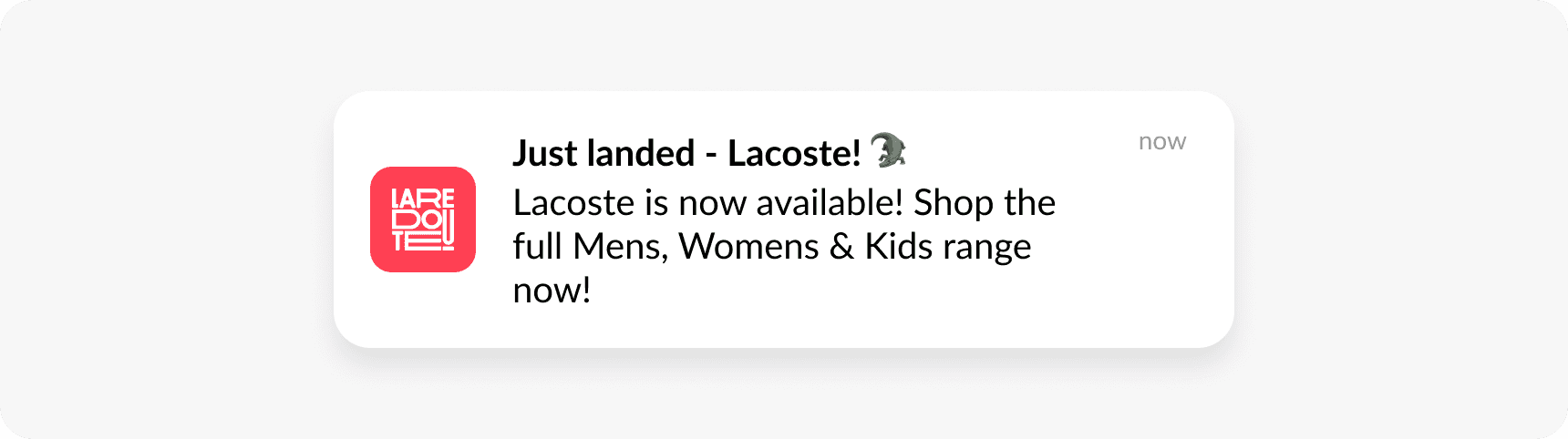
Announcing new products & features
When you launch a new product or roll out a feature update, timing and targeting determine whether users notice. Automation lets you send automated push notifications to the right segments the moment something new goes live — for example, notifying users interested in a specific product category about a relevant new arrival.
Instead of blasting your entire base, real-time push notifications reach only the users most likely to care, driving higher engagement and faster adoption.
Creating urgency & FOMO (fear of missing out)
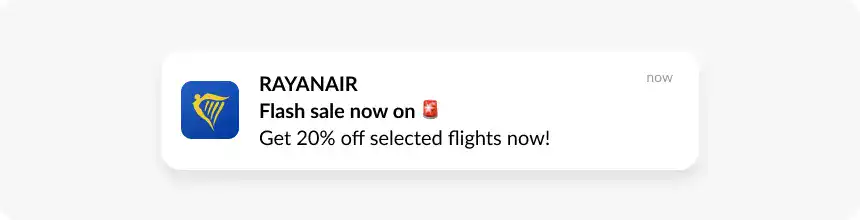
Scarcity and time pressure are powerful motivators. Automated FOMO push notifications can trigger the moment stock drops below a threshold or a flash sale begins — delivering messages like “Only 3 items left in your size” or “Flash sale ends in 2 hours.”
These campaigns drive immediate action because the urgency is real and the timing is precise. The result: measurably higher conversion rates compared to generic promotional blasts.

Special occasion messages (birthdays, anniversaries)
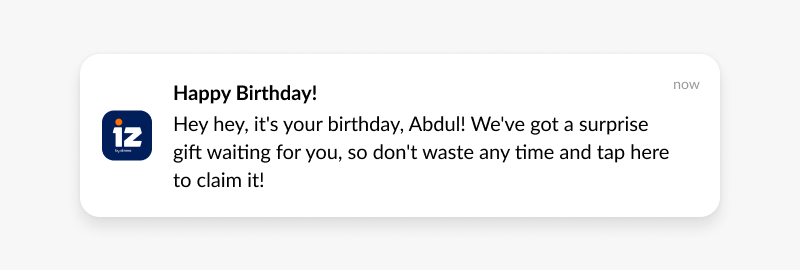
Automated, personalized push notifications for birthdays, subscription anniversaries, or membership milestones show users they are valued — not just another number in a database.
A simple “Happy Birthday! Here’s a special treat just for you” paired with an exclusive discount can strengthen customer retention and boost loyalty. Automation ensures these messages arrive at exactly the right moment, every time, without anyone on your team having to remember.
Automate your push notifications with Pushwoosh
Push notification automation is essential for modern app marketing — it saves time, scales efficiently, and drives measurable growth.
With Pushwoosh, a leading push notification automation platform and customer engagement platform, you can set up automated workflows in minutes through the marketer-friendly interface, without requiring technical expertise, or build advanced scenarios by integrating your backend with the API.