Users buy when they understand value — quickly and in context. In Product-Led Growth (PLG), that understanding doesn’t happen by accident. It’s the result of deliberate guidance that helps users move from first interaction to meaningful value (and eventually to paid) without friction.
That’s where modern PMMs come in.
As a marketer, your job is to operationalize that journey: shorten time-to-value, improve freemium-to-paid conversion, and drive expansion — all through automated messaging that feels helpful, not salesy.
And we’ll show you how.
What product-led growth really means in 2026
User attention is the scarcest resource. Getting someone to download your app is hard. Getting them to pay? Even harder.
Product-led growth (PLG) emerged as the answer: let users experience value before asking them to buy.
But here’s the part that’s often left out.
Products don’t sell themselves without guidance. Users don’t automatically know where value lives, which features matter, or when upgrading makes sense. Left on their own, most will explore briefly, hesitate — and churn.
In PLG, that guidance doesn’t come from sales calls or demos. It comes from automated lifecycle messaging that nudges users forward at the right moment — from onboarding, to activation, to conversion.
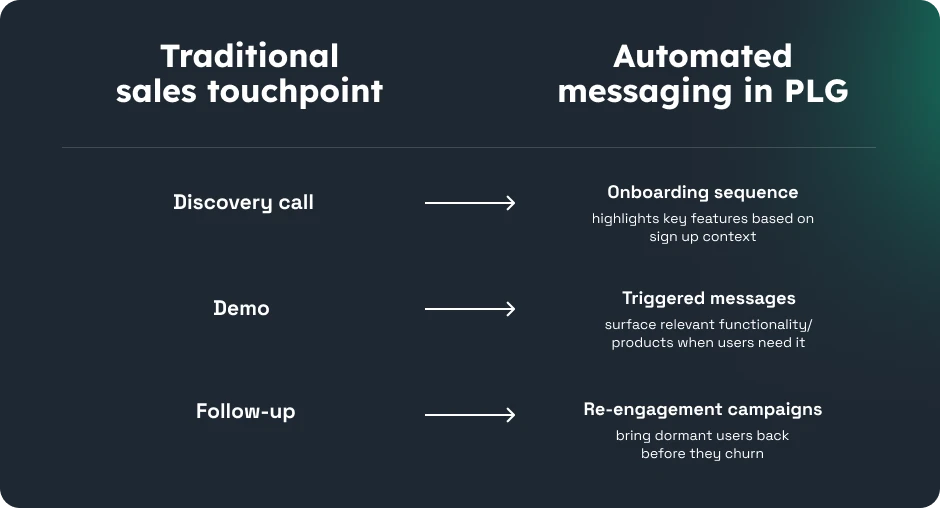
This is where the PMM role has fundamentally shifted.
PMMs no longer just shape positioning or drive engagement. In PLG, they design the path users take inside the product: what they see first, what value is reinforced, when monetization is introduced, and how objections are handled.
However, according to mobile growth expert Anastasia Kudrow, the “handicap” for many apps starts even before the first message is even sent.
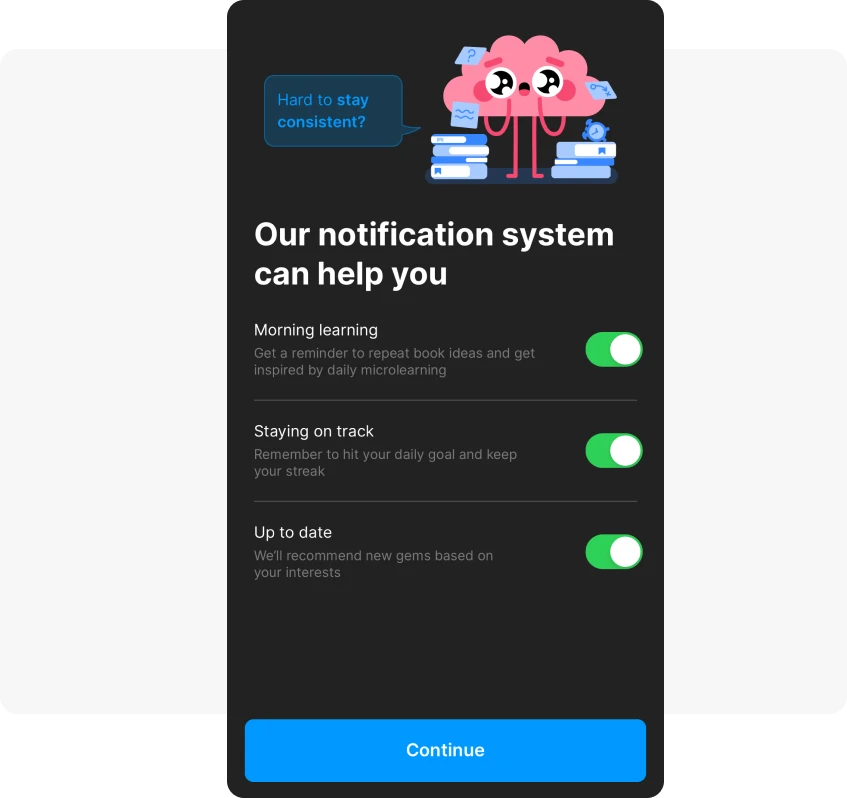
The notification permission moment is a strategic decision, not a UX default. Ask on the first screen, and you’ll get a low opt-in rate, burning your best channel forever on people who don’t even know what your app does yet. Instead, let them experience value first, then explain how notifications help them achieve results.
Let users experience something good first, describe the problem that you solve for them, and then explain how notifications can help them achieve this results.
Source: HeadwayAnd segment by install source from Day 0. Users from paid campaigns behave differently from organic installs. Paid users often need more hand-holding during activation because they didn’t come in with existing intent. Organic users who found you through search or word of mouth are already halfway there.

How automated messaging drives revenue in PLG
The difference between a product that’s used and a product that earns is simple: how well users are guided from curiosity to conversion through strategic, behavior-driven messaging.
Every PLG funnel has the same four critical moments where users either move forward or drop off. Your job as a marketer is to automate messaging based on user actions, and to measure the revenue impact.
Here’s how to build each sequence, what sales function it replaces, and how to easily implement it with Pushwoosh.
1. Activation sequence: Get users to “Aha” faster
The problem: 60-80% of freemium users never reach activation. They sign up, explore for a few minutes, and abandon the app before experiencing real value.
Why? Because they don’t know what to do next or why it matters.
What it replaces: Discovery call – where a salesperson would guide a prospect through key features and help them understand the product’s value.
The solution: Behavioral triggers that guide users to core features based on where they are in the journey, not generic “welcome” emails sent on a schedule.
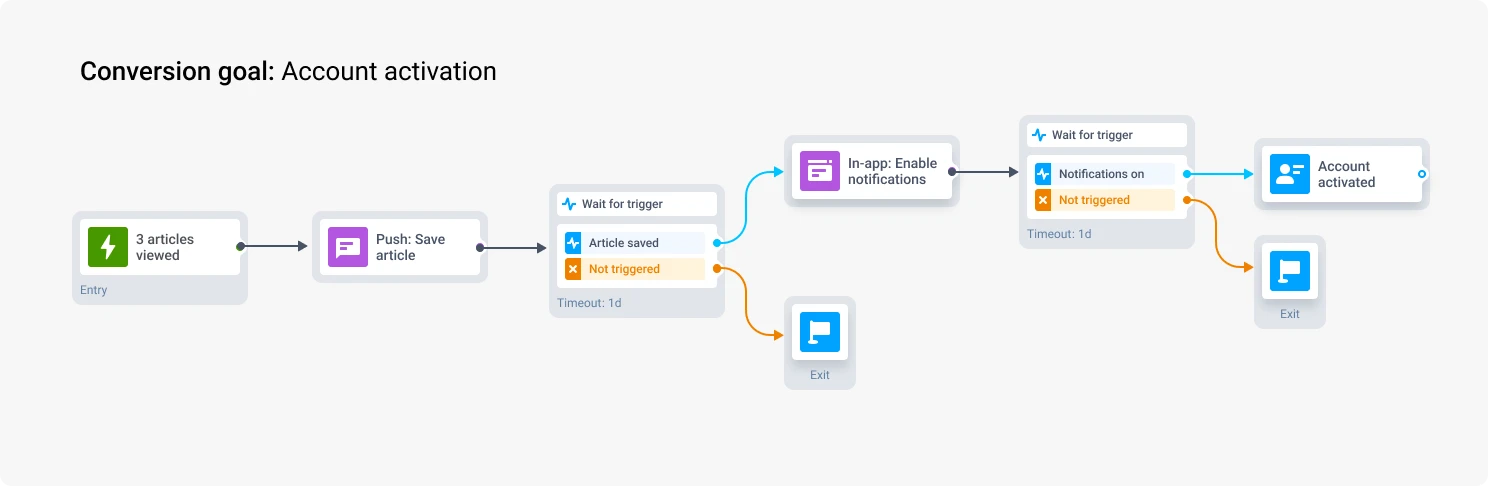
Example: News & media app
- User browses 3+ articles but hasn’t saved anything → Trigger push: “Tap the bookmark to save articles for later”
- User saves first article → Trigger in-app message: “Nice! Now enable notifications so you never miss breaking news”
- User completes both actions → Activation achieved
Revenue metrics to track:
- Activation rate: % of users completing core actions (before vs. after automation)
- Time-to-activation: Days from sign-up to “aha moment”/account activation
- Activated-to-paid conversion rate: Activated users convert 3-5x higher than non-activated
💡 Tip from an expert: To maximize the impact of your automated triggers, follow the “one-tap” rule:
Every push should deep link to one specific action, not a generic home screen. The fewer taps between a notification and the key action, the higher your activation rate. Every extra screen is a leak.
2. Conversion sequence: Upgrade users at peak intent
The problem: Most apps trigger upgrade prompts at the worst possible moment — when users hit a paywall and feel blocked, not when they’ve just experienced value and feel motivated.
What it replaces: Sales demo – where a rep would identify buying intent and present the value of premium features or a product at exactly the right time.
The solution: Contextual upgrade prompts triggered by usage patterns that signal high intent, not arbitrary limits.
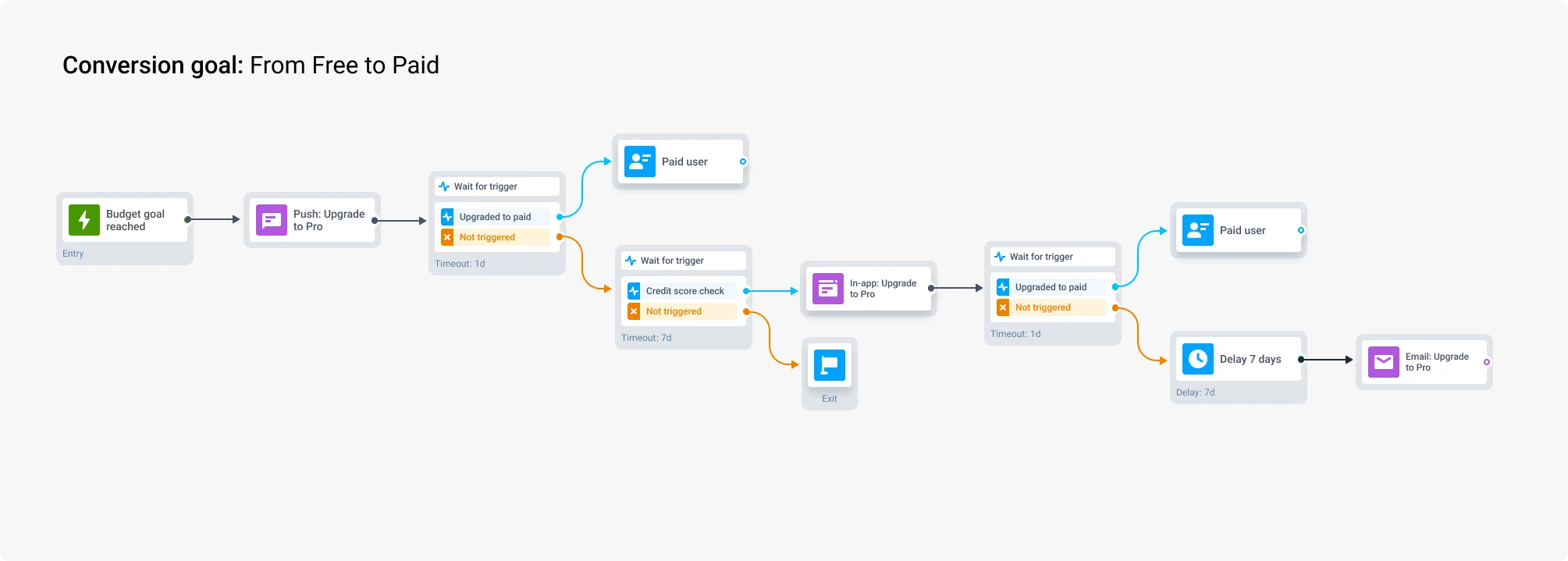
Example: Fintech app
- User completes their third budget goal → Trigger push: “You’re on a roll! Unlock unlimited budgets + automated savings with Pro”
- User checks their credit score at least once a week → Trigger in-app: “Want weekly credit monitoring? Upgrade to Pro”
- User ignores both → Wait 7 days, send email with social proof: “Join 50K+ users building wealth with Pro features”
Revenue metrics to track:
- Freemium-to-paid conversion rate: Overall lift from upgrade campaigns
- Revenue per converted user (ARPU): Are you converting the right users, or just the cheapest ones?
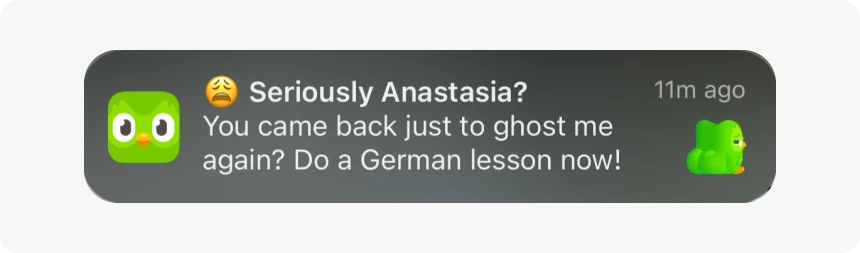
💡Tip from an expert: Personalise to what users actually did, not who they are:
“Most “personalisation” I see in push is just a first name token and a language setting. Real personalisation for activation means your push reflects the user’s actual in-app behavior. What did they start and not finish? What did they engage with most? What did they skip?”
Source: Duolingo
3. Expansion sequence: Drive feature discovery & upsells
The problem: Users on basic plans don’t know what they’re missing. They’ve settled into a routine with 2-3 features and never explore advanced capabilities that could justify an upgrade.
What it replaces: Upsell call – where account managers educate customers on advanced features, propose plan upgrades, or offer additional items for purchase.
The solution: Progressive feature education based on usage maturity, introducing advanced features only when users are ready.
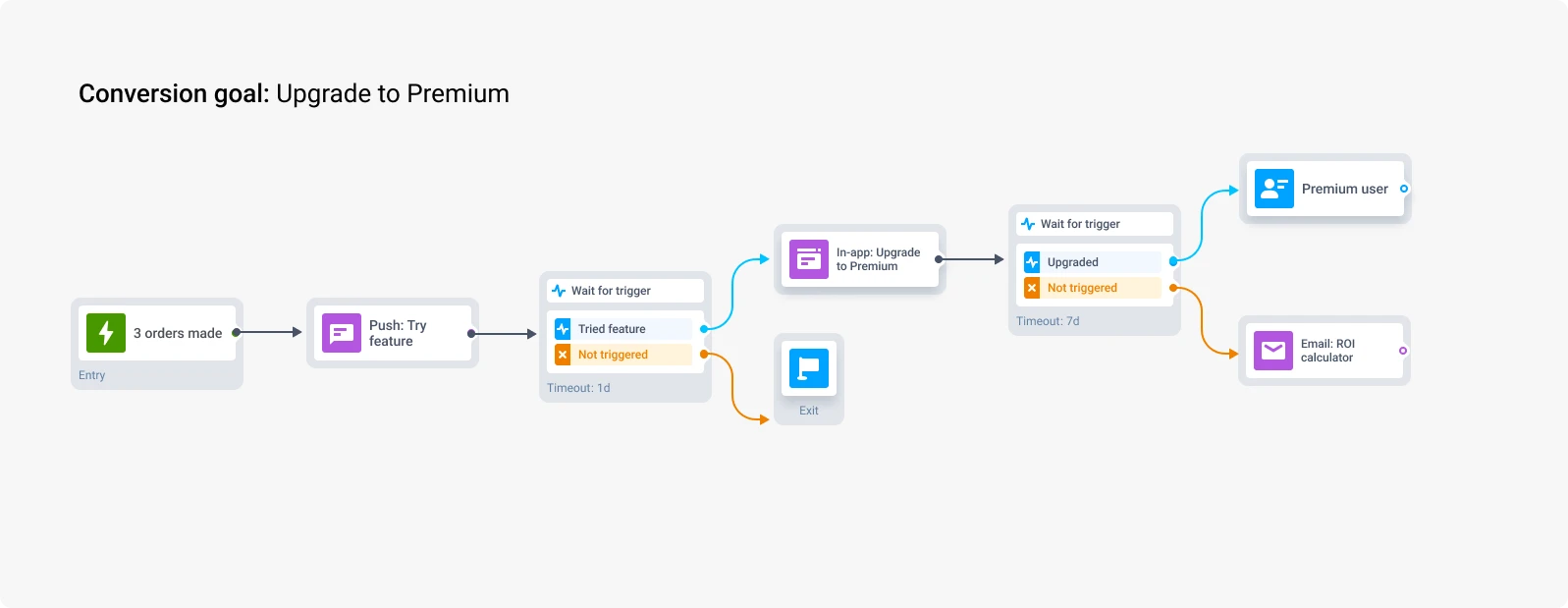
Example: Delivery app
- User orders 3 times (consistent behavior established) → Trigger push: “You order a lot! Try ‘Schedule Orders’ to plan your week”
- User schedules first order → Trigger in-app tooltip next time they browse: “Pro Tip: Premium members get priority delivery + no fees”
- User doesn’t upgrade within 14 days → Email with ROI calculator: “You’d save $12/month on delivery fees with Premium”
Revenue metrics to track:
- Feature adoption rate: % of users who try the advanced feature after messaging
- Plan upgrade rate: % who convert to a higher tier after feature discovery
- Incremental MRR: Revenue directly attributed to expansion campaigns
4. Retention/win-back sequence: Prevent churn before it happens
The problem: By the time a user cancels their subscription or deletes your app, it’s too late. Churn prevention has to happen before disengagement becomes a pattern.
What it replaces: Retention call – where Customer Success would reach out to at-risk accounts and offer solutions before they cancel.
The solution: An engagement messaging sequence triggered when a behavior change signals churn risk.
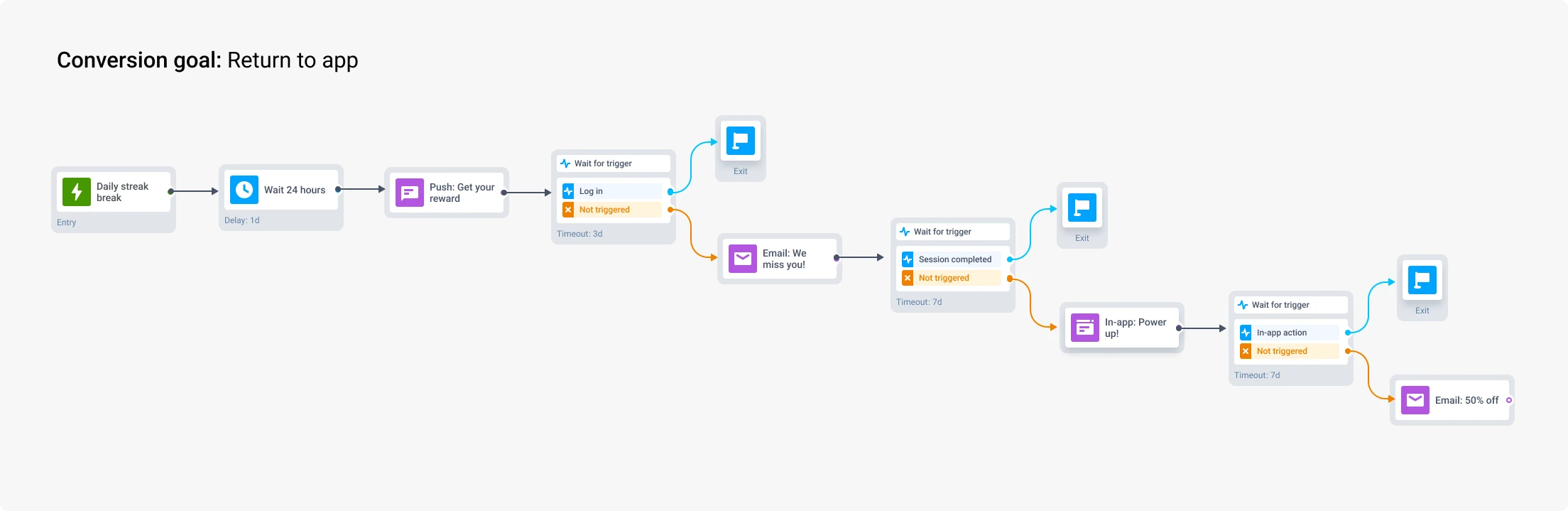
Example: Mobile game
- User’s 7-day login streak breaks → Trigger push within 24 hours: “Your daily reward is waiting! Come back to claim it”
- User hasn’t logged in for 3 days (unusual for their pattern) → Trigger email: “We miss you! Here’s what’s new this week”
- User returns but doesn’t complete session → Trigger in-app: “Stuck on this level? Here’s a free power-up to help”
- User still inactive after 7 days → Final win-back: “We’d love to have you back. Here’s 50% off your next in-app purchase”
Revenue metrics to track:
- Churn rate reduction: Overall decrease in monthly/weekly churn
- Saved MRR: Revenue retained from users who would have churned
- LTV impact: Long-term value of retained users vs. cost of re-engagement
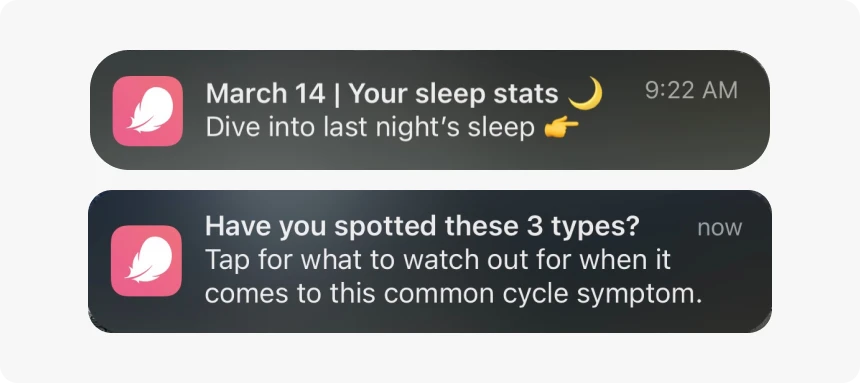
💡Tip from an expert: Every push = one task, one verb, one result:
The biggest mistake I see is push notification that “reminds” people the app exists. “Come back to [App]!” does nothing because it asks for nothing. The user sees it, thinks “Yeah, maybe later,” and swipes.
Every push notification should name the exact action, promise outcome, or at least an insight. And don’t underestimate the “unfinished business”. We are way more willing to finish what we already started than to start something new:
Source: Flo
The metrics shift: From impressions to revenue
Historically, PMMs were evaluated on visibility and engagement. Today, leadership expectations are different.
Your CEO doesn’t care about email open rates or push CTRs. They care about revenue metrics — conversion rates, ARPU, retention, and churn — and expect PMMs to influence them.
That’s PLG thinking:
| Old PMM metrics | PLG PMM metrics |
|---|---|
| Email open rate: X% | Freemium-to-paid conversion rate: +X% (from behavioral onboarding sequence) |
| Push CTR: X% | Time to first paid conversion: reduced from X days to Y days |
| Campaign reach: X users | Expansion revenue: $X MRR added from feature discovery campaign |
| ”Engagement is up!” | Churn prevented: X users re-activated, $Y saved MRR |
See the difference? You’re not reporting on activity. You’re reporting on outcomes.
When messaging is automated and tied to behavior, PMMs can say:
“This activation sequence increased paid conversions by X% and lifted ARPU by $Y, without adding headcount or ad spend.”
The result? You’re no longer justifying your budget with “softer” metrics. You’re showing up with hard revenue data that proves marketing isn’t a cost center — it’s a growth engine.
Start generating revenue with automated messaging
In product-led growth, revenue doesn’t come from perfect positioning or clever taglines. It comes from how consistently users are guided from first value to paid conversion, at scale.
Pushwoosh helps marketers turn lifecycle messaging into a measurable revenue driver: automated onboarding sequences that shorten time-to-value, behavior-triggered upgrade prompts that convert at peak intent, and re-engagement flows that prevent churn — all inside a marketer-friendly platform.
Ready to automate your PLG funnel? Start now with Pushwoosh 👇