In a competitive market, the winner is the one who iterates fastest. But if every campaign requires a dev sprint, an analyst, or a week of approvals — your experiment velocity stays too low to compound growth.
The fastest mobile teams don’t have bigger budgets. They ship small, measurable automations, and use AI to accelerate the loop. Here are 5 cases you can launch inside Pushwoosh this week using ManyMoney AI, an autonomous marketing copilot.
Proper prompts. Proper interface. Real results.
How does an AI marketing co-pilot change the game?
The bottleneck most marketing teams hit isn’t strategy — it’s execution capacity. You know what needs to happen: more personalized campaigns, faster experiments, smarter segmentation. But between dev dependencies, manual analytics, and approval cycles, the gap between knowing and doing stays wide.
A marketing co-pilot closes that gap. It’s not a chatbot that generates copy suggestions, and it’s not a dashboard that surfaces insights you still have to act on. It’s an autonomous agent that connects to your live user data, understands your campaign history, and executes — launches campaigns, runs A/B tests, identifies high-intent segments, kills underperformers — without waiting for you to translate analysis into action.
Think of it as a senior performance marketer who never sleeps, never waits for the sprint cycle, and never misses a high-intent signal. It knows your users, your campaigns, and your revenue goals — and it acts on all three simultaneously.
The shift is from AI as assistant to AI as operator. You set the direction. It runs the campaigns.
What is ManyMoney, exactly?
ManyMoney is Pushwoosh’s AI marketing co-pilot — a chat-based copilot built directly into your dashboard. You describe what you need, it handles the execution: building segments, generating copy, setting up journeys, running A/B tests, and stopping campaigns that aren’t driving revenue.
It works across three modes:
| Mode | What it does |
|---|---|
| ✦ Creation | Build campaigns, journeys, and marketing strategies from a prompt |
| ✦ Analysis | Diagnose underperforming campaigns, find revenue leaks, segment by intent |
| ✦ Configuration | Set up automation rules, channel logic, and targeting parameters |
Case 1 ⚡ Velocity: 3× more campaigns, without 3× the team
Every campaign eats more hours than it should. It’s execution time. A single campaign can eat 6–8 hours: compliance review, segment setup, technical QA, approval rounds. Result: 9 campaigns per quarter when 27 were possible.
ManyMoney builds the segment, generates copy variants, sets up the journey, handles deep links, and schedules sends at each user’s personal best time — no tickets, no waiting.
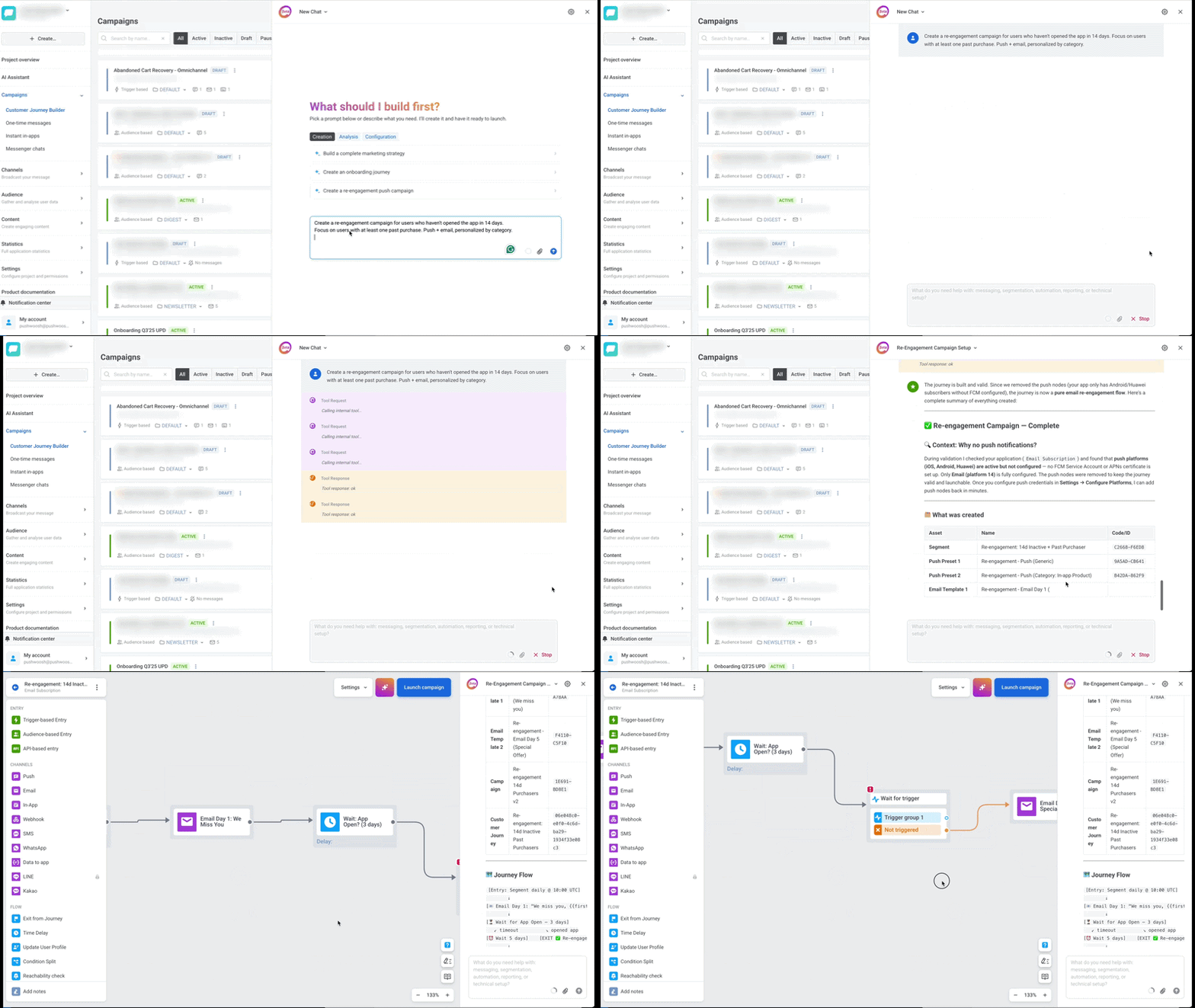
📊 The client’s result: A European neobank went from 9 campaigns per quarter to 27 — tripling their conversion opportunities with the same team size. Campaign creation time: 6–8 hours → 20 minutes.
Case 2 🎯 Targeting: find high-intent users before they leave
Standard segmentation targets users who are interested. You’re always one step behind. By the time you launch a campaign, the high-intent window has closed.
ManyMoney looks forward: it analyzes behavioral signals in real time and identifies users who are about to convert.
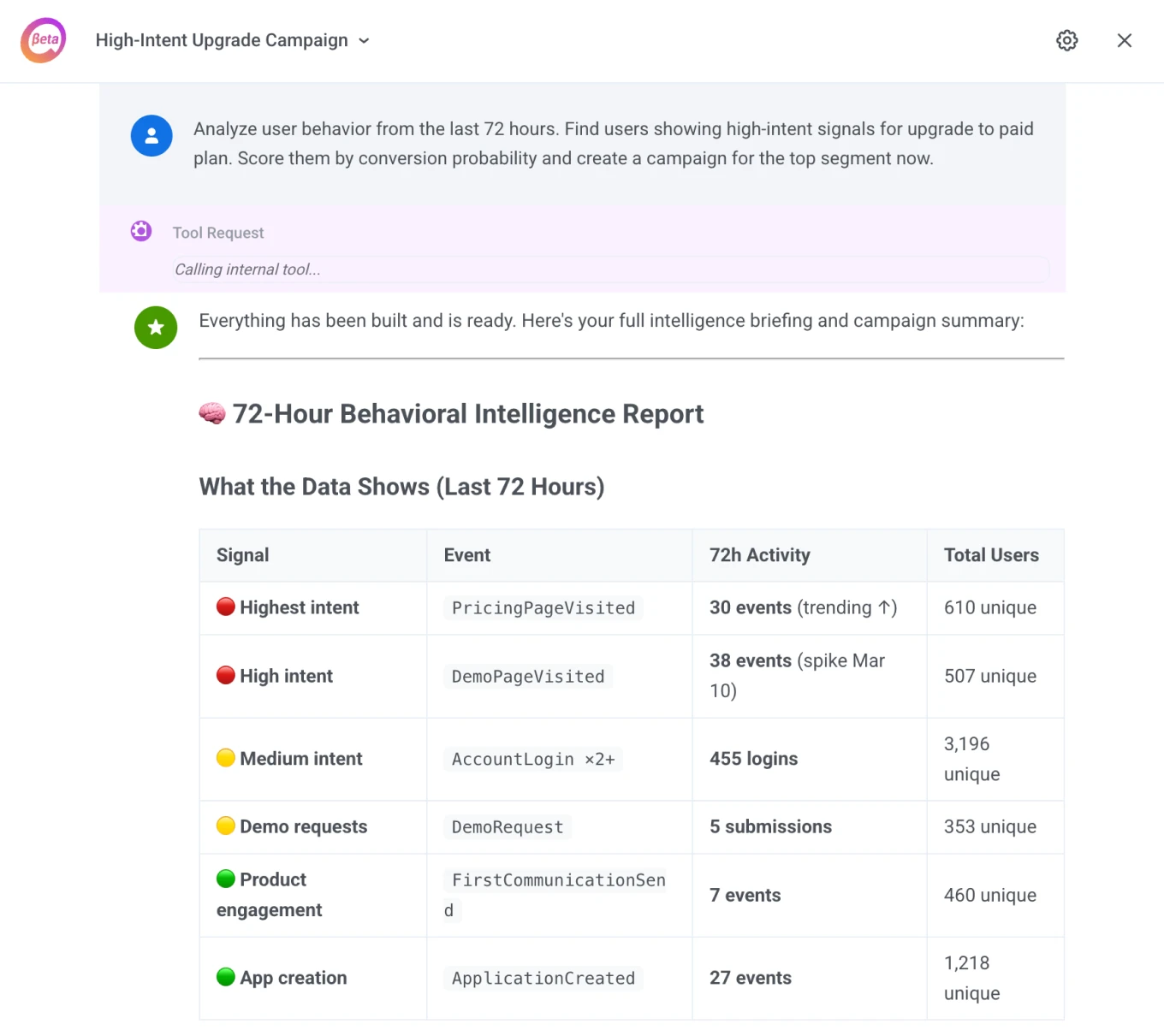
The AI scans millions of micro-events — not just page views, but sequences, time-on-screen, return visits, comparison behavior — and surfaces a segment you’d never build manually.
📊 The result: The same neobank saw conversion jump from 2.1% on broad segments to 11.8% on high-intent micro-segments. The segment size was smaller — but the intent was real, and the revenue followed.
Case 3 💬 AI in lifecycle messaging: build a habit before users drift away
Most apps lose users in the first week — not because the product is bad, but because the messaging doesn’t adapt fast enough to catch drift. A user who completed onboarding but hasn’t come back in 4 days needs a different message than one who came back twice but never triggered the core action.
Based on each user’s Day 0–7 behavior, ManyMoney segments by engagement pattern and builds a personalized sequence: different timing, different channel, different message angle — automatically. No manual cohort-building required.
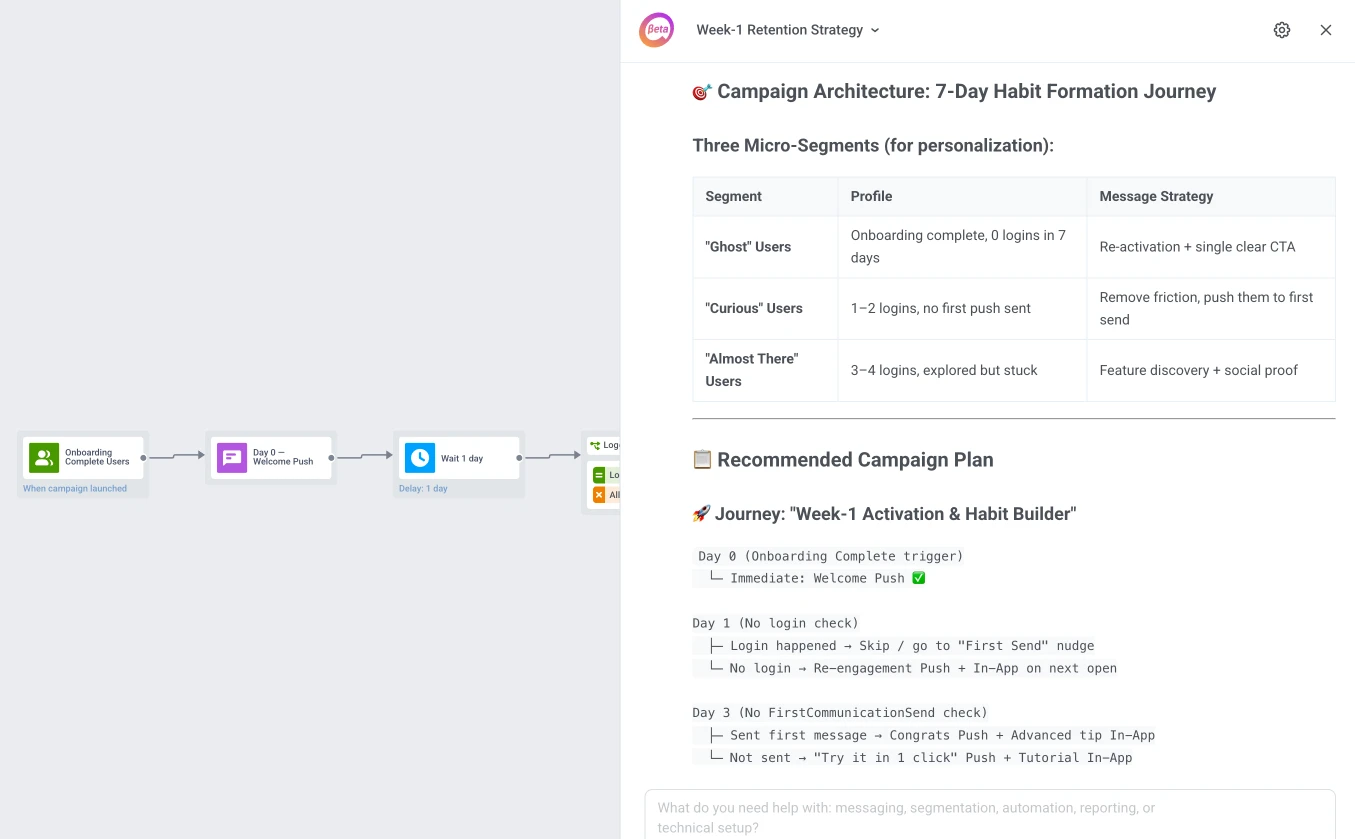
📊 Result: D7 retention is the single highest-leverage metric in mobile apps. Improving it by even 5% compounds into significantly higher CLV across the entire user base.
Case 4 🛠️ Execution: build an omnichannel journey from one prompt
You know multi-touch journeys outperform single messages. But building a conditional journey — push → in-app → email → SMS with timing logic and fallbacks — means a full sprint with your dev team.
ManyMoney inverts that. You describe what you want to achieve — it designs the journey, you approve it.
The result is a full multi-channel journey with branching logic, channel fallbacks, timing rules, and conditional incentives — built in one conversation. You review it visually in Pushwoosh’s Journey Builder before launch.
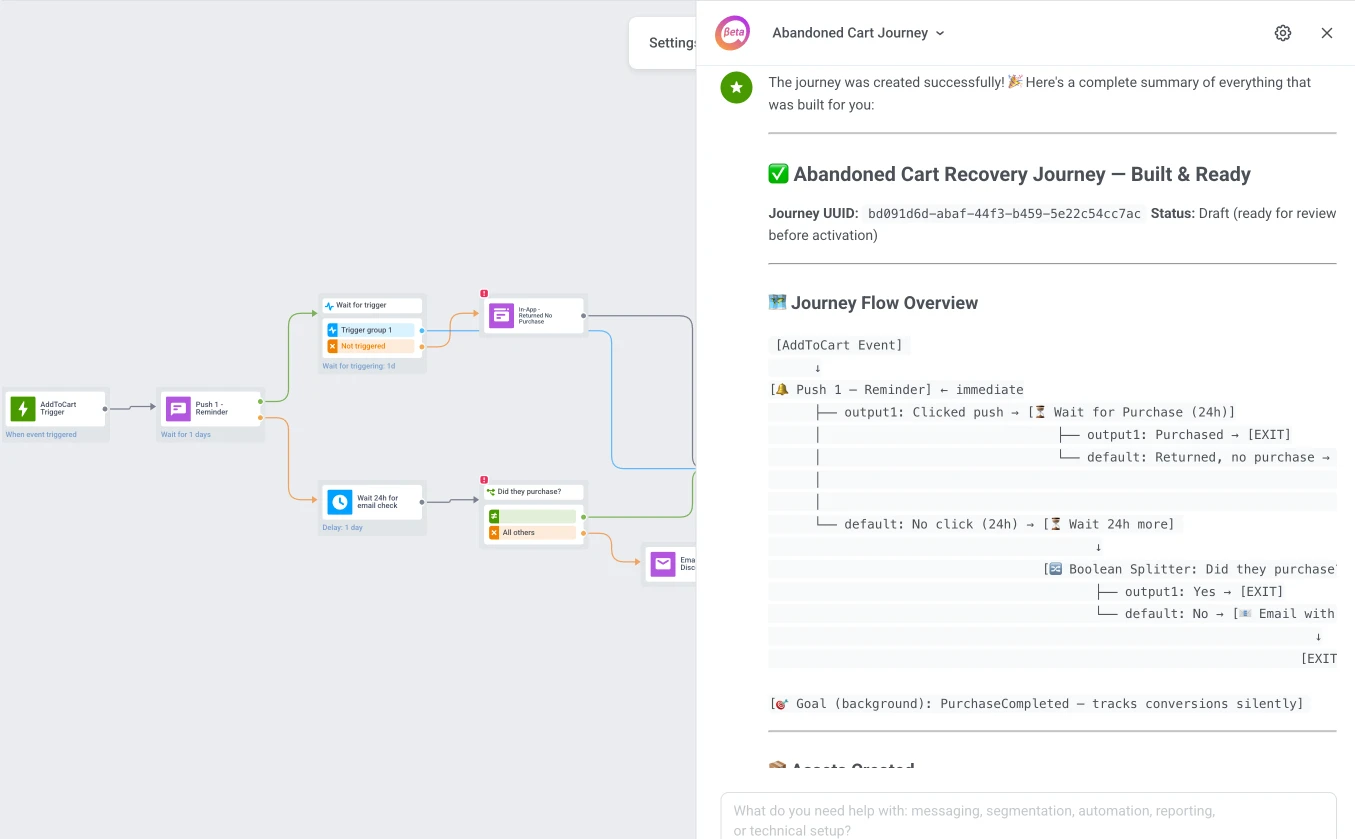
📊 Result: Omnichannel journeys consistently outperform single-channel campaigns by 30–50% on conversion — because they meet users where they are, not where you assumed they’d be.
📌 Related: Abandoned cart email: Examples & best practices for cart recovery
Case 5 🚨 Optimization: kill the campaigns bleeding your budget
You know some campaigns are underperforming. But you only find out at the monthly review — three weeks after the budget has already been wasted. And the winners? They run at their original budget while the opportunity passes.
ManyMoney doesn’t optimize for clicks. It optimizes for revenue:
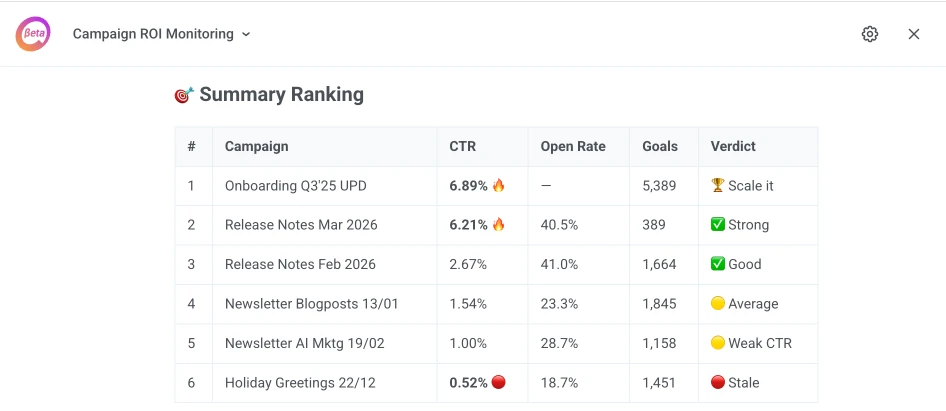
📊 The result: +10% revenue lift from optimization alone, without increasing campaign volume or spend. Moreover, stopping an SMS or email campaign can save thousands of dollars that would have been spent on additional days at a loss.
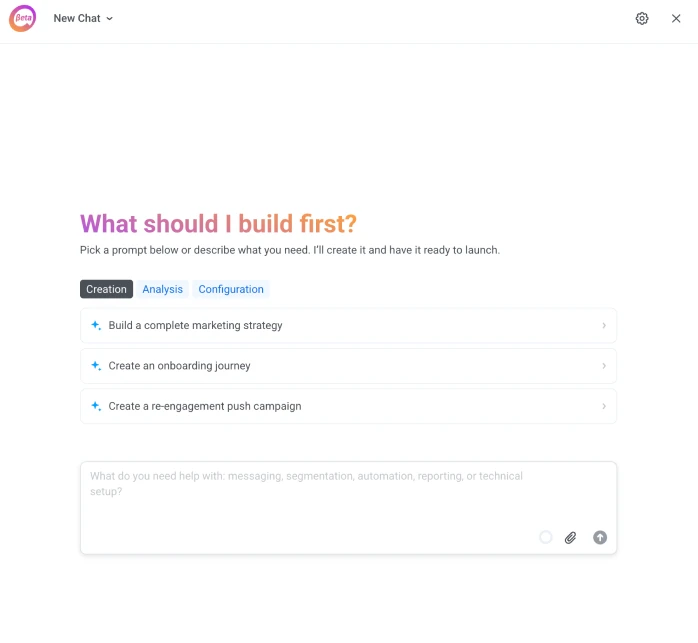
Not sure where to start? Just ask
Most tools require you to learn them first. ManyMoney works the other way around. You describe what you want to achieve, and it figures out the rest.
ManyMoney responds with a full strategy, a recommended campaign structure, and ready-to-execute next steps.
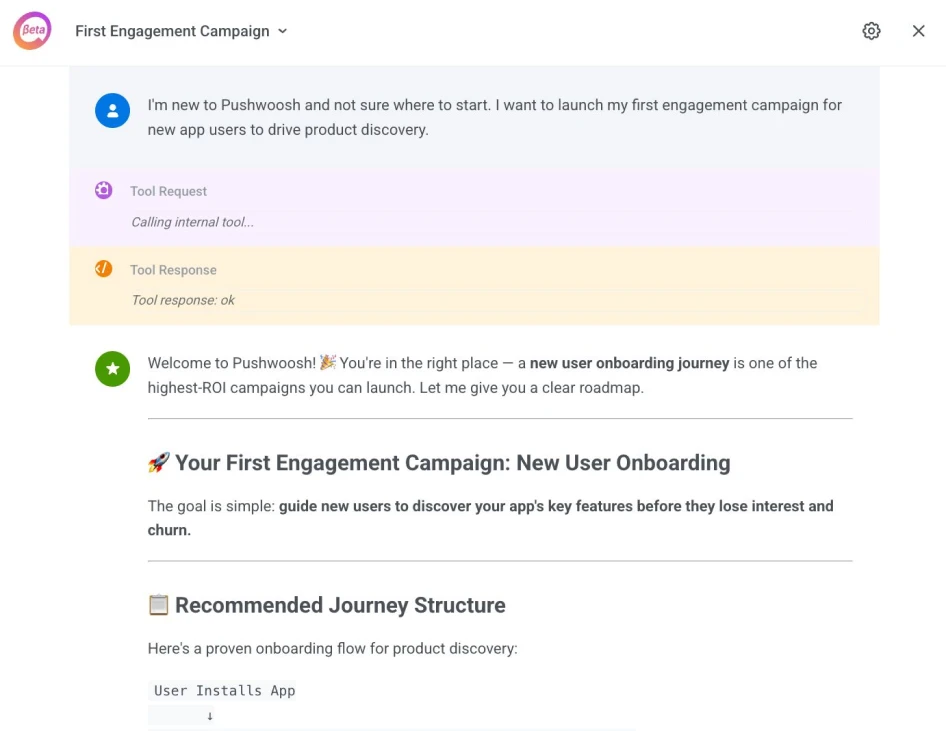
Start your first campaignwith ManyMoney
These aren’t hypothetical use cases. They’re what ManyMoney is doing inside Pushwoosh right now — for fintech apps, food delivery platforms, gaming and e-commerce brands, and many other companies.
The entry point is a single prompt. The outcome is a live campaign.