Explore tactics to identify inactive mobile users and re-engage them, ultimately boosting your app’s user retention.
Read on if your product currently faces these challenges:
- Winning back inactive or churned users;
- Preventing churn;
- Understand why previously engaged users went inactive.
How to identify inactive users
A straightforward method involves tracking events related to user (in)activity, while the more advanced approach—RFM segmentation—allows capturing subtle shifts in user engagement and provides a clear snapshot of your audience’s engagement levels.
Basic level: Track events
To address user inactivity through events, it’s essential to first define which events will signal it. With the Pushwoosh customer engagement platform, you have full control over this process.
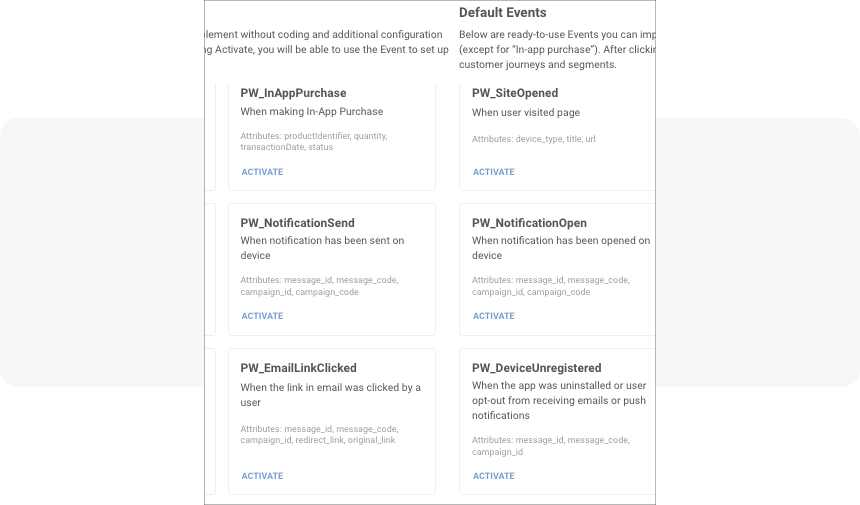
For a quick and easy start, choose one of the default events pre-installed on the platform.
If you need something more tailored to the specifics of your app, you can set up custom events.
- Default events
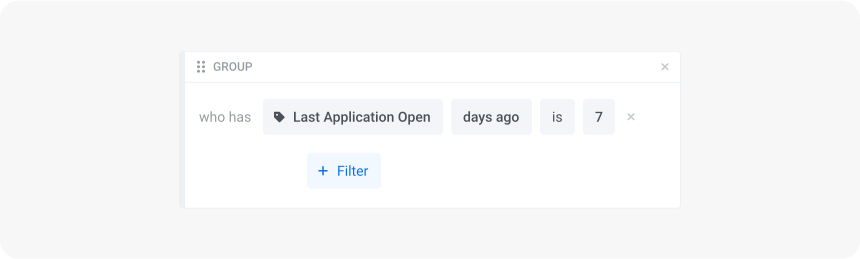
For example, you can create an audience for your re-engagement campaign based on the “ApplicationOpen” event. In Pushwoosh’s segment builder, specify the period during which the user must remain inactive to be included in the campaign:
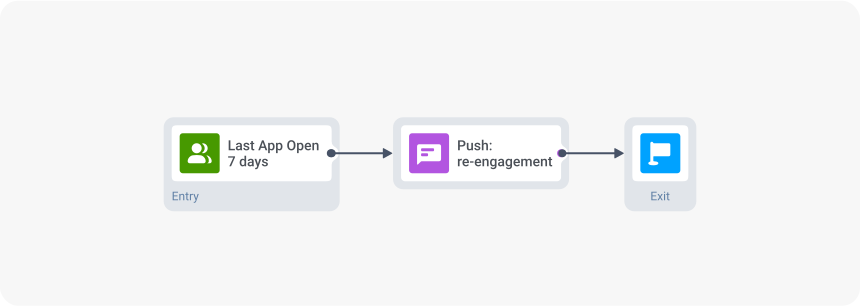
Then, launch your campaign for the selected segment in seconds with the drag-and-drop campaign mapping tool, Pushwoosh Customer Journey Builder:
- Custom events
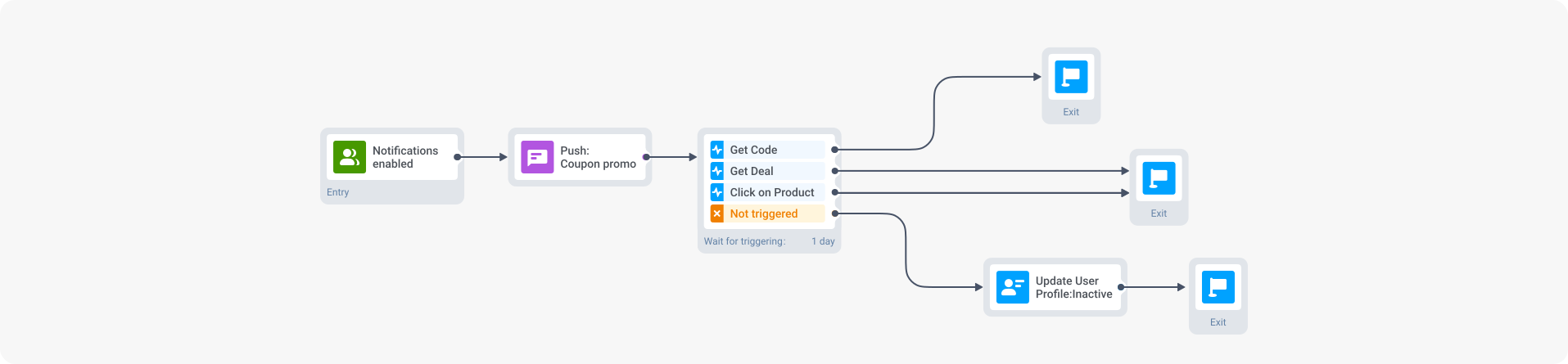
Define key custom events based on core user activities relevant to your business. For a coupons and discounts app, these could include events like ‘GetCode,’ ‘GetDeal,’ ‘ClickOnProduct,’ or ‘ClickOnBanner.’ This way, if a user doesn’t trigger any of these actions during your main promotional campaign, you can tag them as ‘inactive’ at the end of their journey.
Here’s how the flow would look in Pushwoosh Customer Journey Builder:
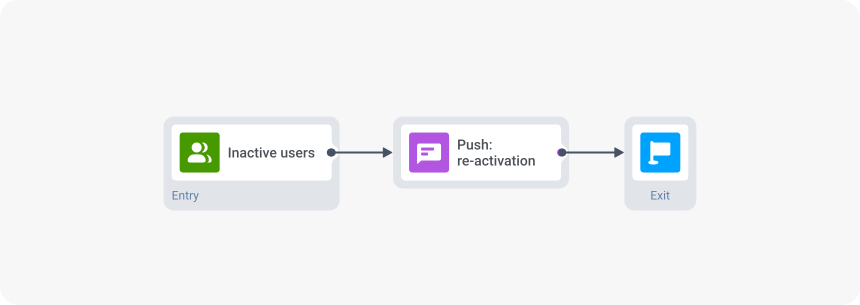
And from there, you can target your re-engagement or re-activation campaign to the newly created ‘Inactive’ segment:
 💡You
can also
upload pre-built segments
from your in-house analytics system or
third-party services
integrated with
Pushwoosh.
💡You
can also
upload pre-built segments
from your in-house analytics system or
third-party services
integrated with
Pushwoosh.
Advanced level: Use the RFM grid
RFM segmentation is a great tool for your re-engagement efforts because it allows you to both identify inactive users and track those who are on the verge of lapsing:
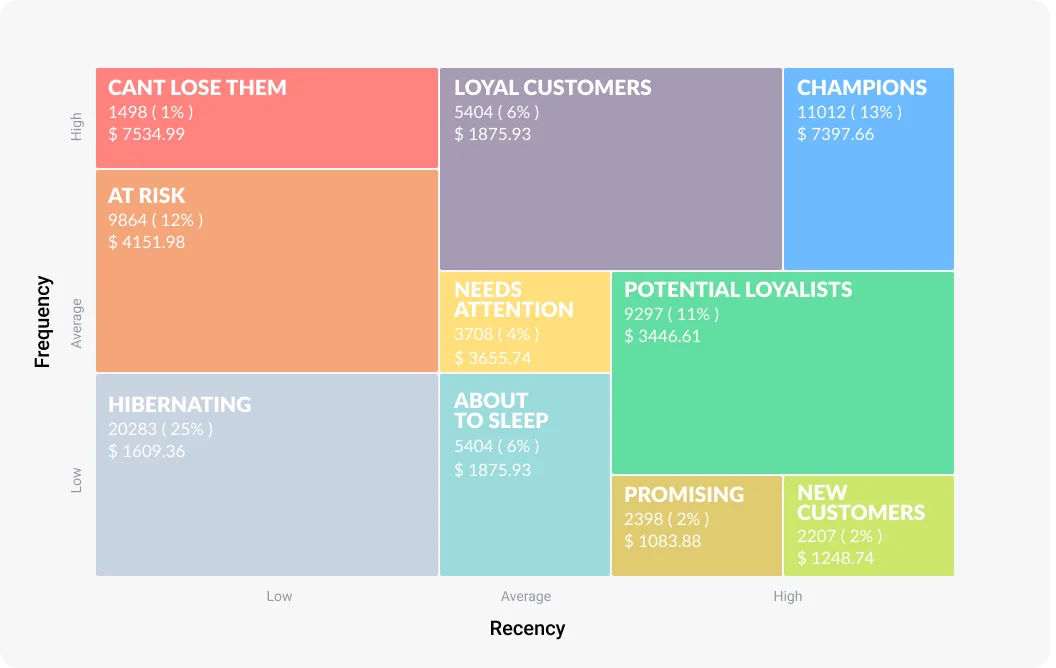
Pushwoosh’s RFM segmentation tool is based on the relationship between such metrics as frequency and recency of target actions. In Pushwoosh, events available for RFM analysis aren’t limited to purchases (as in a classical RFM grid). For example, if your app’s business model is built around advertising, you can create a grid based on how often users view certain pages and identify user groups that need attention according to these criteria.
Here are the key RFM segments you should consider including in your re-engagement campaigns:
- ‘Can’t lose them’: users who are highly engaged but may soon stop interacting if not nurtured;
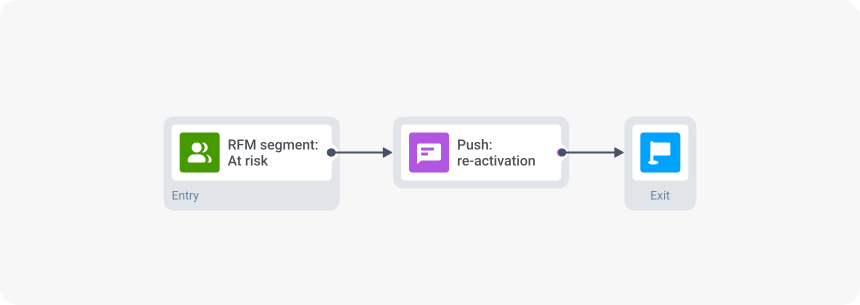
- ‘At risk’: users who have shown a decline in activity and need immediate attention to avoid churn;
- ‘About to sleep’: users who interacted with the app a while ago and are close to becoming inactive;
- ‘Needs attention’: users whose engagement has dropped, and they require targeted efforts to be re-activated.
Once the segments in the RFM grid are calculated, you can seamlessly use them to launch communication flows via the Customer Journey Builder:
Identifying inactive users is just the first step in your re-engagement strategy. The next is selecting the right communication channel for your campaigns, ensuring you can bring users back at the most opportune moment.
Choose the best channel for your re-engagement campaign
Push notifications
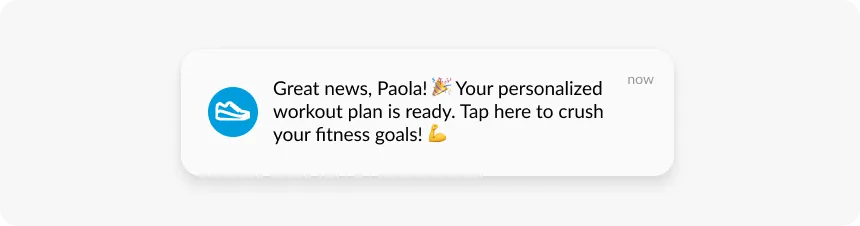
Pushes are ideal when users haven’t opened your app in a while. A well-crafted push with a personalized offer or important update can remind customers of your app’s value and prompt a return.
For example, you could notify users that a new offer, content, or feature tailored to their interests is available:
 💡Remember
that to create personalized messages, it is crucial to collect data about your
users. By understanding user preferences, past behaviors, purchase history, and
demographics, you can create
experiences based on the whole user context.
💡Remember
that to create personalized messages, it is crucial to collect data about your
users. By understanding user preferences, past behaviors, purchase history, and
demographics, you can create
experiences based on the whole user context.
In-app messages
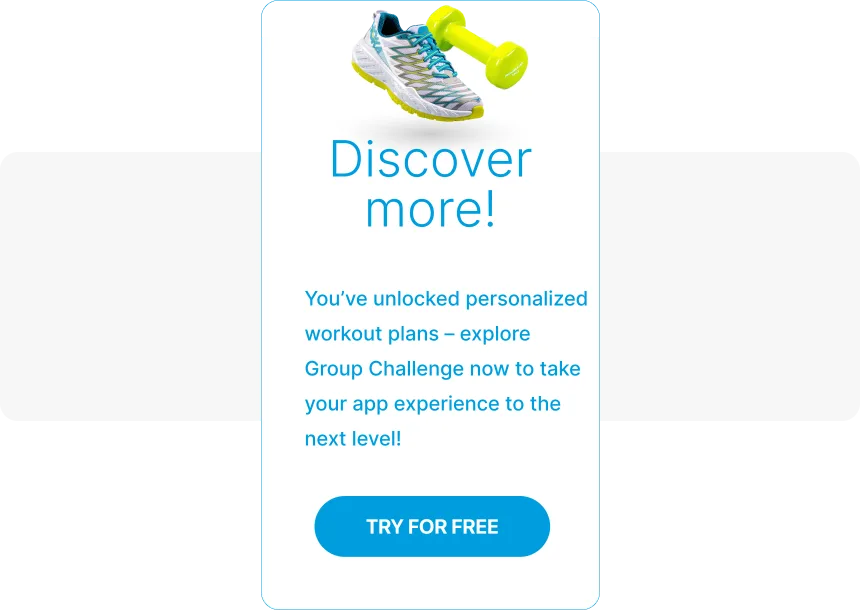
In-apps work best for users who open the app but aren’t completing target actions. By using in-app messages, you can highlight features that users haven’t explored yet or guide them toward the next steps that can help them engage more deeply:
Emails
Re-engagement email is an impactful channel, especially when you need to reach users who have opted out of your push notifications. Emails can fulfill two key purposes:
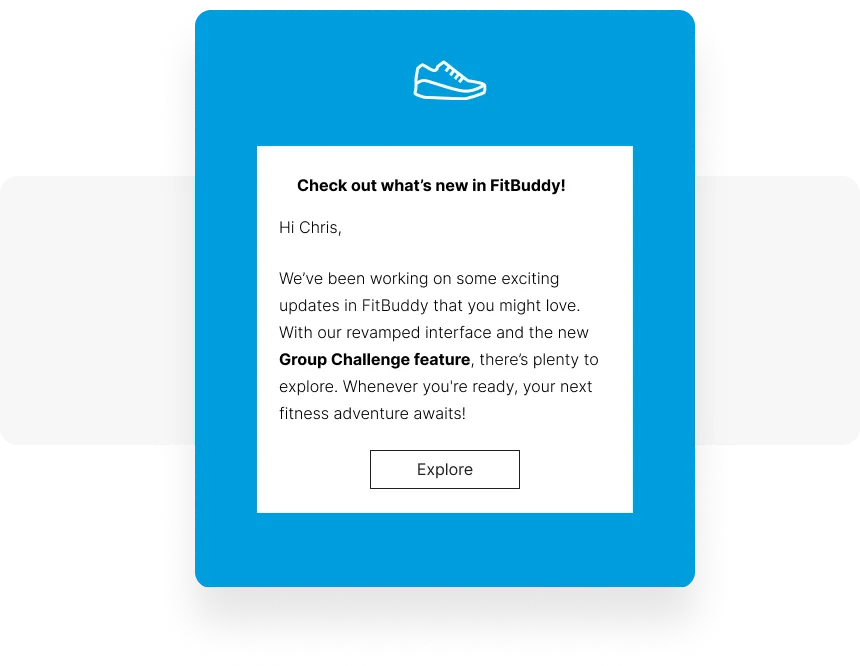
- Re-activation. Email is your chance to captivate users who have drifted away by showing them the essential improvements they’ve missed—for example, a redesigned user interface, fresh integrations, or exclusive content that’s now available to explore:
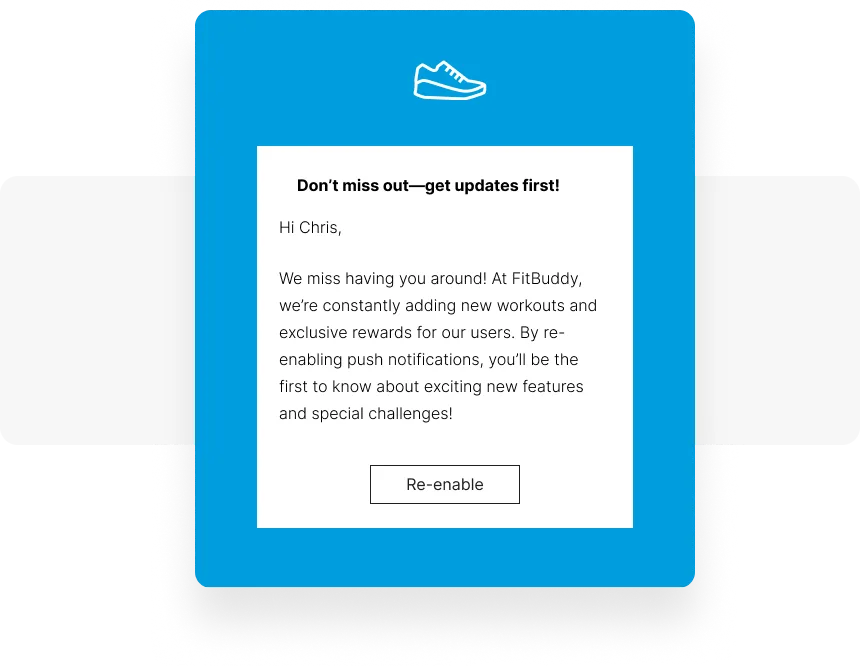
- Re-opt-in for push notifications. Use email to invite users back into your ecosystem by encouraging them to re-opt in for push notifications, ensuring they receive timely updates and offers in the future:
Go omnichannel
What if you could supercharge your chances of re-engaging inactive users by reaching them through multiple channels?
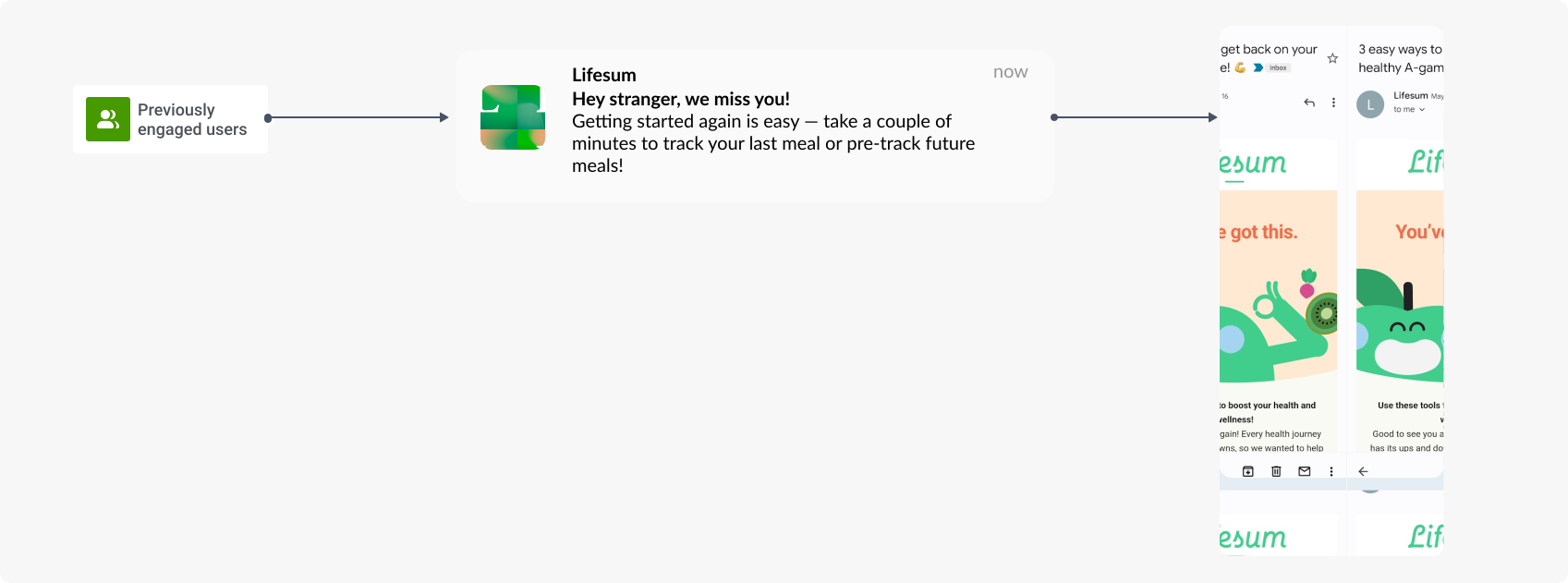
Lifesum, a food tracker app, targets previously engaged users with a re-engaging push notification first and then follows up with some useful tips on how to get back on track via email:
All channels in Pushwoosh are managed from a single platform, making them readily accessible for omnichannel and cross-channel campaigns.
Understanding inactive app users
Identifying the reasons behind user inactivity is crucial for revitalizing engagement. By analyzing user behavior and preferences, you can uncover valuable insights into what may be driving users away from your app.
Some common reasons for inactivity include:
❗Lack of engagement
If the app doesn’t provide regular updates, new content, or interactive features, users may lose interest.
❗Seasonal or cycle-based usage
Some apps naturally experience cyclical usage patterns. For example, a travel app may see more usage during holiday seasons and then face inactivity in between. Similarly, workout apps might see higher engagement at the start of the year but taper off in certain seasons.
By identifying these cycles, you can plan timely re-engagement campaigns that align with users’ seasonal interests or typical usage patterns.
❗Poor onboarding experience
A disappointing onboarding process can leave users feeling confused or overwhelmed, making it difficult for them to see the app’s value. If users don’t quickly understand how to navigate your app or the benefits it offers, they may abandon it before truly engaging.
❗ Incomplete activation of new users
Users who’ve recently downloaded the app but haven’t completed essential activation steps, such as setting up a profile or discovering basic features, often become inactive early on. An activation campaign offering easy tutorials or quick benefits can help these users get started on the right foot and become more engaged.

Retention Squad Lead at Phiture, Creator of the Subscription Stack
To determine what was wrong with onboarded but unengaged users, have an “onboarding intention” or “use case” survey for new users who onboard.
Ask them their reason for downloading the app and direct them to features they are interested in.
If their use case doesn’t match your typical user persona, then you know these are low-quality, low-intent users.
Best practices for re-engaging inactive users
Add incentives and gamification
Incentives and gamification are powerful tools for overcoming user inactivity. By offering rewards, discounts, or exclusive content, you can motivate users to return to your app and re-engage with your brand.
Gamification takes gaming approaches and applies them in a marketing scenario. By incorporating game-like elements, such as leaderboards, challenges, and quests, you can create an interactive experience that encourages users to participate and compete.
Some effective incentives and gamification strategies include:
- Rewarding users for visiting the app daily or completing specific tasks;
- Providing badges or points for achievements;
- Offering exclusive discounts or content to loyal users;
- Creating social sharing opportunities to encourage users to share their progress and achievements.
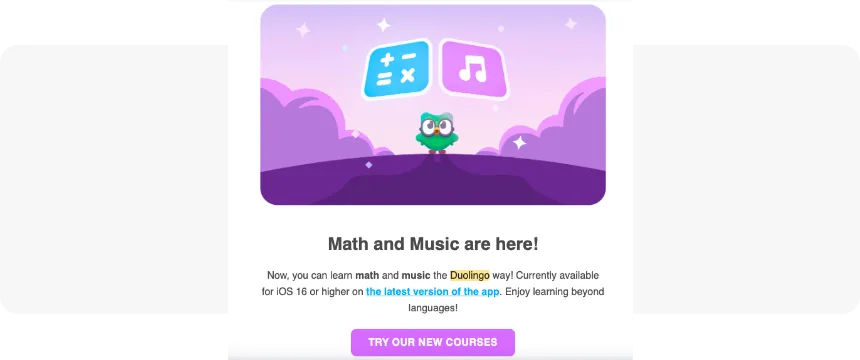
Duolingo is well-known for its use of gamification, turning language learning into a fun and addictive experience. Here’s an example of a re-activation email by Duolingo:
Reintroduce your app to returning users
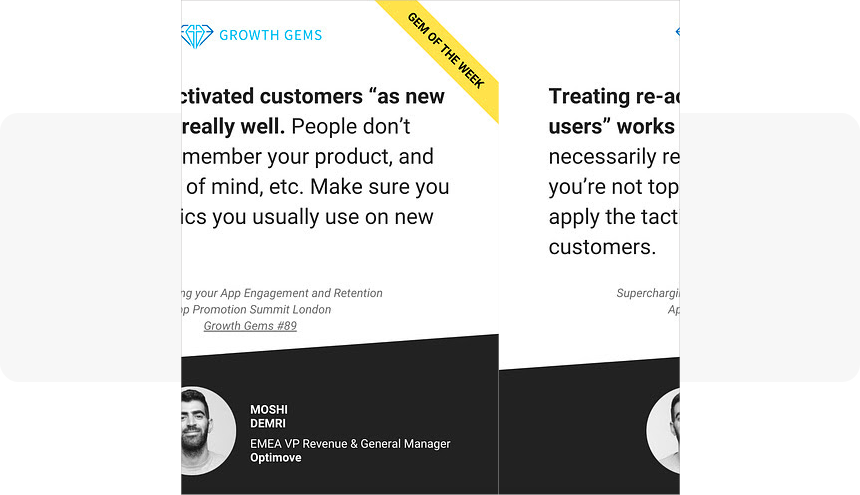
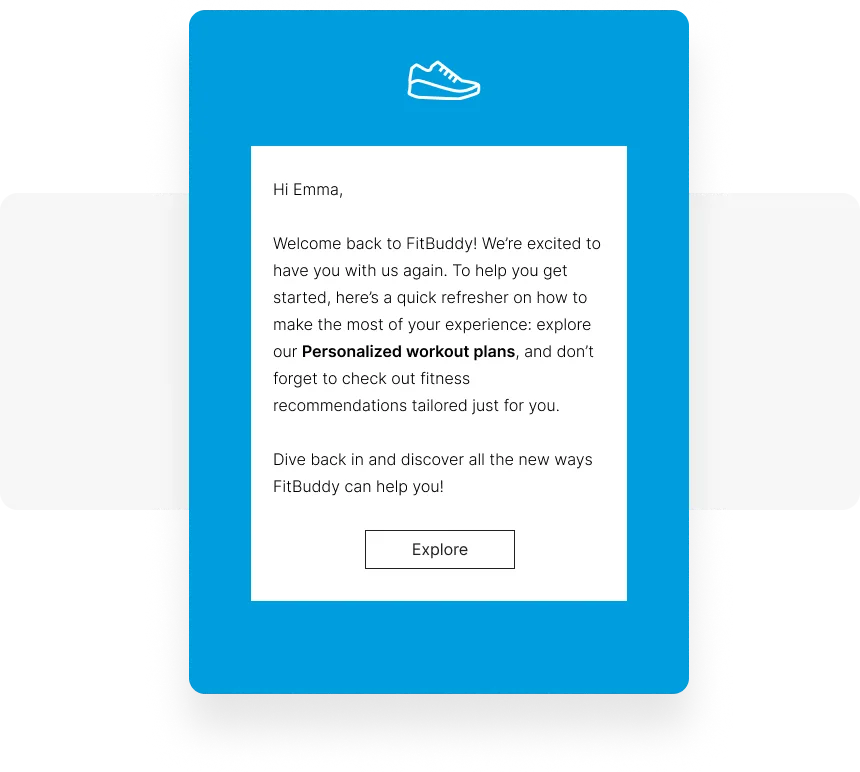
When users return after a period of inactivity, it’s essential to reintroduce them to your app as if they were new customers. This approach not only rekindles their interest but also ensures they fully understand your product’s value.
Here is an example of an email leveraging this approach:
Metrics that prove great re-engagement & re-activation
Measuring success is crucial for understanding the effectiveness of your re-engagement and reactivation strategies. Key metrics can provide valuable insights into user behavior and help you refine your approach:
- App open/session interval;
- DAU and MAU;
- Time in the app;
- Number of app launches;
- Screen opens;
- User LTV;
- Opt-in rate increase for opt-out recovery campaigns;
- CTRs of re-engaging push notifications.
Examples of successful re-engagement campaigns
Success story: AvaTrade, whose opt-in rates exceeded the average both on iOS and Android thanks to re-engagement messaging. By implementing a centralized communication strategy through Pushwoosh, AvaTrade reached out to previously inactive users, resulting in a 12% increase in conversion rates to real account registrations.
Success story: Beach Bum tripled its push notifications’ CTR by using custom sounds like “Dice Roll” and creating an immediate, attention-grabbing effect. This re-engagement tactic, paired with personalized and multilingual messaging led to a 3x increase in DAU, MAU, and overall subscribers across Beach Bum’s gaming apps.
Want to achieve remarkable results like these and boost your success metrics through effective re-engagement and reactivation campaigns? Discuss your needs with our experts and discover how Pushwoosh solutions can elevate your product’s performance.