SMS शायद आपका सबसे महंगा messaging channel है। भारत में DLT-registered SMS की कॉस्ट $0.01–0.05 प्रति मैसेज चलती है — 1 लाख users के बेस पर यह ₹3–4 लाख/महीना सिर्फ SMS fees में बन जाता है। अगर हर flow SMS से शुरू होता है, तो आप उस reach के लिए premium pay कर रहे हैं जो एक सस्ता channel handle कर सकता था।
यह समझ आता है कि teams SMS को default क्यों रखती हैं: near-universal deliverability, और कोई missed message नहीं चाहता। लेकिन “सबको SMS भेज दो just in case” — यह strategy नहीं है। यह budget leak है।
Fix यह नहीं कि SMS बंद कर दो। Fix यह है कि एक ऐसा system बनाओ जहां SMS सिर्फ तभी fire हो जब वह best option हो — और push notification और email बाकी काम संभालें। यहां बताते हैं कैसे Pushwoosh Customer Journey Builder में यह सेटअप करें।
सही channel कैसे चुनें और कॉस्ट बचाएं
अपने channels को एक सीढ़ी की तरह सोचें: सबसे सस्ते step से शुरू करो और ऊपर तभी चढ़ो जब ज़रूरत हो।
Level 1 — Push notification. लगभग zero marginal cost। Instant delivery। भारत में Android 95%+ market share के साथ, push notifications की reach बेहद strong है। Time-sensitive nudges के लिए best — जहां short message काफी हो। Catch: user के पास notifications enabled होना चाहिए, और delivery OS और device state पर depend करती है।
Level 2 — Email. अभी भी बहुत cost-effective (खासकर अगर Pushwoosh इस्तेमाल करो 😎)। Detail-heavy messages के लिए perfect: invoices, plan comparisons, step-by-step instructions। Slower, lower-urgency, लेकिन ऐसे content के लिए बढ़िया जो users को बाद में reference करना हो।
Level 3 — SMS. High deliverability, high cost। यह आपका escalation channel है: यह तब kick in होता है जब push notification और email user तक या तो पहुंच नहीं पाए या काम नहीं किए, और stakes इतने high हों कि spend justify हो। भारतीय FinTech apps में transactional SMS की regulatory requirement भी होती है — लेकिन promotional flows में SMS हमेशा ज़रूरी नहीं।
Principle simple है: हर user को message उस सबसे सस्ते channel से मिलता है जहां वह reachable है। SMS तब आता है जब सस्ते options खत्म हो जाएं या moment सच में urgent हो।
यह theory नहीं है। यह एक concrete routing pattern है जो आप अभी build कर सकते हैं।
Example: UPI payment reminder flow in Pushwoosh
इसे practice में लाते हैं।
यह example लो: आप एक FinTech app चलाते हो और users को upcoming EMI या UPI AutoPay payment के बारे में remind करना है। Missed payment का मतलब है late fees, credit score impact, और trust loss — PhonePe, Paytm जैसे competitive market में यह बहुत बड़ी बात है। Stakes high हैं, तो SMS किसी point पर justified है। लेकिन first step के रूप में नहीं।
यहां बताते हैं कैसे Customer Journey Builder में smart omnichannel routing build करें:
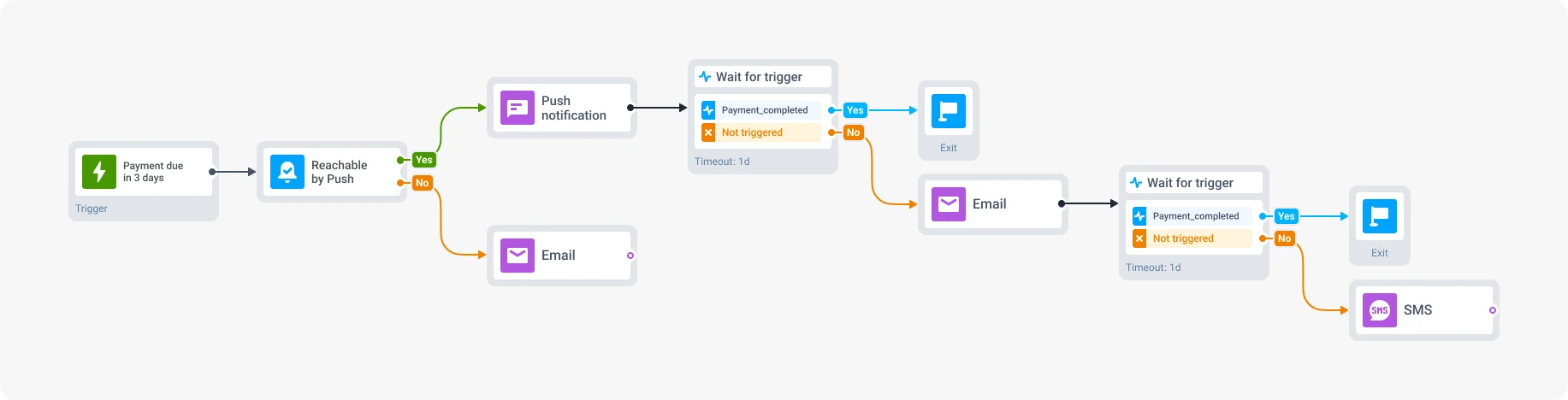
Trigger: payment_due_in_3_days
एक custom event fire होता है जब user की payment date 3 दिन दूर हो।
-
Reachability check → Push notification
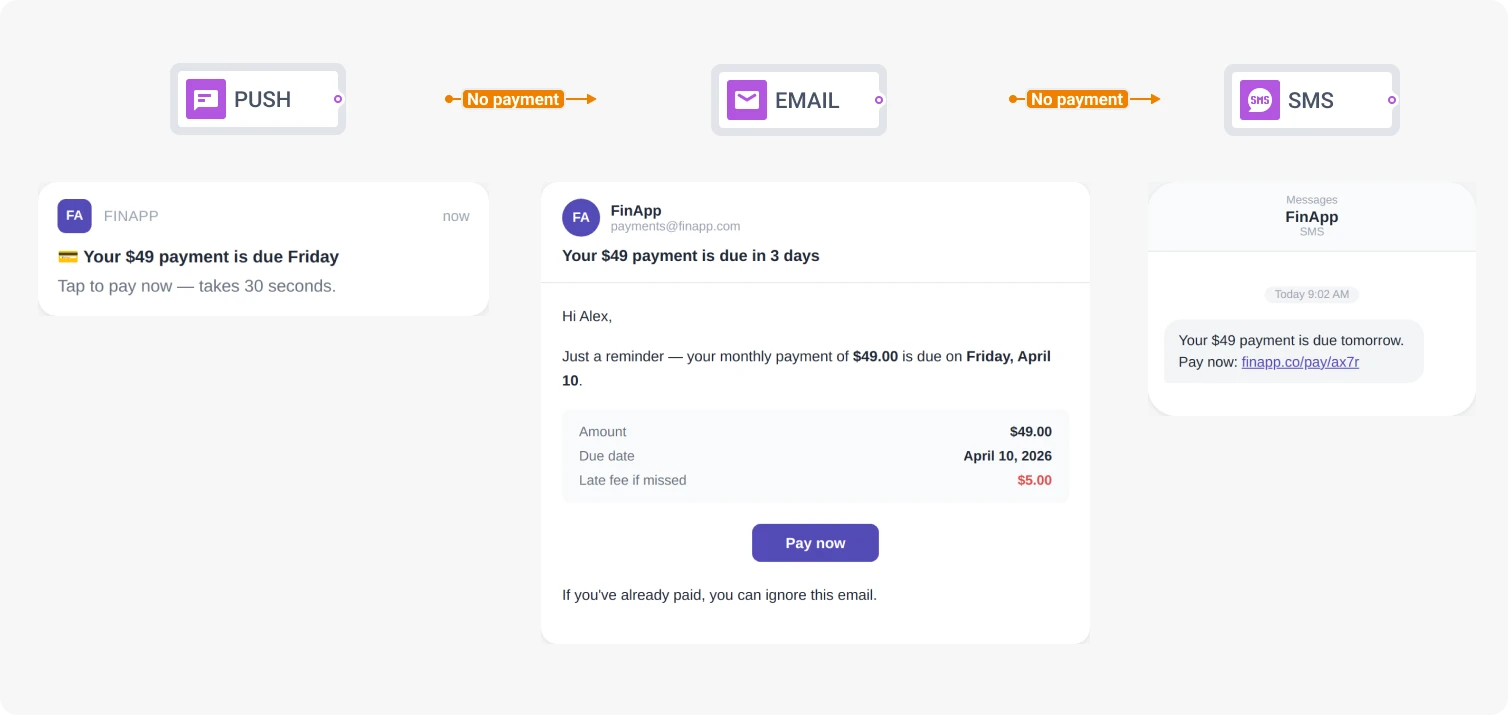
Check करो कि user push notification से reachable है या नहीं। अगर हां — push भेजो: "आपकी ₹2,499 EMI शुक्रवार को due है। अभी pay करें।" Short, actionable, एक tap में resolve।
-
24 घंटे wait → Goal check
क्या user ने payment complete कर ली? अगर हां — journey से exit। Done। और कोई messages नहीं। अगर नहीं — continue करो।
-
Details के साथ email
Full breakdown के साथ email भेजो — amount, due date, miss करने पर क्या होगा, और direct pay link। Email में वो details होती हैं जो push notification carry नहीं कर सकता।
-
24 घंटे wait → Goal check
Payment complete? Exit। अभी भी outstanding? एक और step बाकी है।
-
SMS — last resort
Due date से एक दिन पहले, SMS fire होता है। लेकिन सिर्फ उन users के लिए जिन्होंने: (a) push या email का response नहीं दिया, या (b) उन channels पर reachable ही नहीं थे। Message: "₹2,499 EMI कल due है। अभी pay करें: [deep link]"
Result: ज़्यादातर users Step 1 या Step 3 के बाद pay कर देते हैं। SMS audience के एक fraction को जाता है — वो users जिन्हें genuinely इसकी ज़रूरत है। आपका SMS bill drop होता है, reach same रहती है, और कोई भी एक ही payment के बारे में तीन messages नहीं पाता।
Same logic, अलग-अलग app scenarios
ऊपर का payment flow एक pattern है। Underlying logic — सस्ते से शुरू करो, purpose के साथ escalate करो — अलग-अलग use cases में adapt होती है:
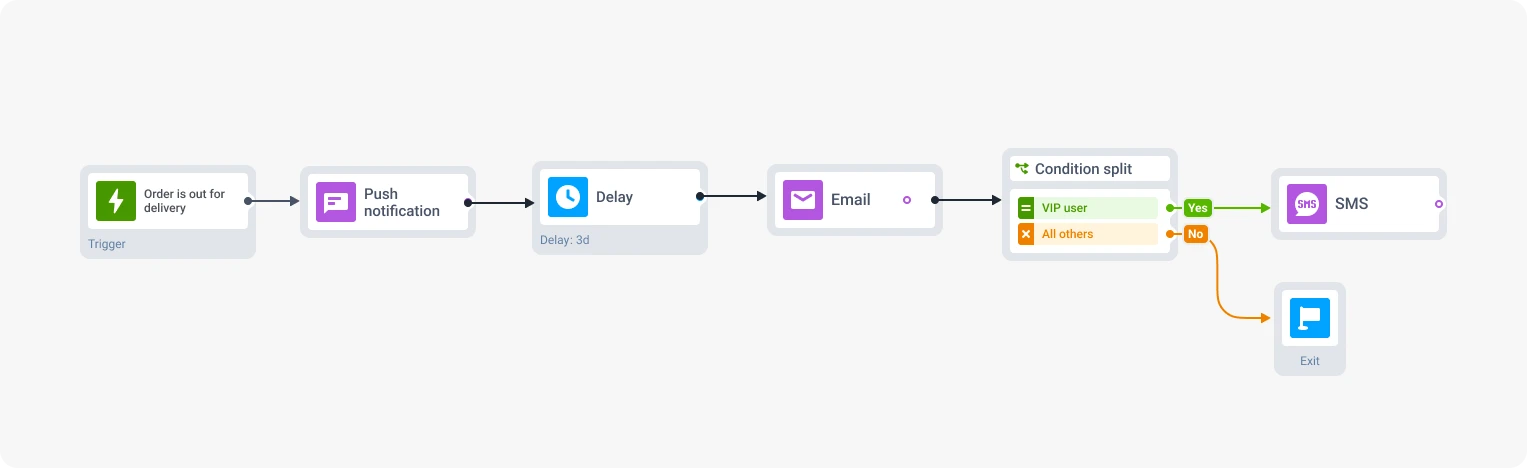
Subscription renewal (OTT, streaming apps). Expiration से 7 दिन पहले push reminder। 3 दिन पहले plan comparison के साथ email। Expiration day पर SMS — लेकिन सिर्फ high-CLV subscribers के लिए जिनकी annual value text की cost justify करे। Hotstar, JioCinema जैसे apps में यह pattern directly applicable है।
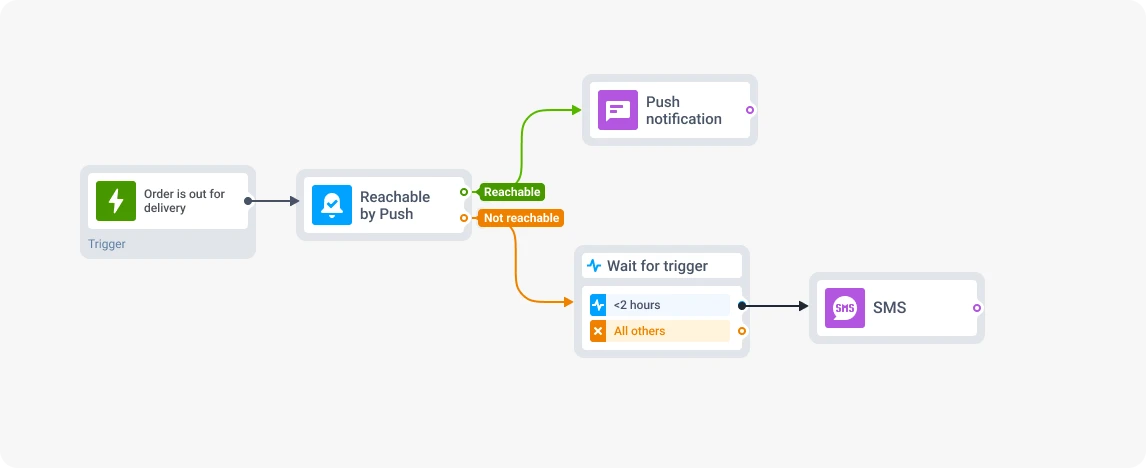
Delivery updates (e-commerce, delivery apps). “आपका order delivery के लिए निकल चुका है” के लिए push notification default है। SMS सिर्फ तब kick in होता है जब user push से unreachable हो AND delivery window 2 घंटे से कम हो। Flipkart, Meesho, Swiggy जैसे high-volume delivery apps में यह routing pattern लाखों SMS बचा सकता है।
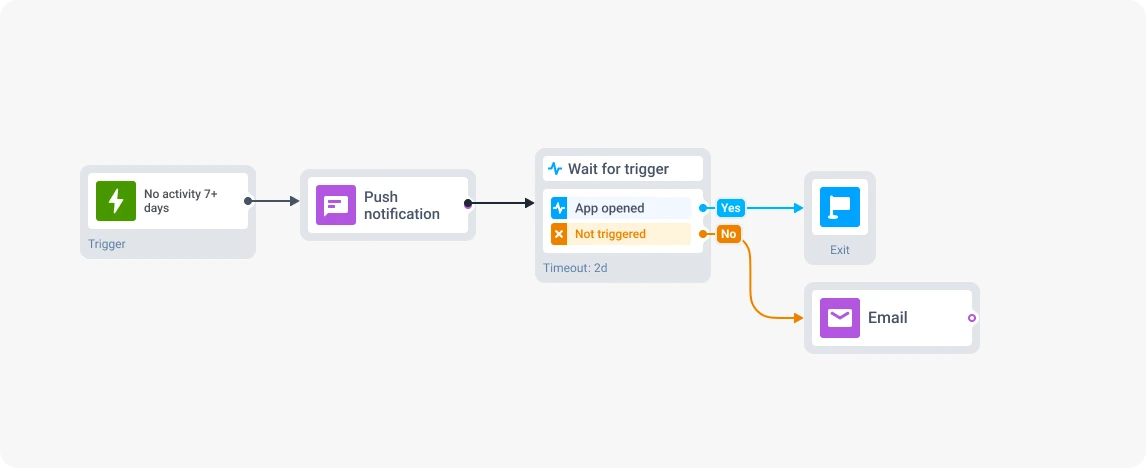
Lapsed user win-back (gaming). Personalized offer के साथ push notification। कुछ दिन बाद email follow-up। और यहां key point: SMS बिल्कुल नहीं। ज़्यादातर gaming apps में lapsed player को text करने का ROI cost justify नहीं करता। SMS skip करना भी एक valid routing decision है — और अक्सर सबसे smart।
Point यह नहीं कि हमेशा end में SMS include करो। Point यह है कि एक ऐसा system build करो जो — per user, per scenario — decide करे कि SMS अपनी जगह earn करता है या नहीं।
Channels में consistency बनाए रखो, overwhelm किए बिना
Channel routing cost problem solve करता है। लेकिन coordination के बिना, एक अलग problem create होता है: users messages से overwhelm हो जाते हैं।
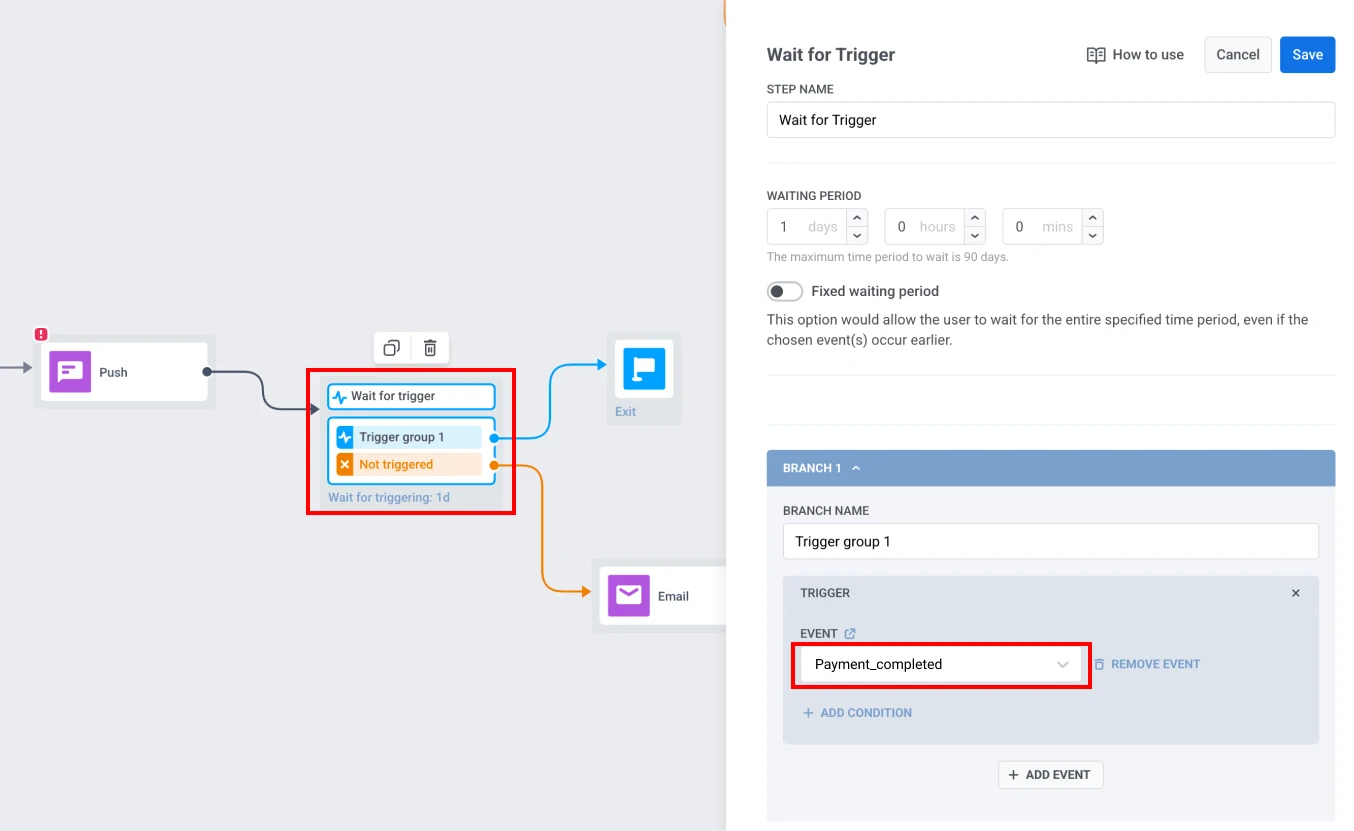
Sequential flow में, Wait for trigger element यह naturally handle करता है — यह target event (जैसे payment_completed) listen करता है और जैसे ही fire होता है, user को exit कर देता है। कोई trigger नहीं? Flow next channel पर move करता है। User को कभी push notification + email + SMS एक ही payment के बारे में नहीं मिलता। हर channel सिर्फ वहां से pick up करता है जहां previous वाला छोड़ता है।
जब message किसी different channel पर जाता है, content को format के हिसाब से adapt करो। Push notification short और actionable। Email details carry करे। SMS stripped to essentials + link।
Cost-per-conversion measure करो, open rates नहीं
Open rates बताते हैं कि message देखा गया या नहीं। यह नहीं बताते कि भेजने लायक था या नहीं।
Channel routing के लिए सबसे important metric है goal completion per branch: journey में हर step के बाद कितने users ने target action (payment, renewal, purchase) complete किया। जब आप देखो कि 70% conversions push notification के बाद होती हैं और 20% email के बाद, तो आपको exactly पता है कि SMS branch किस चीज़ के लिए responsible है — और उसकी cost क्या है।
यहां cost-per-conversion आता है। अगर SMS branch 10% users को convert करती है जो उस तक पहुंचते हैं, और हर SMS की cost ₹1–2 है, तो SMS से ₹10–20 per conversion बनता है।
Push, अपनी near-zero cost और 70% conversions share के साथ, effectively ₹0 पर deliver करता है।
यह math SMS-as-escalation का case खुद बना देता है — और आपको budget review में लाने के लिए hard numbers देता है।
Pushwoosh में Journey analytics यह step by step दिखाता है, canvas पर ही — ताकि आप exactly trace कर सकें कि conversions कहां होती हैं और कौन सी branches अपनी cost cover करती हैं।
Smart omnichannel routing build करो। Savings देखो।
इस article के हर flow में same building blocks use हुए हैं — Reachability check, Wait for trigger, channel elements, और time delays — सब Pushwoosh Customer Journey Builder में available हैं। कोई custom code नहीं, कोई external channel orchestration नहीं।
वो flow choose करो जो आपके highest-volume SMS use case से match करे। Push notification और email को first tiers के रूप में rebuild करो। SMS को handle करने दो जो सिर्फ SMS handle कर सकता है। फिर numbers check करो।