
In August 2022, Android launched the 13th version of its operating system, introducing a significant change: apps are now required to obtain user permission before sending push notifications. Previously, users were automatically subscribed to push notifications, and if they didn’t want to receive them, they had to opt out manually. Now, users can choose which apps they wish to receive notifications from.
Pushwoosh analyzed data from over 16 million devices worldwide, including app categories ranging from finance to hyper-casual games. The data covers the two years following the release of Android 13.
Let’s take a closer look at our research findings to understand how the Android 13 release impacted opt-in rates and user engagement.
Opt-in: Gaming apps faced the biggest decline
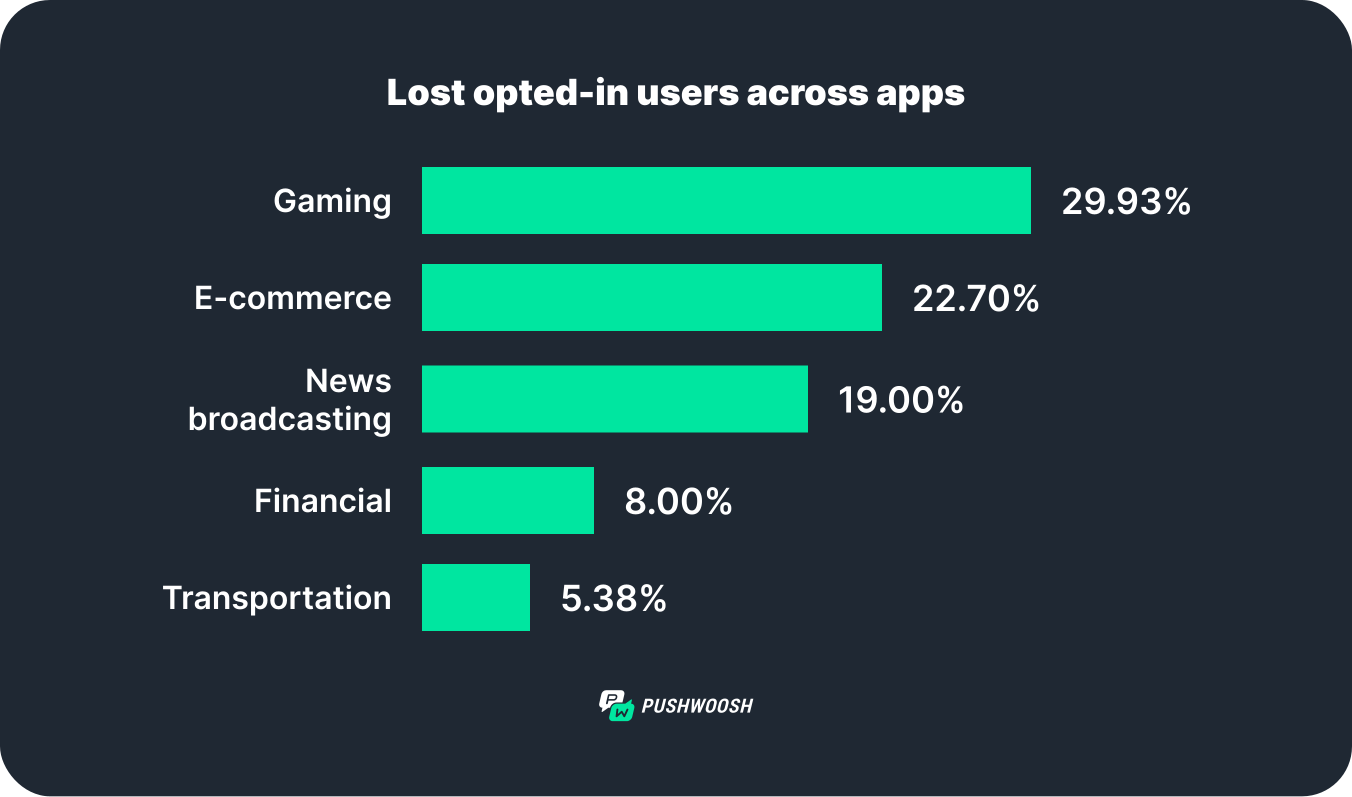
Gaming apps have lost nearly a third of their opted-in users. In contrast, financial and transportation apps (carsharing, delivery, etc.) experienced the least loss, which can be attributed to the urgent and important information they send to users.
News broadcasting apps saw a 19% drop in push subscribers. Interestingly, sports news apps dedicated to specific sports or teams did not experience any decline at all. In this case, the content tailored to users’ interests made a difference.
These insights offer practical takeaways for any app category: the more relevant your push notifications are, the more likely users will remain subscribed. Do you collect data about your users, understand their preferences, and personalize your push strategy? If not, it’s time to start! Doing so will help you get through mobile platform updates with minimal losses.
A silver lining for gaming apps
Despite gaming apps losing the most push notification subscribers, positive trends remain.
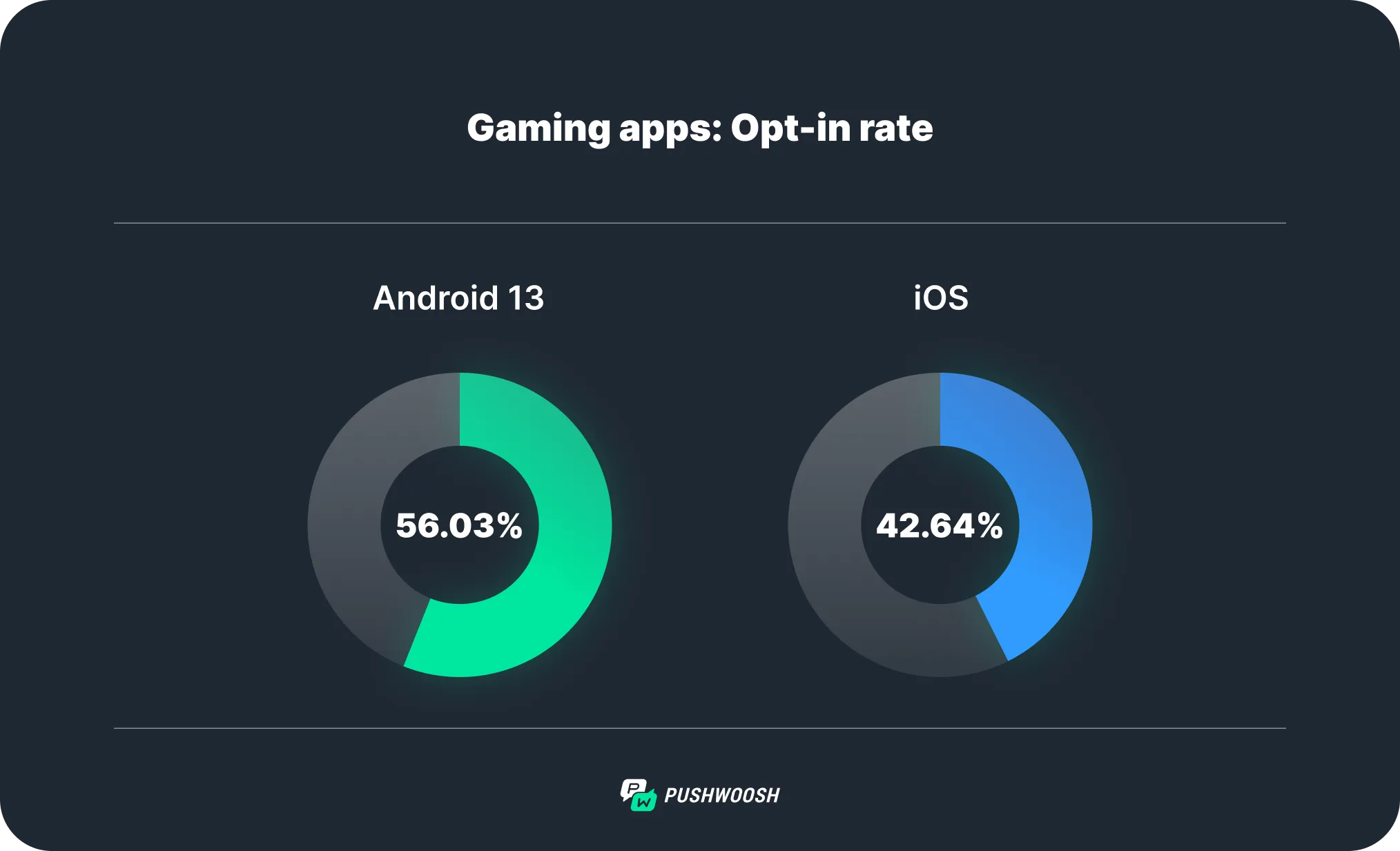
Firstly, mobile games have a higher opt-in rate on Android 13 than on iOS. As you will see below, this applies to all app categories in our research:
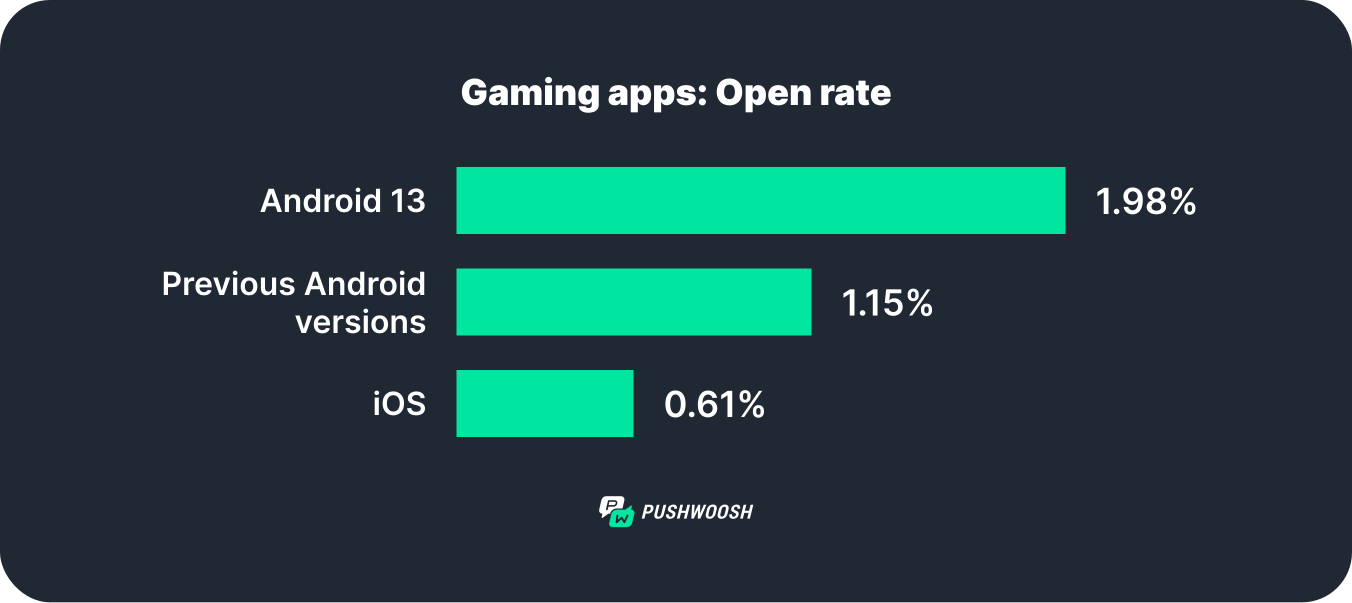
Secondly, gaming apps show a higher push notification open rate on Android 13 compared to previous Android versions and iOS overall:
💡Learn further: Best mobile messaging practices proved by 410 successful gaming apps in Pushwoosh’s Growth Guide for Game Apps.
Opt-in rate across apps: Android 13 surpasses iOS
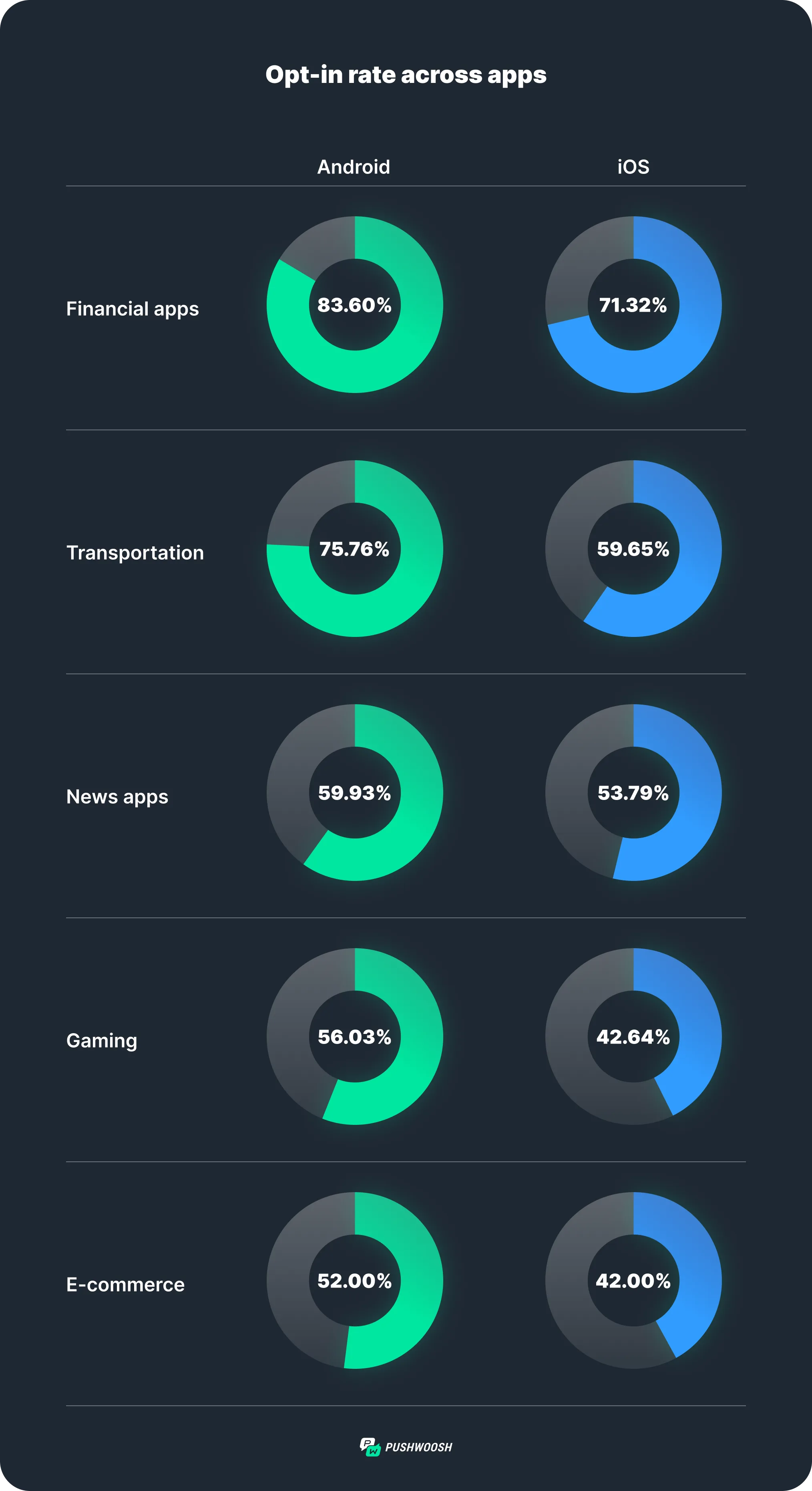
These are the highlights from the opt-in rate analysis:
- For all app categories included in the study, the opt-in rate on Android 13 is higher than the average across iOS versions.
- Financial and transportation apps dominate with the most subscribers on both platforms.
- The biggest gap in subscribers between Android 13 and iOS is in transportation apps.
Open rate across apps: Users are more engaged on iOS, but only in e-commerce
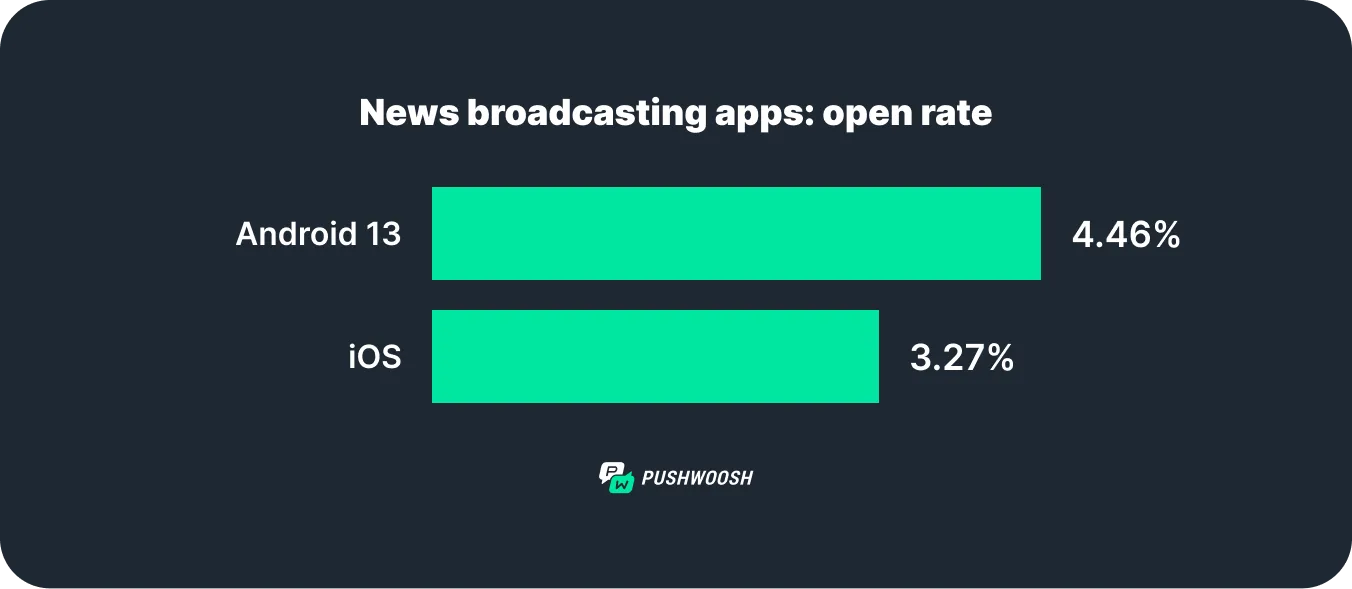
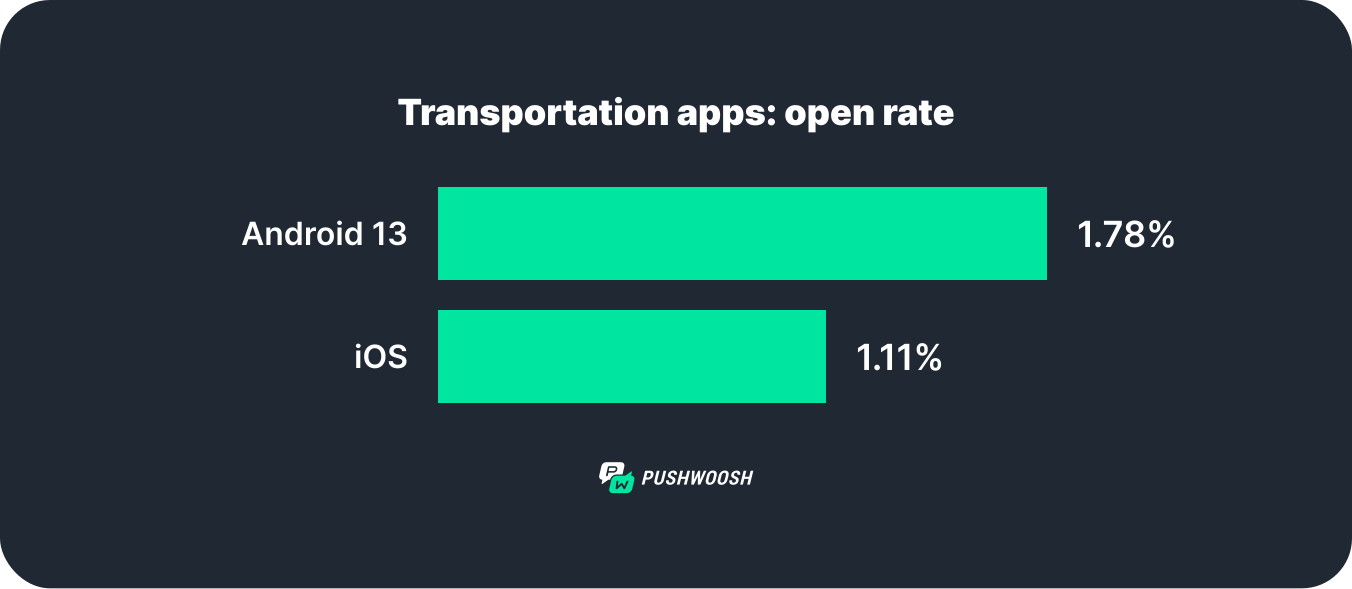
In almost every app category, push open rates are higher on Android 13 compared to iOS. Here are the stats for news broadcasting and transportation apps to illustrate this observation:
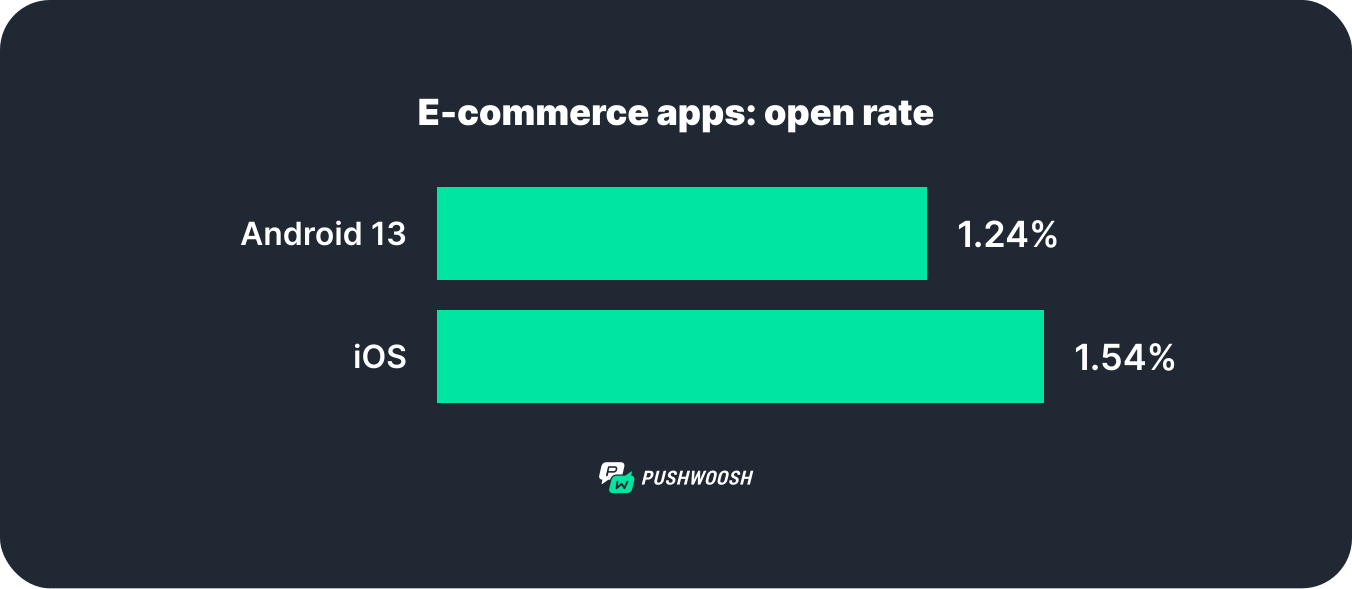
The exception to this trend is e-commerce apps, where iOS users are more willing to engage with push notifications compared to Android 13 users:
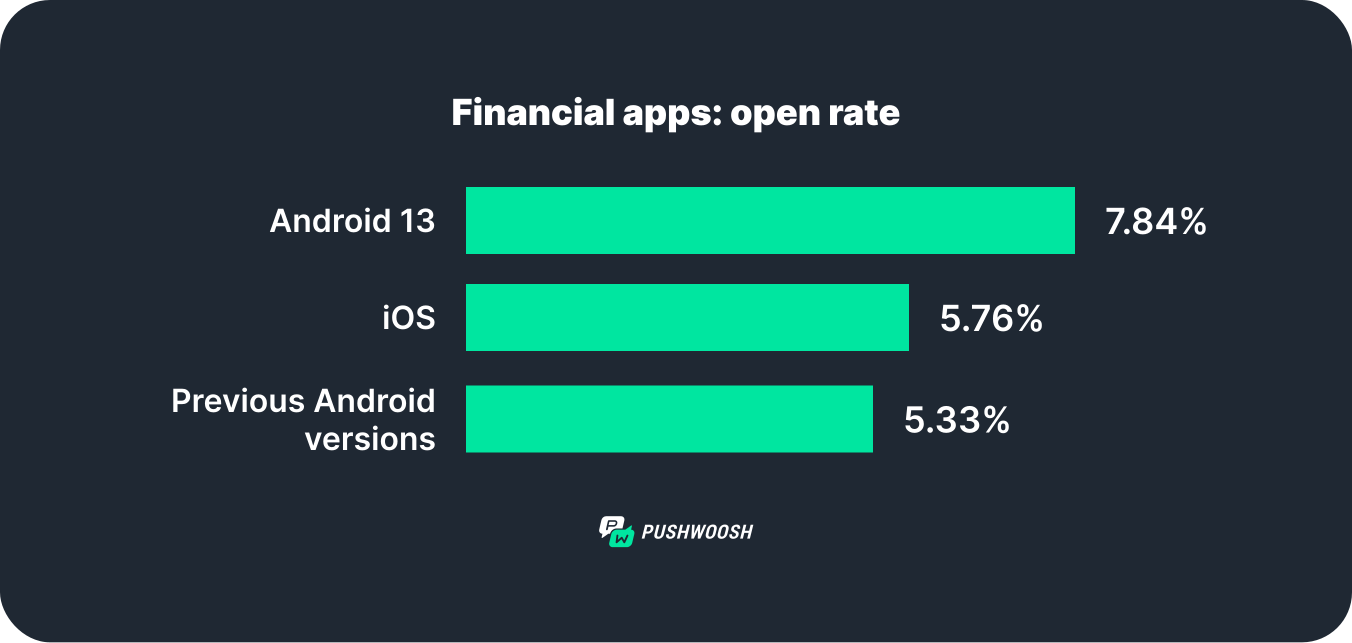
In financial apps, similar to what we previously showed for gaming, the open rate on Android 13 exceeds not only iOS but also the previous version of Android:
💡Financial apps also showed the highest CTR for Android 13 among all app categories, reaching 8.8%. Overall, the CTR across all apps increased by 1.5% compared to previous Android versions.
Strengthen user engagement even in the face of mobile platform updates
The changes in user behavior resulting from the new opt-in rules on Android 13 demonstrate that even with subscriber losses, engagement can still be strengthened. To navigate these changes effectively, it’s important to improve the relevance of push notifications and communicate their value to users. This can be achieved through personalization tactics implemented in push notification campaigns.
Discover how Pushwoosh clients have implemented these tactics and improved their success metrics: