Choosing a solution for your business is nothing like selecting a household item. It’s not an emotional decision, yet it’s all too easy to be swayed by the enticing promises on landing pages or during personal demos. After the fact, you might find yourself wondering: Did I even need all those expensive extra features I was sold?
To help you make a wise and informed choice, the Pushwoosh team has created a comprehensive checklist outlining the essential criteria your ideal customer engagement solution should meet.
What are you looking for in a customer engagement platform?
Let’s take it from the top. When you set out to increase customer engagement, which metrics do you pursue? Depending on your answer, different kinds of platforms may suit you.
At Pushwoosh, we help our customers achieve higher engagement with their audiences across mobile and web channels. To this end, we enable tracking app users’ behavior, processing their attributes, and applying segmentation filters.
By working with this kind of online data, Pushwoosh customers deliver more relevant messaging. As a result, companies see improved engagement and increased conversions to target actions.
By working with this kind of online data, Pushwoosh customers achieve higher relevance in their messaging. Consequently, companies see improved engagement and increased conversions to target actions.
Are these your current goals, too? Keep reading to learn the criteria that define a great customer engagement platform. Use our checklist to make a smart choice.
Data layer: Get to the core of a customer data platform Action layer: Turn data into engaging messages Analytics & Prediction layer: Base your next steps on historical data
- Data layer: Get to the core of a customer data platform
At the core of any customer engagement platform, there is a technical system capable of collecting and processing customer data.
The specifics of this data can vary: it might be sourced solely from a mobile application or gathered from the web as well.
In either case, to ensure satisfaction with your choice of platform, you need to determine:
Maximum data load
What is the maximum volume of data that a platform can process?
The final figure will be a composite of the following factors:
Data retention period
For effective segmentation, you need access to sufficient customer behavior data.
1️⃣ Data on active user devices
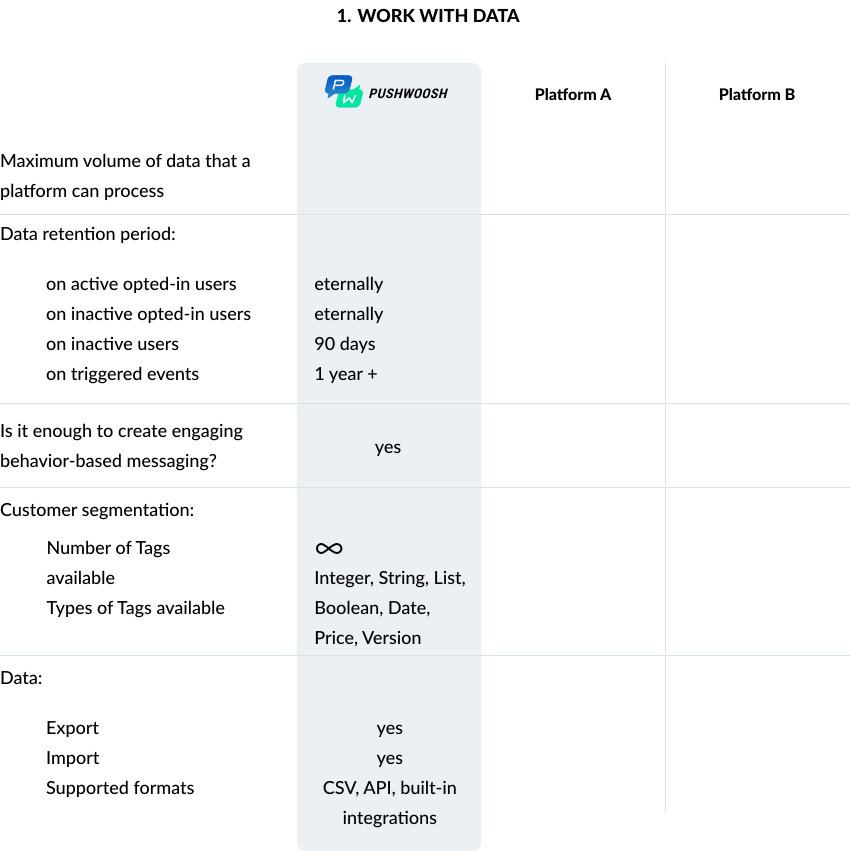
If a customer has opened your app at least once in the past 90 days, they are considered active; in Pushwoosh, data on active user devices is stored indefinitely—as long as they keep opening your app.
Most customer engagement platforms follow the same practice, retaining data on active users. But what about staying informed of inactive users? This is where customer engagement platforms may differ.
2️⃣ Data on inactive user devices
Pushwoosh stores data on inactive user devices without any time restriction if they remain opted in for your push notifications.
If users have opted out of pushes and stopped opening your app, their data is stored for 90 days by default.
This gives you a chance to re-engage inactive users before they churn permanently.
3️⃣ Data on triggered events and message interactions
Most often, you’ll target customers who have performed specific actions within the last 30 days. Access to behavioral data for this period keeps your communications timely and relevant.
In fact, 30 days is the bare minimum for a customer engagement platform to even make it to your shortlist.
🌟Pushwoosh goes beyond this baseline, offering **event and message history storage** for up to **1 year** for all customers, with the option to extend the retention period for an additional cost—potentially even unlimited.
With access to a full year of event data, you can build more insightful segments, generate comprehensive dashboards, and export valuable reports.
This extended data retention provides deeper insights into customer behavior, enabling more informed decisions and precise targeting—on par with the capabilities of advanced customer data platforms.
The questions to ask yourself:
- How long does the customer engagement platform of your choice retain user behavior data?
- Will this data retention period be sufficient for your team to make informed decisions and send effective communications?
Customer segmentation capacity: Tags better be unlimited
Find out if a customer engagement platform you’re considering sets any limits on the number of Tags you can use.
It is also important to know if there are any types of Tags your future platform does not support.
For example, Pushwoosh allows its Custom plan customers to create List Tags—something other vendors don’t necessarily provide. This kind of Tag is a must for granular attribute-based segmentation, and even at the basic level, you’ll find it useful.
The question to ask yourself:
- Does the customer engagement platform you lean toward provide enough Tags and support the types of Tags you need for customer segmentation?
Data import and export
A robust customer engagement platform should offer flexible options to import and export data in various formats. This is essential for businesses that rely on a best-of-breed approach, integrating multiple tools to manage customer engagement effectively.
When evaluating a platform, consider whether it supports the following data management capabilities:
- SDK integration for collecting information about mobile and web push subscribers;
- The ability to pass real-time data via API for transactional and personalized triggered messaging;
- Bulk data uploads through CSV import for efficient management of email and SMS contact lists;
- Seamless data exchange with integrated partners or the option to request custom integrations for non-standard data sources;
- Data export via API and webhooksto update external systems like CRMs or synchronize data across your tech stack.
These features (all supported by Pushwoosh) ensure that your platform can seamlessly ingest, process, and distribute data across your organization. This fosters more efficient workflows, delivers accurate customer insights, and supports cohesive communication strategies across multiple channels.
The question to ask yourself:
- Does the customer engagement platform you’re considering support seamless data import and export across all relevant formats and integrations?
The cost you’ll pay for the needed capacity
A budget holder should know in advance how much the company will pay to use a customer engagement platform. However, not all vendors provide complete pricing details upfront.
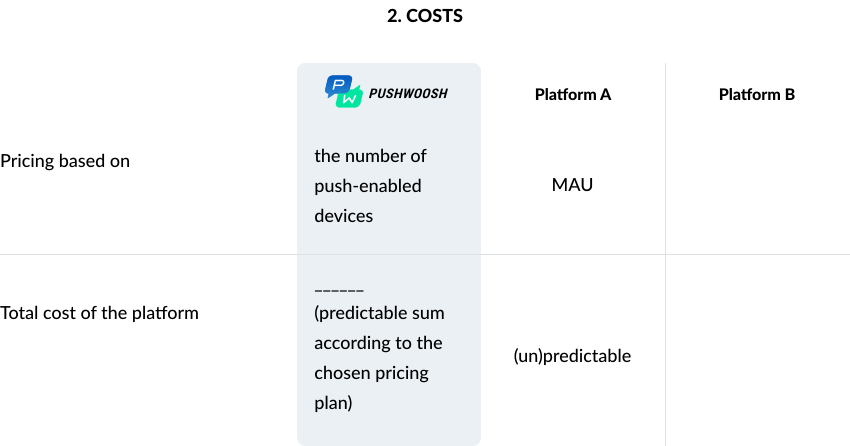
Some platforms charge based on the number of MAU (monthly active users). If it soars, the desired growth may backfire with unplanned costs.
Other vendors use more intricate pricing models based on data points. Here’s how it works: every action a user takes in the app consumes a certain number of data points. Some users are naturally more active, and they may become even more engaged with UX improvements or successful user engagement campaigns. As in-app activity grows, so does the cost of using the platform. If only you could predict it…
Luckily, there’s a pricing model that leaves no room for such surprises. A customer engagement platform may charge based on the number of push-enabled devices, which typically doesn’t change overnight. This is the pricing model Pushwoosh offers—you can check out the plans on this page.
The questions to ask yourself:
- Are you aware of the total cost you’ll pay for using a customer engagement platform when you sign a contract with a vendor?
- If not, how much extra can your marketing budget cover?
Researching these core criteria at an early stage will help you choose a platform that meets your business requirements and fits into your company budget best.
- Action layer: Turn data into engaging messages
The next set of questions covers what you can do with the collected customer data — which channels the platform allows you to include in your engagement strategy and how fast, reliable, and easy its implementation will be day-to-day.
Connected channels: Mobile, web or, better yet, both
Customer engagement is heavily driven by mobile today—but it’s not limited to it. When selecting a communication technology partner, choose one that supports both mobile and web channels.
This dual-channel approach allows mobile-first businesses to gain a competitive edge in web-based engagement.
Similarly, companies without a mobile app can future-proof their strategy. Who knows—within the next 12 months, your company may finally see the value in launching a mobile app, making it essential to incorporate more channels into your marketing mix. The transition will be much smoother if you select a provider experienced in both mobile and web communications from the outset.
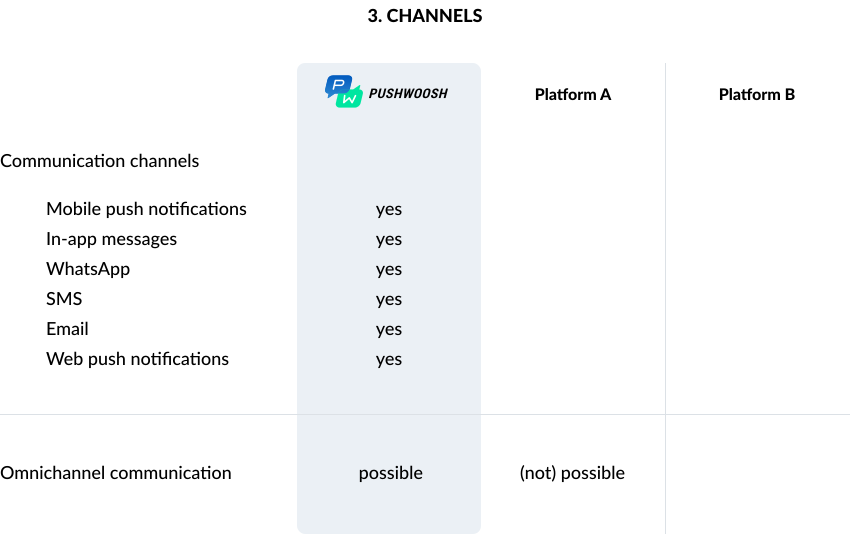
Your ideal platform should offer mobile and web push notifications, in-app messages (that you may know as “popups” or “popup banners”), emails, SMS and WhatsApp messages.
While additional channels can be advantageous, ensure they come at a cost that aligns with your budget—and confirm upfront pricing to avoid surprises later.
The question to ask yourself:
Does the platform support your must-have channels?
- Mobile
- Web
Even more of your favorite channels & tools accessible via webhooks
If you find a customer engagement platform that allows you to continue working smoothly with your favorite external services, it’s a great match.
You should be able to connect a third-party analytics platform or an SMS provider of your choice to your new communication platform. This is easiest when a vendor enables external connections via webhooks—which is how Pushwoosh facilitates it.
The questions to ask yourself:
- Can I connect my favorite third-party services to the platform?
- How much time will our development team need to spend on this?
Omnichannel communication
Engaging your customers across multiple channels is good. Keeping them in the loop with perfectly synchronized, multistep omnichannel messaging is even better.
All else being equal, opt for a customer engagement platform that allows you to follow your audience across their journey and deliver timely, relevant messages through the channels your customers are most responsive to.
The question to ask yourself:
- Does the platform enable omnichannel communication?
Deliverability of the platform
- The architecture of a customer engagement platform should enable processing millions and billions of messages daily. So, listen to what a provider communicates as their maximum number of notifications delivered. Pushwoosh, for example, delivers 1B+ messages daily, and the current safety margin is ×10, meaning the platform is capable of sending 10B pushes daily if necessary.
- Pay attention to the difference between sending a message and delivering it. Surely, it’s the latter that you expect a customer engagement platform to provide. However, not every provider is capable of delivering push notifications and emails to the gateway with an up to 99.9% guarantee, like Pushwoosh is.
The question to ask yourself:
What deliverability rate does the platform guarantee?
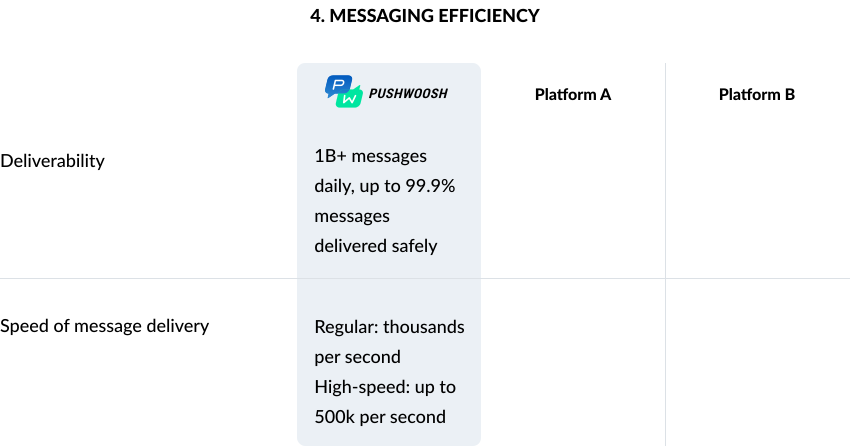
The architecture of a customer engagement platform should support processing millions or even billions of messages daily. Pay attention to the maximum number of notifications a provider claims to deliver. For example, Pushwoosh delivers over 1 billion messages daily, with a safety margin of ×10, meaning the platform can handle up to 10 billion pushes per day if necessary.
Be sure to distinguish between sending and delivering a message. It’s the latter that matters. However, not every provider can guarantee message delivery to the gateway with an up to 99.9% success rate for push notifications and 97% deliverability for emails—something Pushwoosh can offer.
The question to ask yourself:
- What deliverability rate does the platform guarantee?
Speed of message delivery
Still on the subject of deliverability, the speed of communication matters, especially in industries like media and sports.
When you need to spread the news fast, your technology provider must not fail.
Thousands and even tens of thousands of notifications per second should be considered the gold standard of delivery speed for enterprises with large audiences.
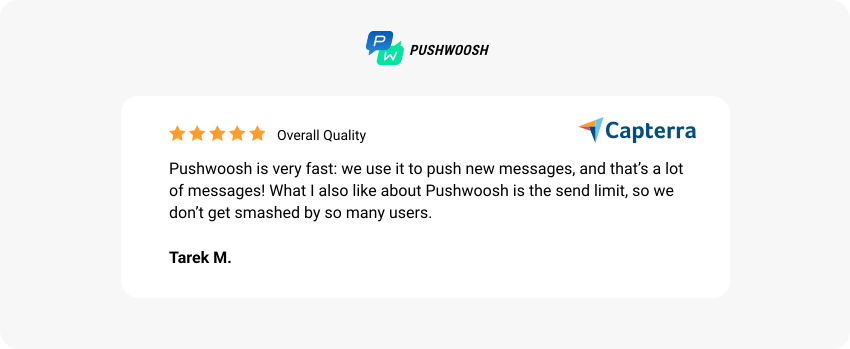
For media and sports companies, it’s even more critical—they should be able to deliver up to 500k push notifications per second. This record-breaking speed allows Pushwoosh customer ONE.co.il to lead the Hebrew-speaking sports news segment. We give more details about the high-speed technology behind this success here.
The questions to ask yourself:
How fast is the platform?
- Average speed of message delivery
- Highest possible speed
Content creation for in-app messages & emails: As easy and as elaborate as you wish
As a team that’s been working in the market for over a decade, we encourage you to choose a customer engagement platform that allows you to create, upload, and edit your message content internally.
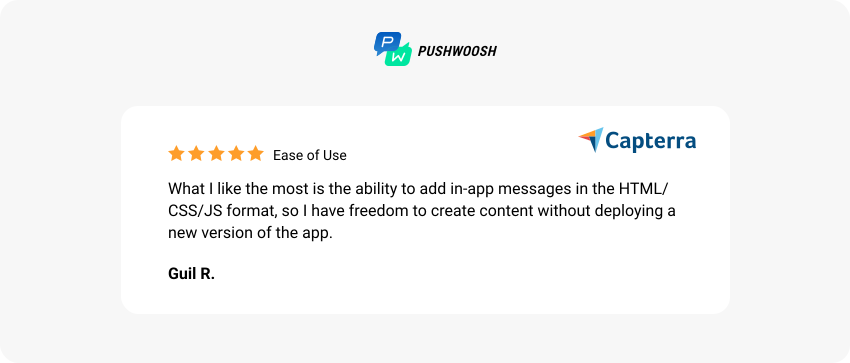
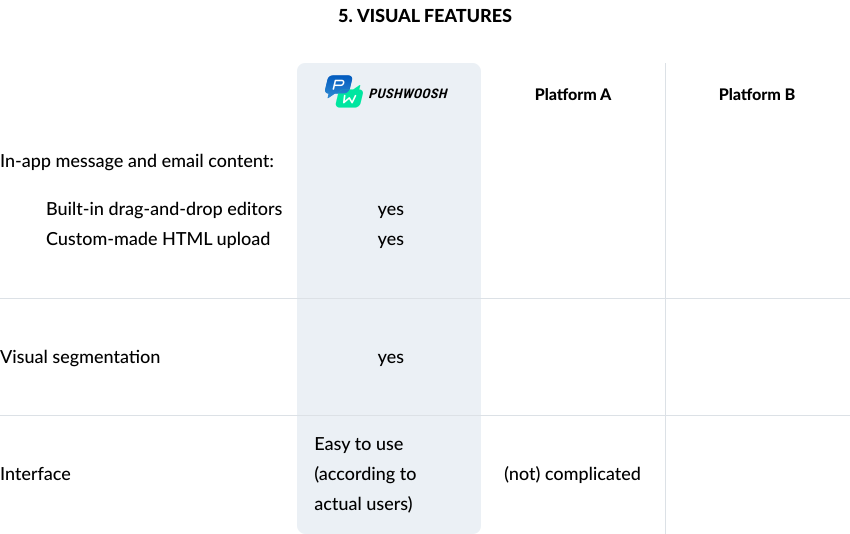
Some days, you may need to quickly assemble a message using built-in templates and a drag-and-drop editor, while other times, you might upload pre-designed assets in HTML. Pushwoosh supports both approaches, giving your team the tools they need without requiring extensive technical expertise.
Additionally, the platform securely stores all your rich media content and email templates, keeping them organized and ready for future campaigns.
The question to ask yourself:
Does the platform allow you to work with in-app messages and email content:
- Through a drag-and-drop editor for quick designs?
- By uploading custom-designed HTML files for advanced layouts?
Visual campaign builder: Segment, trigger and communicate easily
In 2025, a customer engagement platform shouldn’t just work—it should work for you. That’s why a visual flow builder is essential.
With Pushwoosh, you gain more than just a builder—you unlock a powerful toolset to simplify and optimize your campaigns:
⭐ Trigger campaigns based on user actions, segments, or API requests.
⭐ Test different scenarios with built-in A/B/n testing and multichannel communication.
⭐ Optimize for reach by automatically selecting the best channel—email, push, or WhatsApp.
⭐ Track customer progress through every stage of their lifecycle with real-time updates and data integrations.
⭐ Use unlimited events for behavioral segmentation.
⭐ Create dynamic engagement flows: Split your campaigns in real time as users interact with your communications and personalize their experiences.
All of this happens on a visual canvas, making it easy to design, execute, and refine your engagement strategies—no technical expertise required.
The question to ask yourself:
- Does the customer engagement platform look easy to use, and is it designed to help you accomplish tasks effortlessly?
- Analytics & Prediction layer: Base your next steps on historical data
Here starts the battle of human vs. artificial intelligence.
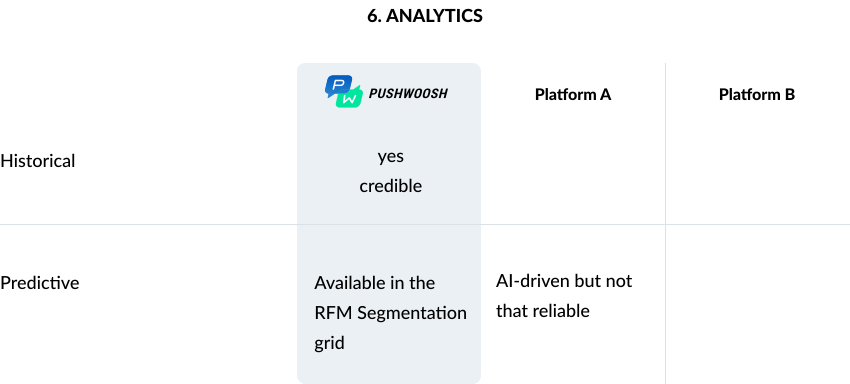
If you explore a range of customer engagement platforms, you’ll see that some of them offer predictive analytics. Their machine learning algorithms analyze users’ past behavior and try to give you hints on the best delivery time or the ways to reduce churn.
Sounds awesome — on these platforms’ documentation; in reality, though, these intelligent algorithms can be less reliable than an industry-savvy customer success manager. An experienced and dedicated professional, oftentimes, can operate more insights on your market profile and use critical analysis before convincing you that your best time to send is 3 a.m. This is a real case, by the way, when a number of customers were bombarded with push notifications in the dead of night — just because the oh-so-intelligent system recommended it as the most engaging time.
“The rise of the machines” is rare, you may say, and one-time mistakes happen to the best of us. We would agree — if it wasn’t the price you pay for such unreliability. A customer engagement platform with prediction features will always be overpriced.
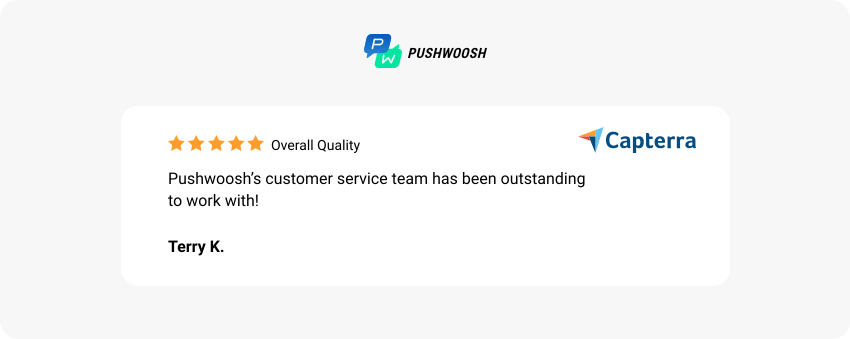
So if you find a vendor that only provides you with historical and real-time data analytics, don’t hesitate to go with their solution. Better value for money is key to higher ROI and a fruitful long-term partnership. Just study beforehand what actual users of the platform say about support and customer service.
The questions to ask yourself:
Does the platform provide comprehensive historical data analytics?
Does it make any predictions? From 1 to 10, how credible are they?
Checklist

Choose a Customer Engagement Platform Wisely
Complex tasks don’t necessarily require complex solutions. When choosing customer engagement platforms, consider the one that meets your challenge and doesn’t pose another one.
Contact the Pushwoosh team, and we’ll walk you through the criteria mentioned in this post and show you how easily and effectively your customer engagement issues may be resolved.