Most in-app purchase growth comes from better timing, sharper targeting, and smarter channel orchestration. Not from reinventing your pricing or redesigning your paywall. Yet according to industry benchmarks, only 1–2% of users who install a mobile app ever make a purchase, and most teams still respond to that number with big, slow bets.
This guide covers 8 experiments across push notification, in-app, and email. Each experiment targets a specific moment in the user journey where the right message converts attention into revenue.
👀 Catch users while they’re still looking
The first 72 hours after install are a make-or-break window: most apps lose 75% of users after Day 1. The users who do stick around are actively exploring. And that’s the moment to nudge them toward a first purchase, not wait for them to find the paywall on their own.
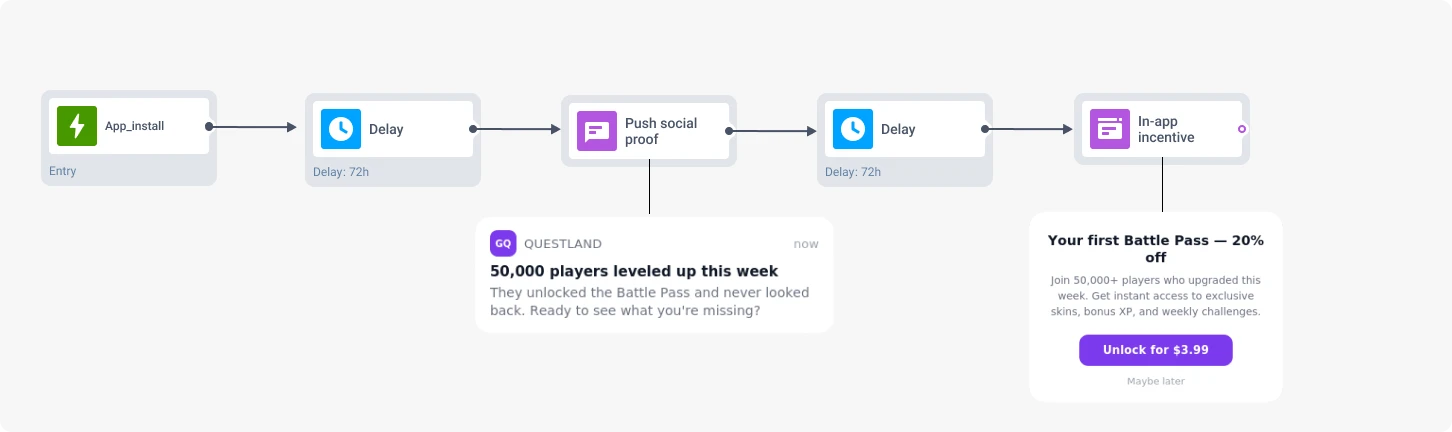
Experiment 1: Social proof push + personalized in-app offer on Day 2–3
Send a push notification with a social proof hook — “50,000 players unlocked [premium feature] this week” — and follow it with an in-app message that showcases a first-purchase incentive when the user opens the app.
Pro: Run an A/B test for the social proof copy vs. a direct discount to see which drives higher conversion.
Experiment 2: Feature-discovery in-app message triggered by behavior
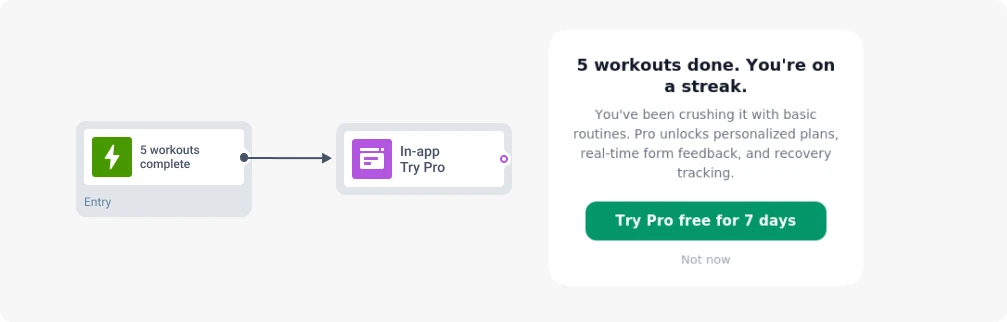
When a user interacts with a free feature that has a premium upgrade (e.g., completing 3 workouts, reading 5 articles, finishing a game level), trigger an in-app message that highlights the premium version of what they just used.
The trigger is the intent signal, so don’t show this to everyone — only to users who demonstrated interest through action.
🤑 Convert users who have already shown purchase intent
A user who opened a paywall, added something to a cart, or started a checkout is exponentially more valuable than a casual browser. Yet most mobile apps let these high-intent moments pass with zero follow-up.
Behavioral triggers paired with an omnichannel sequence recover revenue that’s already halfway through the door.
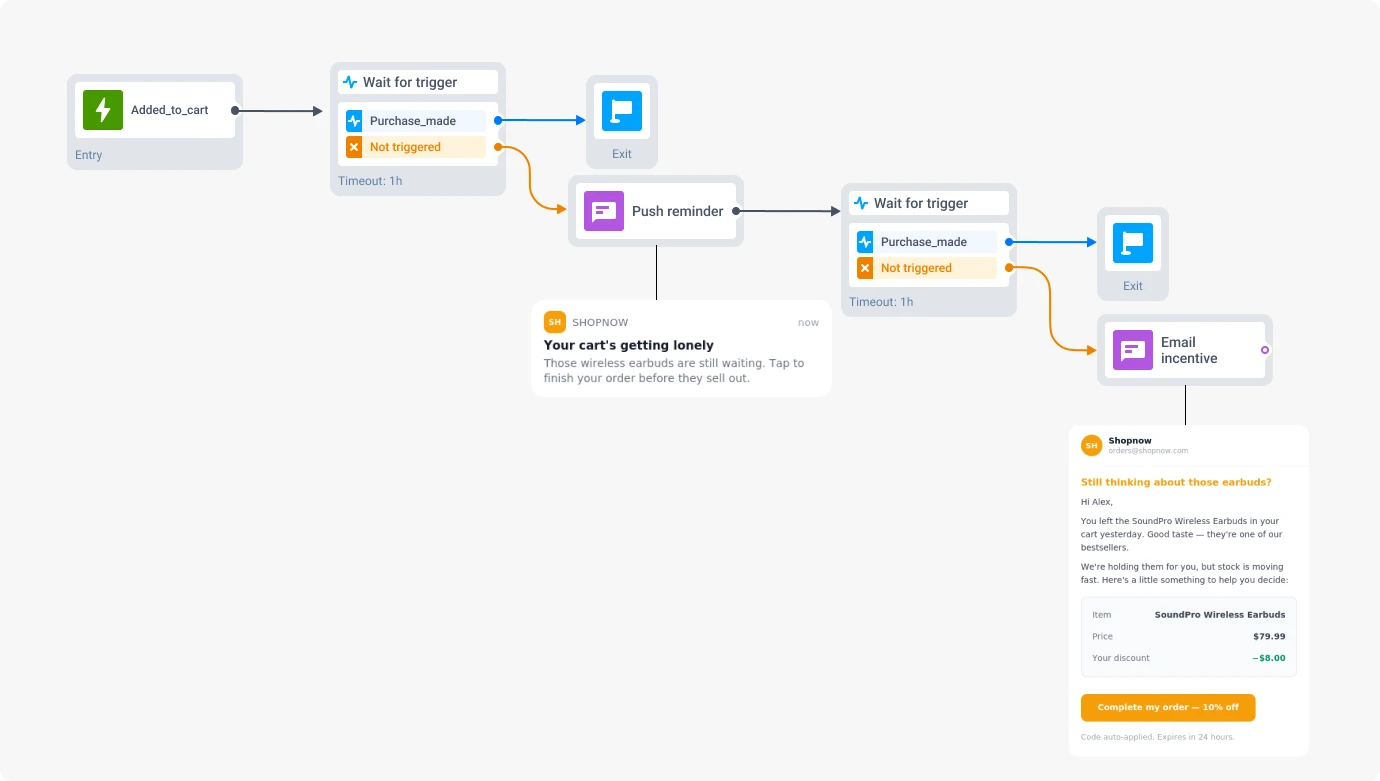
Experiment 3: Abandoned-purchase recovery sequence (push + email)
When a user views a paywall or adds an item to a cart but doesn’t complete the purchase, trigger a push notification 30–60 minutes later with a reminder. Do not offer a discount yet — include a clear CTA.
If they don’t convert within 24 hours, follow up with an email that adds urgency or a small incentive.
Experiment 4: Segment-based offer test
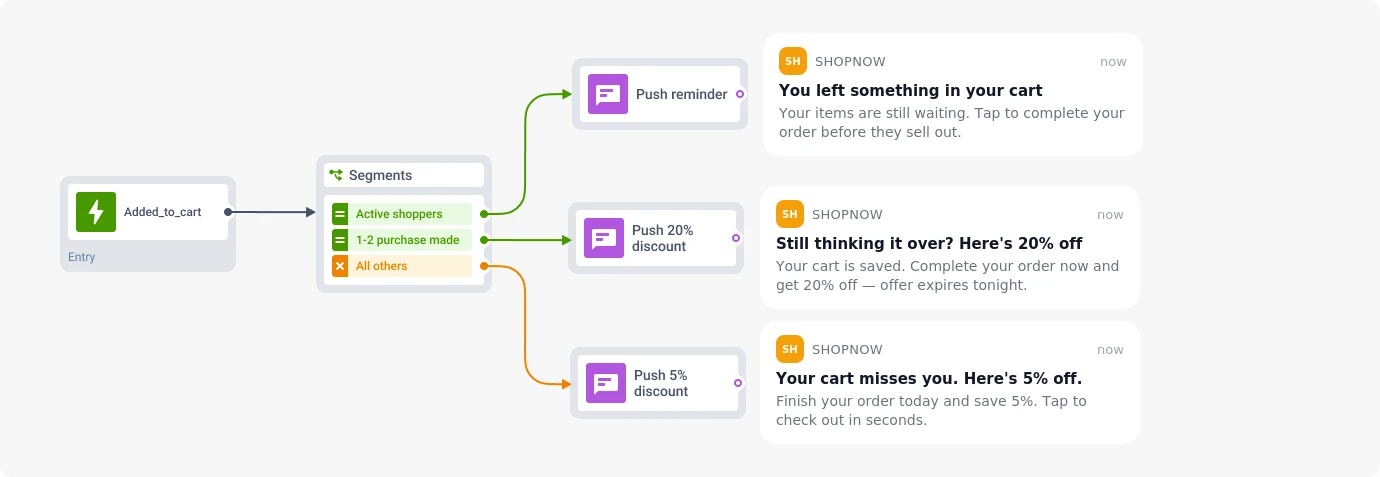
Not every user needs the same nudge. Split your high-intent audience into segments — based on engagement level, lifetime value, or purchase history. Then test different offer amounts for each segment.
Power users may convert with a simple reminder; casual users may need a 20% discount. The goal is to find the minimum effective incentive per segment and avoid discounting users who would have paid full price.
💰 + 💰 Turn one purchase into two
The moment right after a purchase is when trust and engagement peak. And most apps waste it with a generic “Thank you” screen. This is your upsell window.
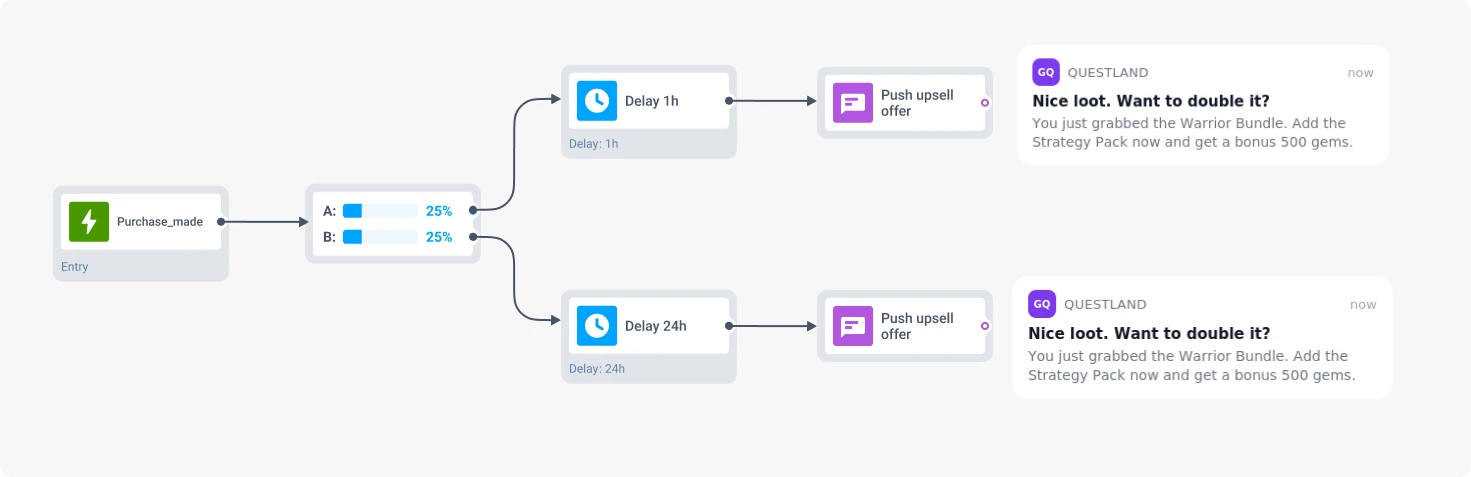
Experiment 5: Post-purchase upsell push + timing test
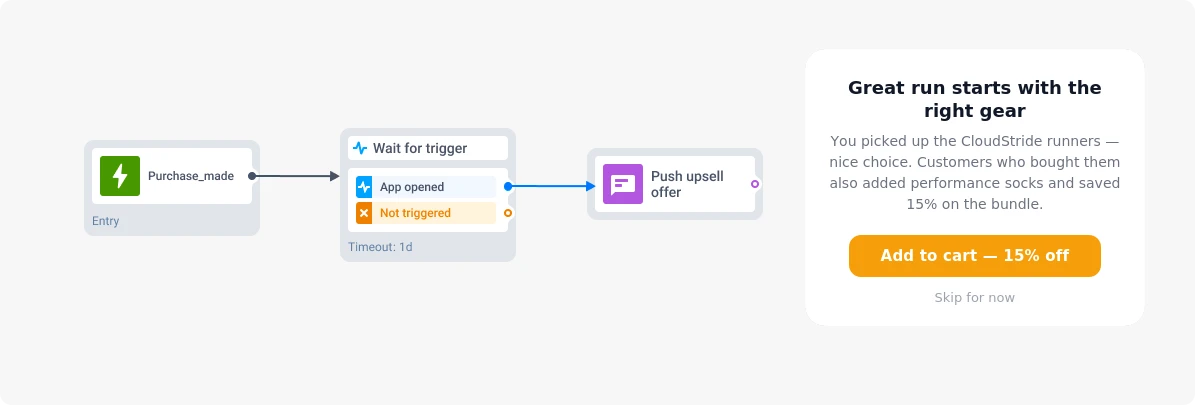
After a user completes a purchase, send a push notification with a relevant upsell offer — but A/B test the timing: 1 hour after purchase vs. 24 hours.
The product context matters: for gaming, the 1h variant often wins (the player is still in-session); for e-commerce, 24h can outperform (the buyer has received confirmation and is in a “shopping” mindset).
Experiment 6: Cross-sell in-app recommendation
When a user who recently purchased opens the app, show a personalized in-app message recommending a complementary item based on what they bought. “You unlocked the Pro Pack! Players who bought this also use the Strategy Bundle” or “You purchased running shoes! Here’s 15% off performance socks.”
💸 Win back lapsed buyers
Users who purchased before but went silent already trust your app enough to pay. They just need a reason to come back.
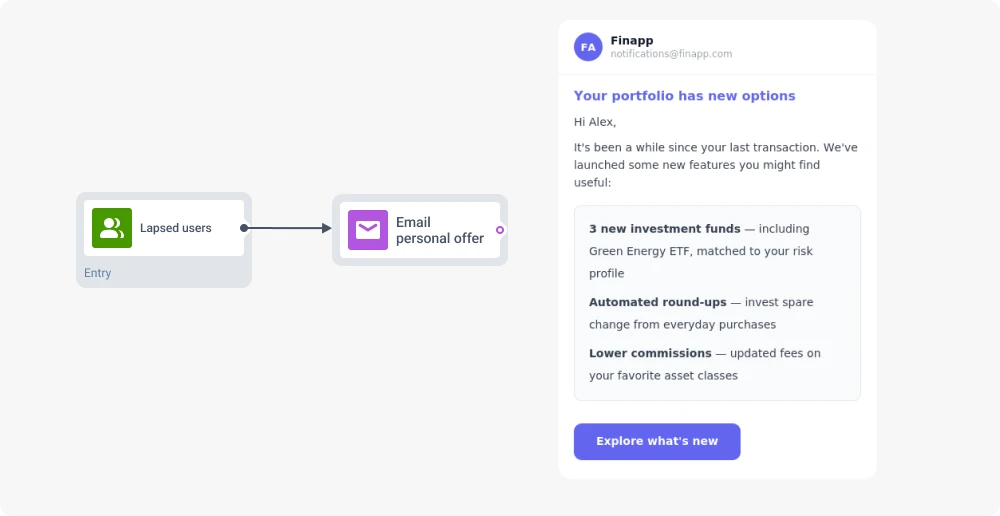
Experiment 7: Lapsed buyer email with a personal offer
Segment users who made a purchase but haven’t been active in the last 14 days. Send an email with an offer tied to their last purchase category: “New items in Strategy Games” for a mobile game buyer, “Your favorite brand just dropped new arrivals” for e-commerce.
Pro: Use Dynamic Content and Liquid templates to insert the exact category or an item the user purchased before.
Experiment 8: Push + in-app combo for dormant spenders
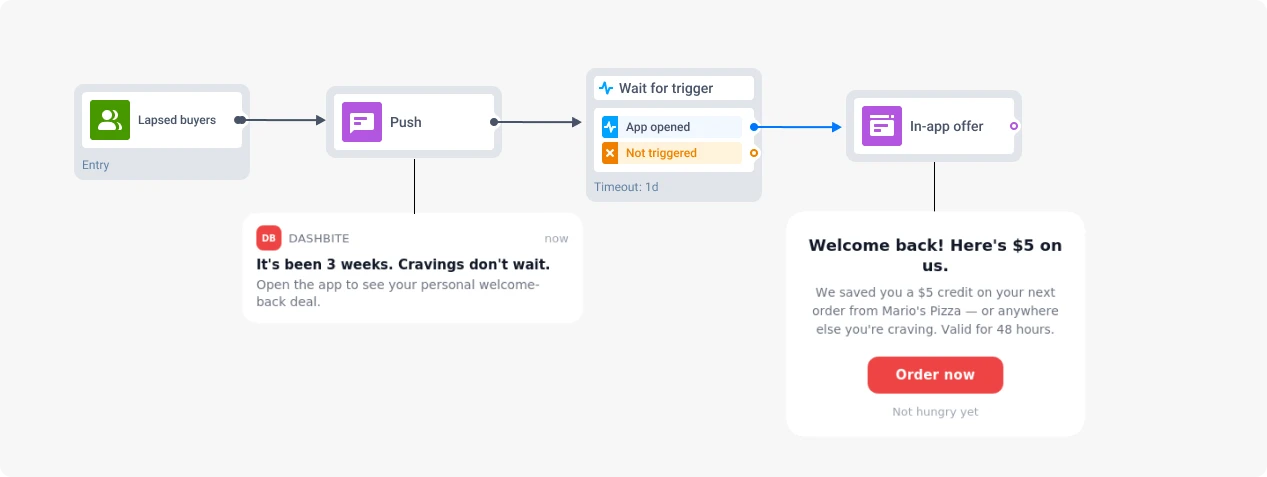
This one tests channel orchestration. Send a push notification to bring the lapsed buyer back into the app, then greet them with a personalized in-app offer the moment they open.
The push notification handles re-engagement; the in-app message improves conversion.
Increase in-app revenue with multichannel flows in Pushwoosh
Every experiment in this guide follows the same logic: find the right moment, send the right message to the right user, and scale what works into an always-on flow that converts on autopilot.