Here’s the thing most people get backwards about wallet passes. You don’t send an update. You edit the pass, and the phones come to you.
Change a points balance, a tier, an expiry date, a barcode. You change it once, on your side. Every card already sitting in a customer’s Apple Wallet or Google Wallet quietly redraws itself with the new information. Nobody reinstalls anything, nobody re-downloads a card, and in most cases nobody even gets pinged. That’s the whole trick, and the mechanism behind it is worth understanding before you build anything on top of it.
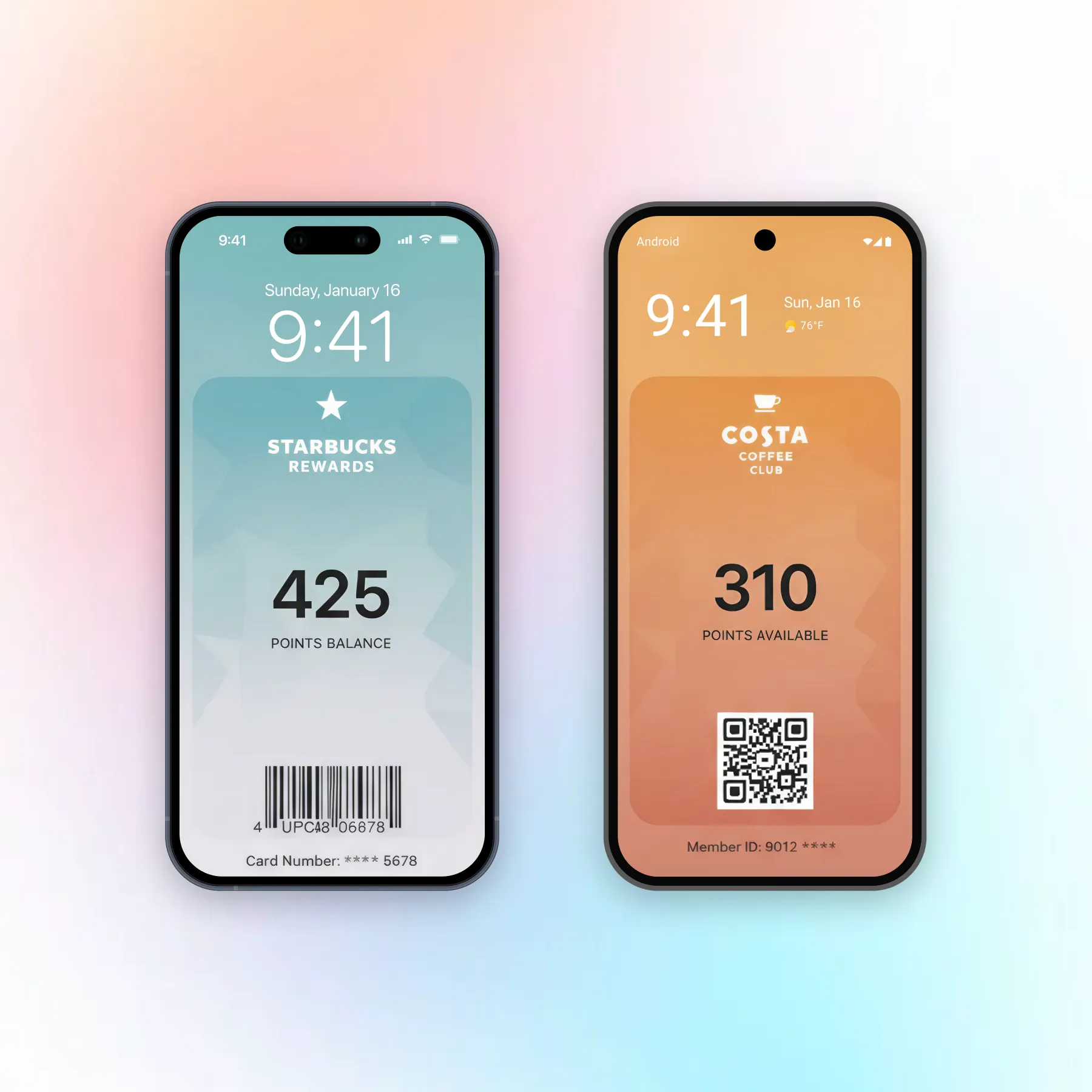
The silent push mechanism behind every update
A wallet pass isn’t a static image. It’s a small data package with a home server address baked into it, so it always knows where to check for its own latest version.
When you edit a pass, the sequence goes like this. Your pass platform sends a silent push to Apple’s or Google’s servers. Silent means exactly that: no banner, no sound, no notification the customer sees. The push simply wakes the wallet on the device and tells it one thing, that a pass it’s holding has changed.
The phone then reaches back to the pass’s home server, pulls the updated file, and swaps it in. The customer opens their wallet later and the card is just… correct. They never saw the handshake that made it correct.
Apple and Google differ in the plumbing, but the shape is the same. Apple uses the PassKit web service and APNs for the silent push; Google uses its Wallet API and updates the object server-side, which then propagates to the device. Either way, you touch one record and the update fans out to every phone holding that pass.
What triggers an update on the customer’s phone
Not every change has to come from you tapping a button. Some updates fire on data, some on context. The common ones:
Points or tier change
A customer earns points, crosses a threshold, moves from Silver to Gold. Your loyalty logic updates their record, the pass reflects the new balance or tier, and the silent push carries it to their phone. No email saying “congratulations, you’re Gold now” required, though you can still send one if you want the moment to land.
Location-based relevance
This one isn’t a data edit at all. A pass can carry location coordinates, and when the phone notices the customer is near one, it surfaces the pass on the lock screen on its own. Walk near the store, the coffee card shows up. You set the location once when you issue the pass; the phone handles the rest without any push from you.
Expiration and greying out
A coupon ends. A ticket’s date passes. You push an update that marks the pass expired, and the wallet greys it out so it’s visibly done rather than silently broken. It’s a small thing that saves a support ticket, because the customer can see the offer lapsed instead of wondering why the barcode won’t scan.
What happens if the customer is offline
Time for the honest part, because this is where overpromising gets people in trouble.
If a customer’s phone is offline when you push an update, the update does not reach them in that moment. There’s no magic here. The silent push can’t wake a device that isn’t reachable.
What saves you is that the pass knows where its home server lives. The next time the phone comes online and the wallet checks in, or the next time the customer opens the pass, the device pulls the current version and catches up. So the update isn’t lost, it’s just deferred until the phone can hear about it.
The practical rule: wallet updates are reliable, but they’re not instant guarantees against a phone in airplane mode. Design for eventually-correct, not always-instant. For anything time-critical, like a flash discount that expires in an hour, pair the pass with a channel that confirms delivery rather than relying on the silent update alone.
Why this matters for marketers, not just developers
Strip away the plumbing and here’s what’s left: the card in your customer’s pocket is a live surface you control, not a printout that goes stale the moment it’s issued.
Think about what that removes. No campaign to re-issue cards after a pricing change. No “please delete the old coupon and download the new one” email that half your list ignores. No notification blast every time a balance ticks up, which is exactly the kind of noise that trains people to mute you. You edit the source, the pockets update, and you’ve spent none of your customers’ patience doing it.
That’s the difference between a wallet pass and a static asset. One is a channel. The other is a PDF.
Manually notifying every cardholder about a price or points change doesn’t scale. Pushwoosh pushes the update silently, no app required and no notification fatigue. See how it works with Wallet Passes.