The boom of fintech & banking has made a broad range of products available to customers at their fingertips. An opportunity, on the one hand; a challenge, on the other, as ensuring adoption and positive ROI from these products might be quite a brain teaser. Would you use a hint? App messaging will be your answer! Read this post to get ideas for increasing the usage of your core and innovative fintech & banking products. Standalone tactics and more fundamental marketing strategies await you below.
Increase the number of basic transactions
You know the essential tasks that your app facilitates doing: sending money transfers, making online payments or expense entries. A larger number of these transactions can make for greater revenue for your business, so you want to promote them with your app messaging.
Channel to use: Send push notifications to encourage customers to accomplish these simple tasks with the help of your app, for example:

Example of a push notification from a bank app

Generic example of a push notification from a personal finance app. Copy generated with Pushwoosh AI Composer
Trigger to start messaging: Opt for broadcast messaging (no specific targeting needed) or perform regular checks: wait for the user to accomplish the required transaction on their own, and if they don’t, send your push reminder. Repeat daily/weekly/on a schedule of your choice.
Personalize your offers to user behavior
Perhaps one of the most challenging aspects of promoting new fintech products is how to stand out from the crowd while communicating differentiators of your product to your customer.
You should ensure that the products promoted are innovative yet accessible, revolutionary yet safe, and most of all, you should ensure they can deliver real value to your customer.

To serve a truly valuable marketing offer to each of your banking app users, start by gaining insight into their preferences and patterns. For this, track your audience’s in-app behavior and reactions to your communications.
Then, set a dedicated flow in Pushwoosh or share such triggered-event data with our platform and follow up with relevant messaging.
Trigger to start messaging or **Segment to target: ‘**Have used a specific product/feature’, ‘Have used it more than N times’ or ‘Have not used the product/feature’ — depending on your subsequent offer.
For example, it’s most reasonable to send a new cashback offer specifically to those who have enabled the cashback option in their account in the first place.

Channels to use: Push notifications + in-app messages. With this format, you can deliver new marketing offers at the best moments to catch your fintech app users’ attention: when they’ve just opened your app, viewed a relevant product screen or clicked on a push.
Message: Refer to the user’s experience: if you know they do money transfers from time to time, mention the newly-added benefits (like no-fee transfers).
Or, if a user has paid for their groceries with your bank card, suggest they enable cashback and enjoy going to the supermarket a bit more the next time.
😇 Either way, remember what kind of zero- and first-party data your customer has shared with you and stay safe, secure, and non-creepy when personalizing your messages.
Spread the news that encourages to take action
Sometimes, the news is the offer: when a central bank announces new saving rates or a particular cryptocurrency increases, you might see a natural spike in interest in your related products and services. All you need to do is push your audience gently.
Trigger to start messaging or Segment to target: You may opt for broadcast messaging or tailor your offer to those who have previously used/viewed similar products.
For example, news on the deposit interests might be to the liking of those who have checked out your savings accounts section:

And when communicating a positive crypto trend, you may do a test: will it be more exciting for someone who has made exchanges in the past or someone who has been hesitating?
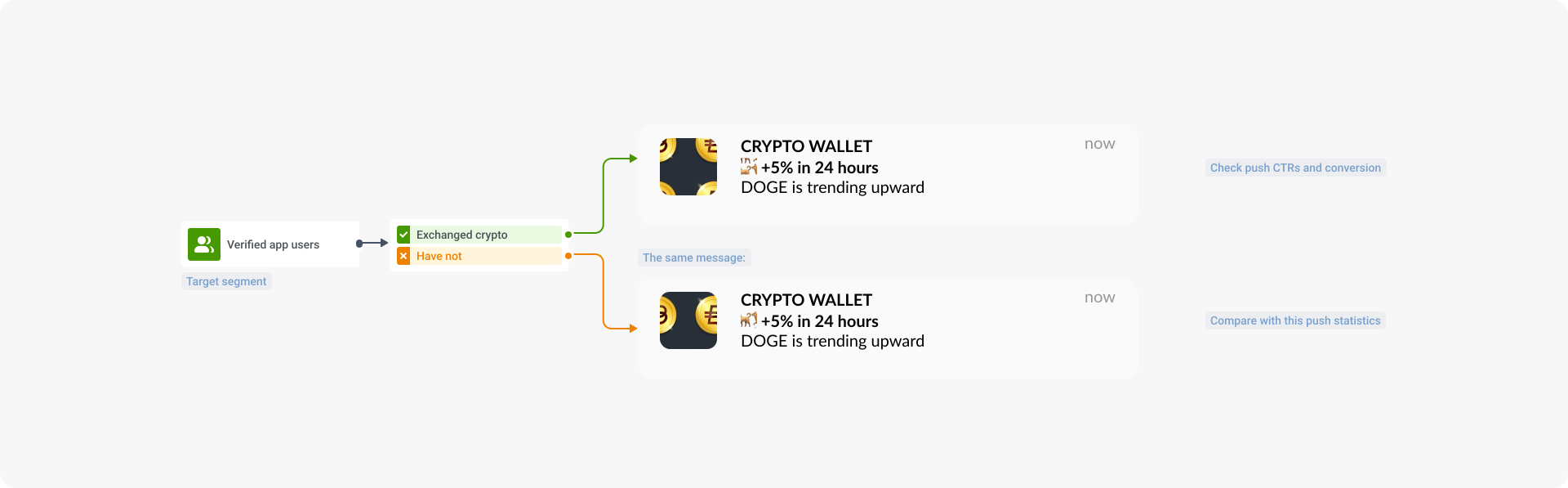
As the message itself is quite motivating, you don’t have to add any particular CTA to your push — just ensure it contains a Deep Link taking a customer who clicks on the notification directly to your relevant product section (for our two examples above, these will be ‘Saving accounts’ and ‘Cryptocurrency exchange’ accordingly).
Time your promo to special occasions
Message: Cater to your clients’ financial needs on holidays: remind them they can do money transfers to their close ones, get cashback for extra spending, and not worry about expenses at all as they can apply for an instant credit card.
Segment to target: If you operate internationally, make sure you only address your special occasion offer to those who celebrate this specific date:
📌 Segment out users by the location they indicated in their profiles;
💱 Determine target users for a promo by their previous activity.
For example, this Diwali offer from Payit will be on-point for those users who aren’t currently located in India but have wired money to accounts registered in this country.

Stimulate in-app product discovery
Opening a new banking account or making a financial investment is quite a decision your customer has to make. So be prepared for a long journey and equip yourself with a multi-step messaging strategy.
Convert engaged app users to apply for more products
Segment to target: Whether you’ve just launched a new fintech product or discovered an underutilized one in your portfolio, it might be the smartest to target it first to your most engaged app users. You can identify them without using sophisticated segmentation tools — just set your messaging to pop up when a user opens the application.
💳 One thing to check, though: verify that the customer has not yet applied for the promoted product.
Channel to use: in-app messaging
Message: Attract your audience’s attention with an appealing title and image. Briefly explain your offer: one–two sentences or a few bullet points will do. Don’t forget to add:
🆗 a CTA button with an embedded Deep Link leading to the appropriate app section;
❎ a close button to avoid annoying the users who are not ready to apply for your product yet. You’ll need them to stay on your side later on!
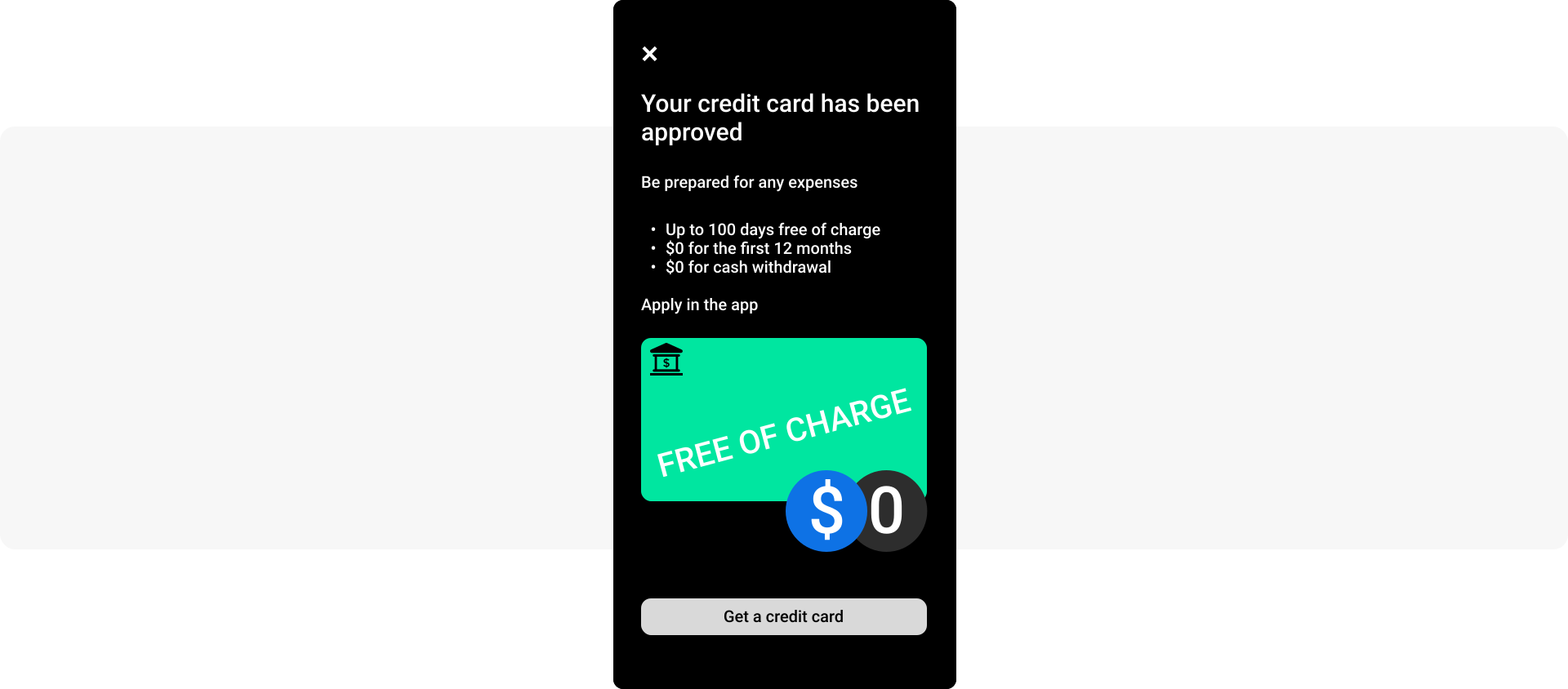
To craft the best-converting in-app message, you may need to experiment with different versions of copy, design, value proposition, and target segments. To accommodate lots of testing, you will need an easy-to-use, preferably no-code Android or IOS in-app messaging solution — like the one from Pushwoosh.
Discover Pushwoosh In-App Messaging
Cover large groups of users with push notifications
If you want to accelerate your new fintech product marketing campaign, choose push notifications as your primary channel. It will help you distribute the news quickly and immediately see your audience’s reaction: whether your updated offering sparks interest.
Trigger to start messaging or Segment to target: Send a push to all the opted-in users. This way, you can cover up to 90.5% of your entire user base, as our opt-in benchmarks show.
Message: Highlight the value a customer will personally get from using your fintech/banking product. Streamline the application process: add a Deep Link leading to a source with more detail on the offer.

Target relevant product offers at users who performed a specific behavior
Some customers are big spenders, while others are saving types. By analyzing your banking app users’ previous behavior, you can attribute them to a particular segment and target them with offers that most certainly fit into their pattern.
Trigger to start messaging or Segment to target: depends on the nature of your offer and your marketing campaign goal. For example, if you’re a bank promoting a new credit card, you may aim at the customers exceeding their spending limit.
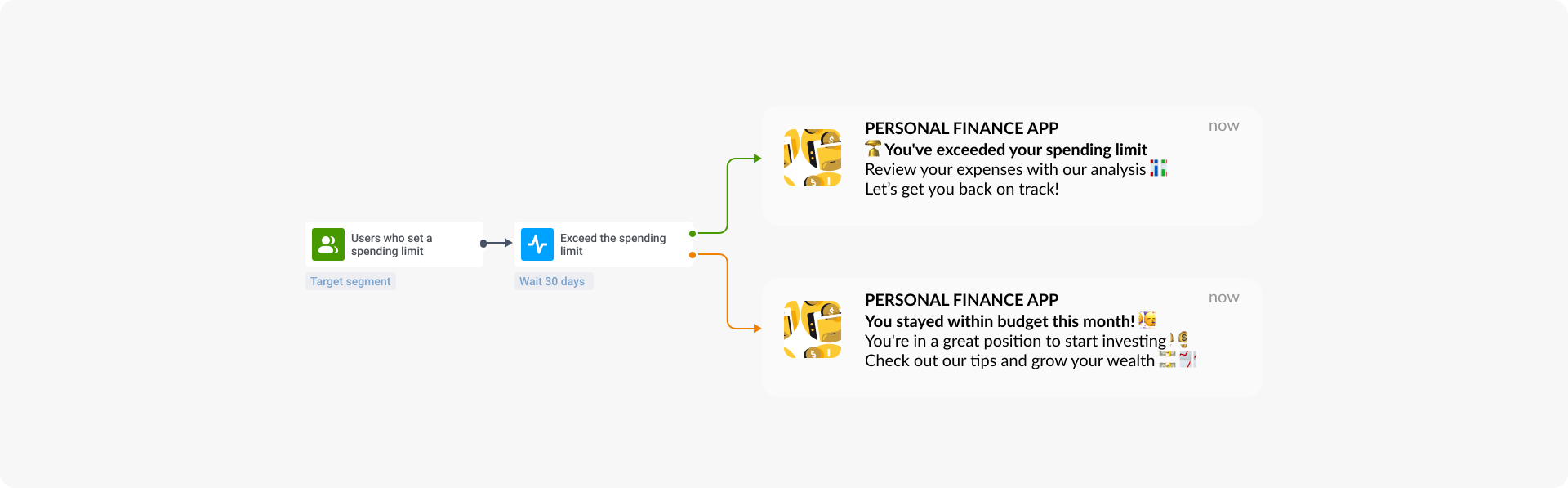
And for those who stay on top of their finances, you will have a different offer, such as a savings account:
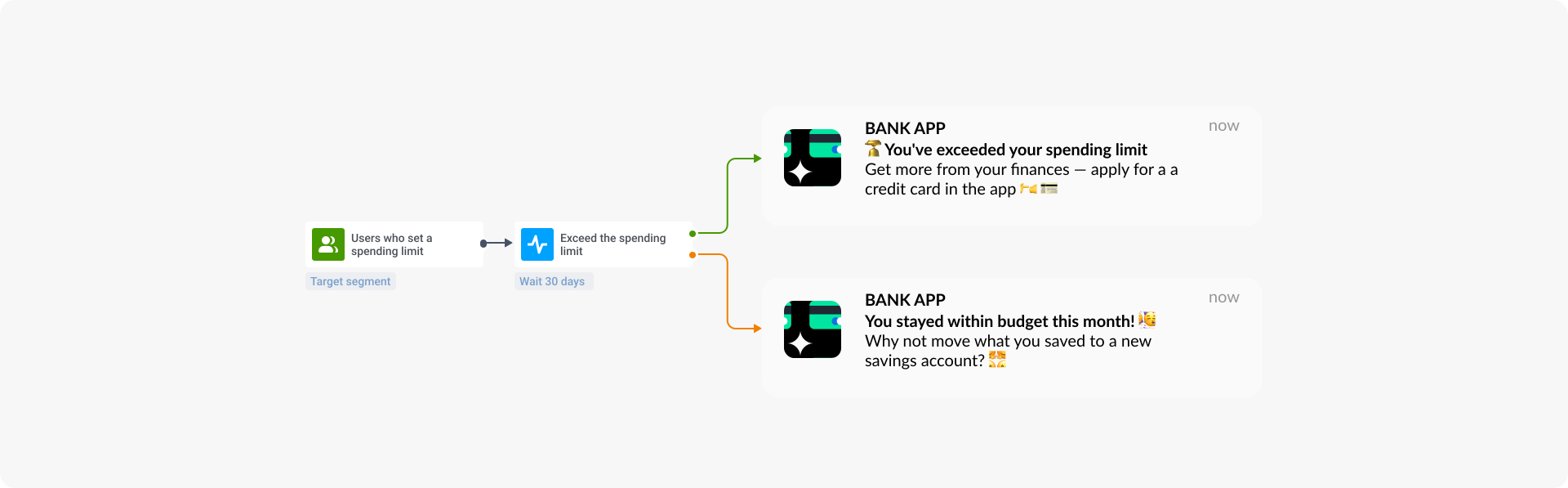
Needless to say, the message will differ if you’re communicating on behalf of a personal finance app as opposed to a bank app. Your offers may include expenses analysis and investment options, but audience segmentation will be done in the same way as above:
Create a full-scale messaging funnel
The most challenging part of promoting fintech app products is shifting mindsets. You have to solve a real pain so users can find your solution compelling.
Another challenge is building credibility. You have to work on it through continuous educational content, PR, partnerships, etc. It’s a long journey.
You will need to send more than one in-app message to convert someone uninformed of a new product into an active user. A complete set of TOFU to BOFU messages will be required. At that, your first communication will likely have an educational tone of voice rather than a call to immediate conversions.
For example, Payit starts its fintech marketing campaigns with considerate in-app messages.
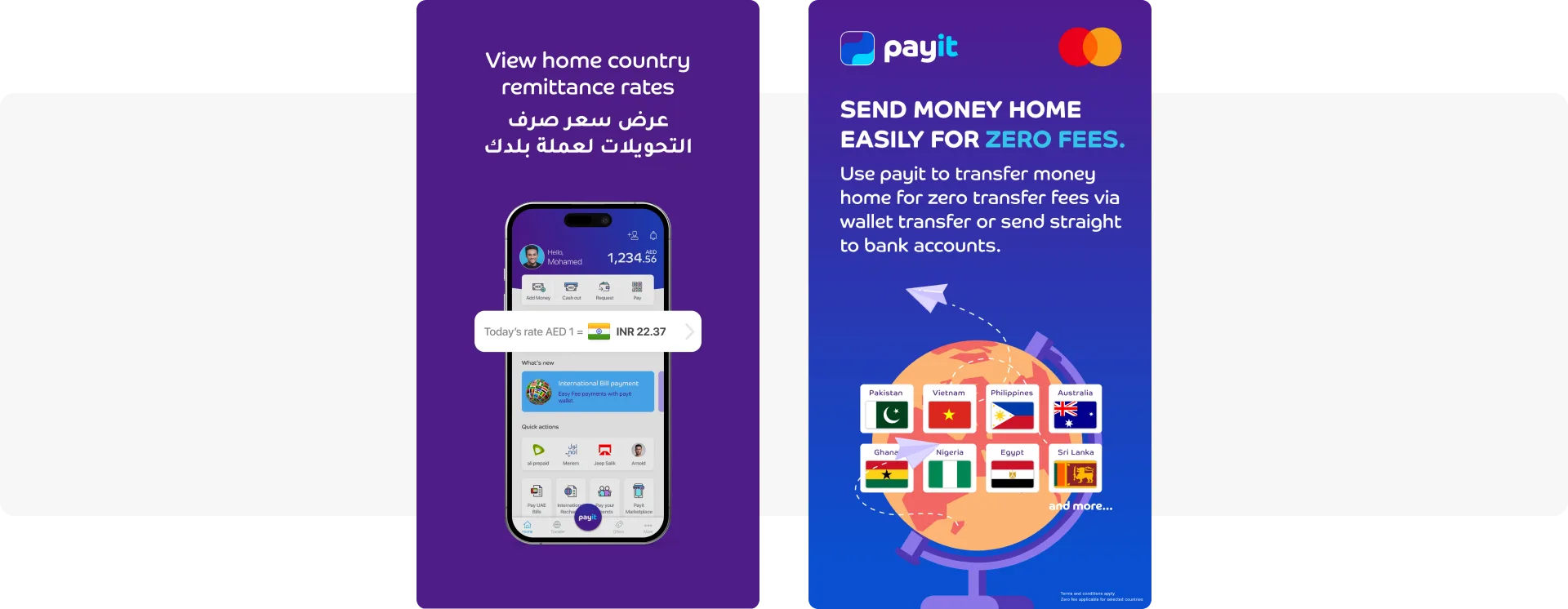
Such in-app messages might be later followed by push notifications with more direct CTAs.
👀 Remember to set the right expectations from these top-of-the-funnel in-app messages: your target metrics for them will be the number of views and CTR, not conversions. With this in mind, you might use some tips to:
Maximize the reach of your offers
You’ve been doing a great job narrowing down your target segments… And at the same time, you’ve been craving to reach more users. Well, fellow marketer, we at Pushwoosh have figured out ways to satisfy your seemingly controversial needs:
Use Message Inbox in tandem with push notifications
Deciding on a financial product may take days, while interaction with a push notification or an in-app message only lasts a few seconds. So it sounds like you should find means to extend the time users return to your offer to consider it in peace and quiet. For this purpose, Pushwoosh supports a Message Inbox.
📩🏠 Set it up once and get an extra channel to deliver product offers to your app users in their rhythm.
📲When preparing to send a push notification, simply choose the option “Save to Inbox”, and it will appear in a dedicated section of your app.
👉💳 Expect more clicks and conversions into using/applying for your promoted product!
Add emails to your marketing communication strategy
AI may replace professional copywriters, and self-driving cars may supplant taxi services, but email won’t leave its position anytime soon. So if you have a lot to say regarding your offer, don’t hesitate to refer to this time-tested channel.
Adjustment for 2023: incorporate email into an omnichannel messaging strategy. The following two tips will show you exactly what it means:
Do a reachability check
So, you’ve sent your target customers a push notification with a product offer. Now the ball is in their court, and you will simply be waiting for their clicks and conversions to appear in your ‘Statistics’ window. Bad news, you will likely be disappointed with the stats when they arrive.
There are several reasons why a push notification you sent may never actually be delivered to your customer: they may have opted out of pushes or uninstalled your app. And you will still count on such users unless you do a Reachability Check — verify if, technically, your message can be delivered to a particular user. If it can not, you can take action immediately: try sending the same offer via other channels, for example, email.

An omnichannel campaign mapped out with Pushwoosh Customer Journey Builder
Track push and email opens
Delivering a message with a new fintech product offer to your customer is half the victory. The other half is built on your ability to see if there was any reaction to the message: did the customer open your email? Did they click on your push?
From there, your communication can take two different directions. For example, if your fintech/banking app user got interested in an offer and clicked on a push, you may meet them in the app with more detail. And if they ignored your push for whatever reason, you may try to convey the same message via email.
If the customer doesn’t open your email either, you take your last chance and wait until the next time they open your application. Then, you will show them an in-app message.
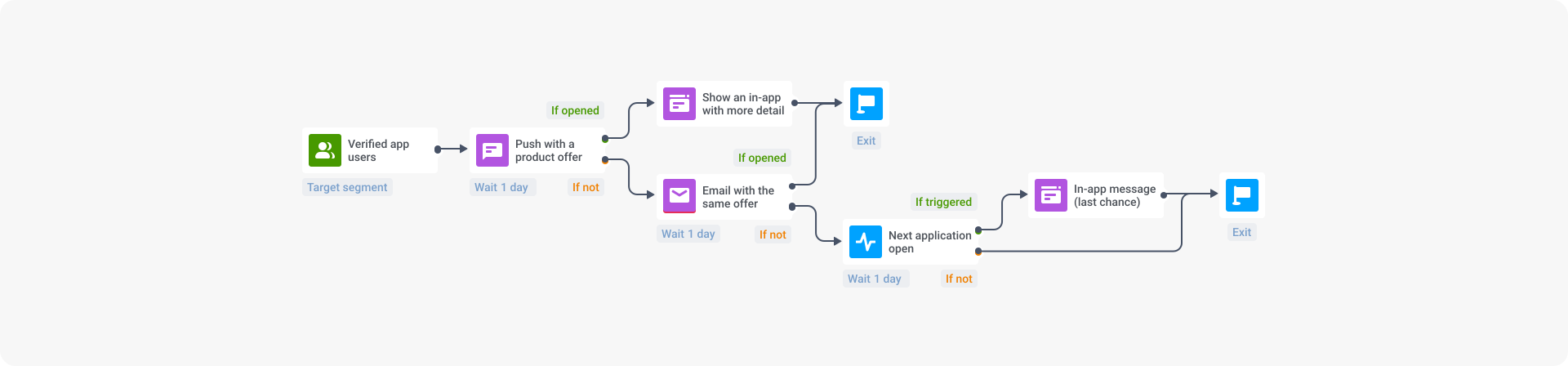
There are several scenarios of how a user may react to your messaging series; luckily, you can accommodate them all with Pushwoosh Customer Journey Builder.
Adopt the campaign-building mindset for your fintech & banking products promo
To see a visible increase in your fintech & banking product usage from your marketing activities, you will certainly need to send more than one individual message. To succeed in the long journey, we at Pushwoosh suggest you approach every promo as a full-scale campaign:
- Plan a segmentation + messaging flow (as opposed to sending disjointed messages with no targeting at all)
- Set its conversion goal
- Create content for multiple channels: push notifications (with Pushwoosh AI Composer), in-app messaging, and email
- Send your messages, making sure they reach their recipients
- Track, analyze, and optimize your results
Ready to get started? Equip yourself with efficient tools for messaging campaign planning and execution — request a personal Pushwoosh demo with our team: