Do you know any marketer who likes to spend hours on routine tasks? As marketers ourselves, we don’t. Scheduled messaging helps us save pretty much time and stay focused on the job that requires a higher level of human intelligence. What a trick! Instead of setting numerous reminders, you can set an automated communication flow once and then yield the desired results repeatedly for as long as you need.
This article will provide you with many examples of repeated automated communications across different industries — from e-commerce to sports and gaming. You’ll figure out what metrics you can affect and how to start sending scheduled messages quickly and hassle-free. And, most importantly, you’ll get familiar with an automation tool that provides for this.
Sounds interesting, right? Fasten your seat belt — we’re landing for more detail!
Why Does a Marketer Need Automated Push Notifications?
New users join your existing segments every day, week, and month. They gain new statuses in your e-commerce app, reach new levels in your game, or, unfortunately, stop using your application. You most likely want to react to these changes immediately to stay relevant.
In fact, automated communications help businesses grow the number of engaged mobile app users, improve CTRs, reduce churn rate, and increase brand awareness and loyalty.
What app metrics may be improved with repeating notifications?
- CTR
- DAU and MAU
- Churn rate
- Conversion goals (e.g. Add to Basket)
- Sales and revenue
And there are some less obvious KPIs you can achieve with recurring messaging:
- Brand awareness and loyalty
- App ratings (by collecting feedback)
- New feature adoption
- Customer lifetime value
Now, let’s figure out how your app can actually benefit from automated repeating notifications. No doubt automation should be efficient, but how effective is it in your case?
Gaming: Engage Players with Daily Offers
Communication examples: daily challenges, special promotions and events, subscription and upgrade offers
Mobile gaming is booming, and as a result, competition in the industry is also growing as major players enter the market. To stay relevant, every gaming app should use the full potential of push notifications to its maximum.
For example, Bladestorm, a Pushwoosh customer, has been sending broadcast recurring push notifications with daily offers to the entire user base. Every weekday, a new bonus is proposed to gamers. With the use of Pushwoosh tools, the company has already started getting results beyond higher CTRs and push notification opt-in rates. The game app has seen its DAU and MAU growth and an increase in revenue.
🚀Read the complete success story of Bladestorm
When it comes to retention and re-engagement, nothing works better than repeating push notifications — with a custom-set frequency, they appear on users’ screens even when their phones are locked, and the app is not launched.
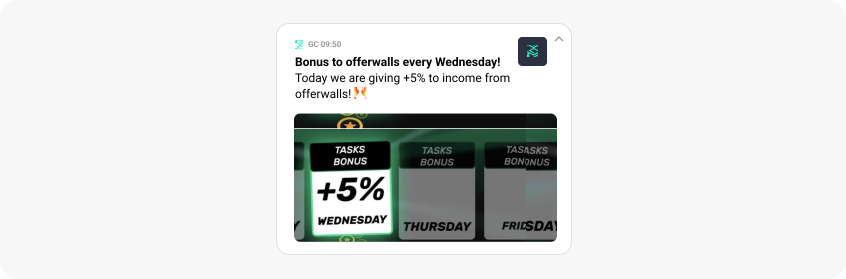
But the use of scheduled messages is not limited to broadcast messages.
Another Puhswoosh customer success story features Beach Bum, an interactive games company, using personalization features. Addressing gamers by their names made push notifications personalized and engaging. And when a notification comes in your native language, it boosts CTR as well.
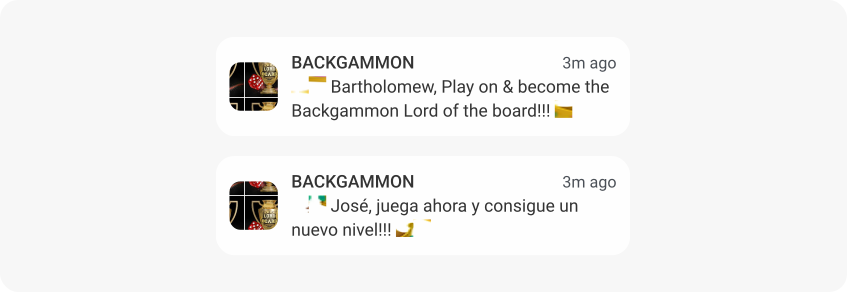
As a result of the proper personalized approach, Beach Bum pushes on average had 8%–12% CTR, which is great for a gaming app. Now imagine if Beach Bum had also used recurring notifications on Android and iOS to automize their communications? There would be even more impressive results!
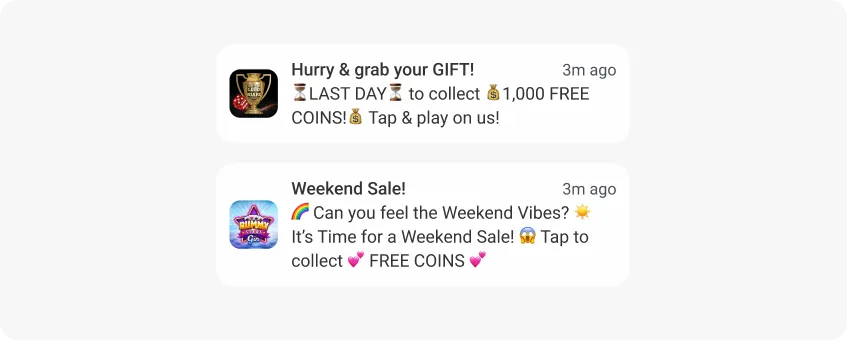
Besides, scheduled notifications are great for promotions — game apps can notify their players of sales and personal discounts and effectively encourage users to make in-app purchases.
 🎮Discover all the Pushwoosh features for game apps growth
News and Media Apps: Keep Your Subscribers Updated with Regular Digests
Communication examples: daily and weekly news digests, subscription and upgrade offers
You can send broadcast monthly notifications to any subscriber who has viewed your website letting them know that you have published new content.
Similarly, you can send a daily and weekly news digest to engage your subscribers and keep them updated on the latest news.
Besides, you can easily create a campaign that sends push notifications with relevant news to those who frequently visit a specific section of your website, for example, Economics.
An important thing here is that the content of scheduled messages is not set in stone:
You can edit the content of any communication as frequently as you want. The same applies to segments: the audience is recalculated before each launch of a messaging sequence. So every new subscriber joins the segment automatically.
Language-Learning and Fitness Apps (Basically, Any Subscription-Based App)
Communication examples: daily challenges and reminders
You may be wondering what such different industries like language-learning and fitness have in common? Surprisingly, the types of communications they use (as well as a common subscription-based business model). And even from the user’s point of view, learning a new language is the same as building up muscles. You always need someone to push you to do exercises.
Daily reminders and challenges are versatile types of communication every language-learning or fitness app should use to engage, retain, and re-engage its audience. And repeat notifications with a Scheduled Launch are the perfect fit for this job to be done effortlessly. As there’s no need for personalization and segmentation, you can set a broadcast communication flow once and keep your users entertained for a lifetime!
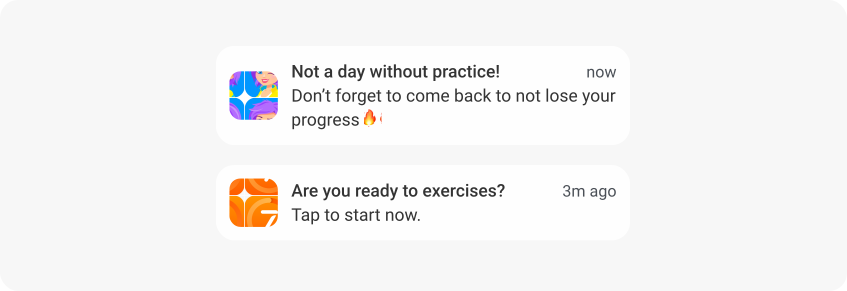
Daily reminders are also useful for any other kind of product app, e.g., health & wellness apps, calories calculators, habit builders, weather forecasting apps, and the like.
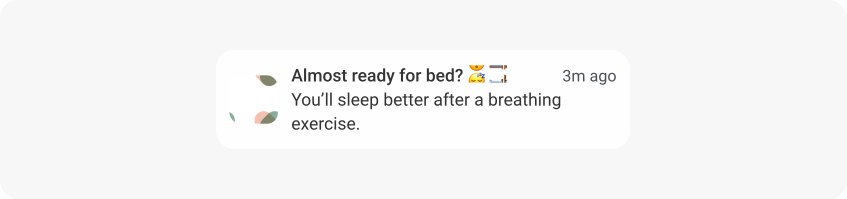
E-Commerce and Retail: Increase Sales with Precise Segmentation
Communication examples: special promotions, sales, announcements of scheduled events
First, let’s look at grocery delivery apps. This type of business can benefit from setting up daily scheduled messages with promotions on specific food product categories, e.g., bakery, dairy, fish.
Another use case for recurring push notifications might be introducing weekly promotions to specific categories of customers — for example, 20% off for students on Mondays, 30% off for the retired on Tuesdays, etc.
Food delivery apps and restaurants can apply similar tactics.
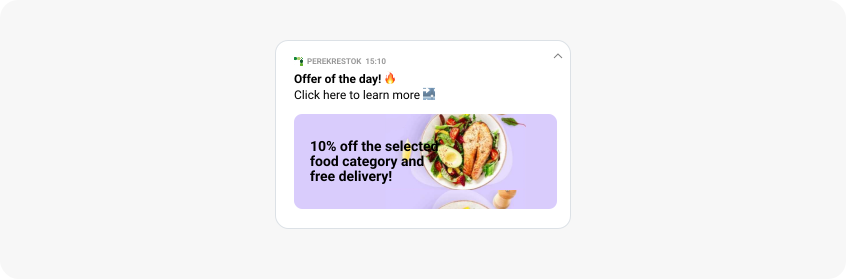
E-commerce stores can make use of automated push notifications to re-engage users and boost sales through daily, weekly or monthly promos and discounts.
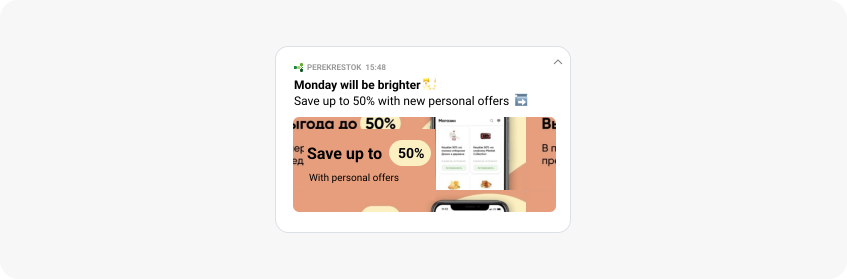
Besides, you might wish to send a weekly notification to all of your subscribers letting them know about new products you have for sale at your store.

One more option is sending a monthly notification to any subscriber who has viewed your store and letting them know that you have a new collection arrived. That’s where Segmentation plays an important role.
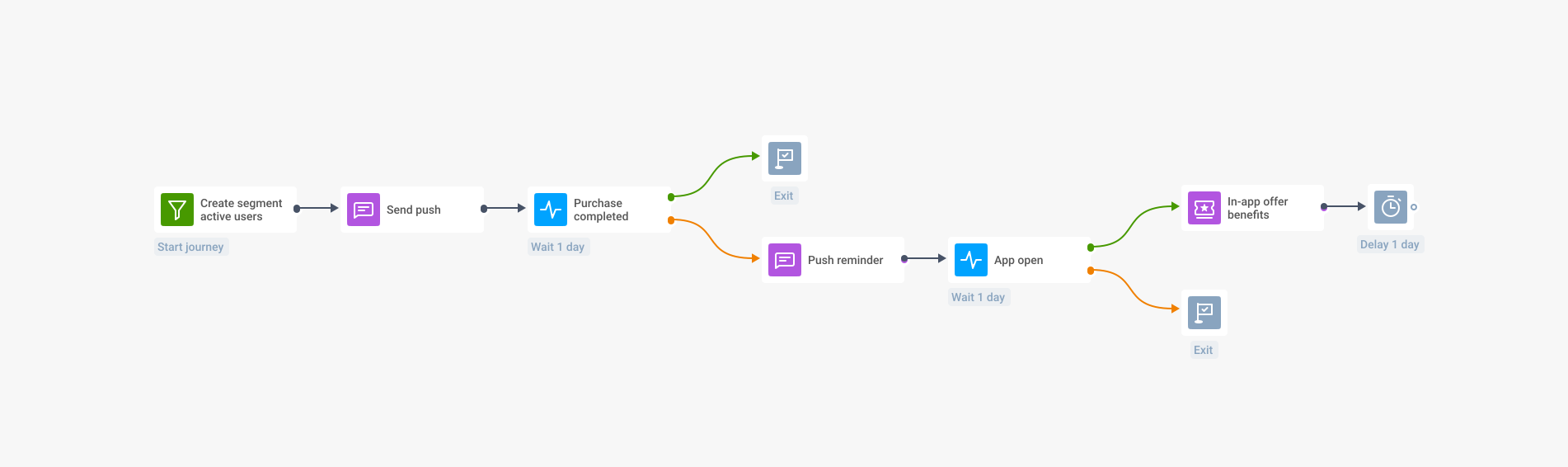
Another benefit is that repeating push notifications ensures your brand name makes a periodic appearance on your users’ screen, which is undoubtedly good for your brand awareness.
Sports and Streaming Apps: Schedule Reminders for Sports Events and TV Shows
Communication examples: announcement of scheduled events, subscription and upgrade offers
Everyone has their own hobbies: some watch sports games online, while others prefer TV series. The common thing is the type of communications entertainment apps may use to engage their audience.
Like news and media apps, sports apps can send periodic digests, e.g., weekly highlights of sports games.
Moreover, sports games are usually played at the same time at regular intervals (which is our case), so you can set automated reminders for your subscribers. For example, ‘The game starts in 5 minutes — it’s time to support your team!’
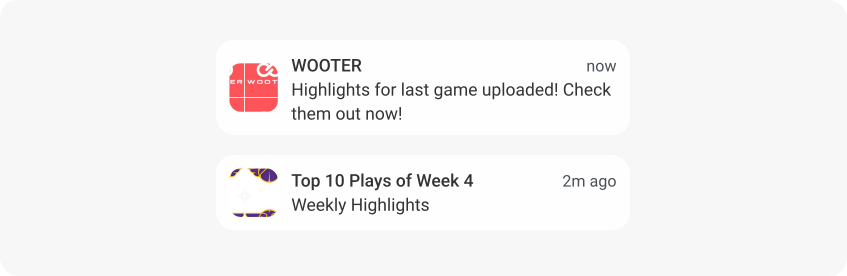
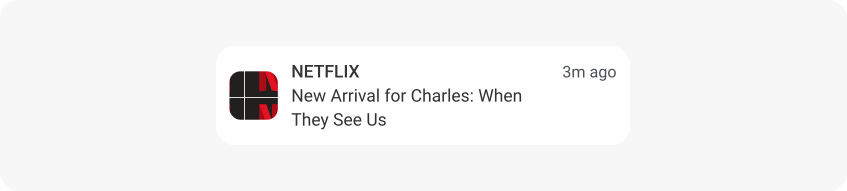
The same goes for streaming services. With scheduled messaging, you can grow your DAU and MAU by notifying your subscribers when a new episode of their favorite show comes out.
 🤩Discover
more ideas of how to use mobile messaging to grow
DAU
and
MAU
in your app. Both posts we’re linking to feature benchmarks! 😉
🤩Discover
more ideas of how to use mobile messaging to grow
DAU
and
MAU
in your app. Both posts we’re linking to feature benchmarks! 😉
Enjoy the Benefits of Recurring Notifications by Using Scheduled Launch in Pushwoosh
Using Pushwoosh, you can schedule a repeating Start Segment entry in Customer Journey. This way, new users joining your Start Segment will enter the same journey you’ve already activated. You won’t need to create a new flow with the same entry segment.
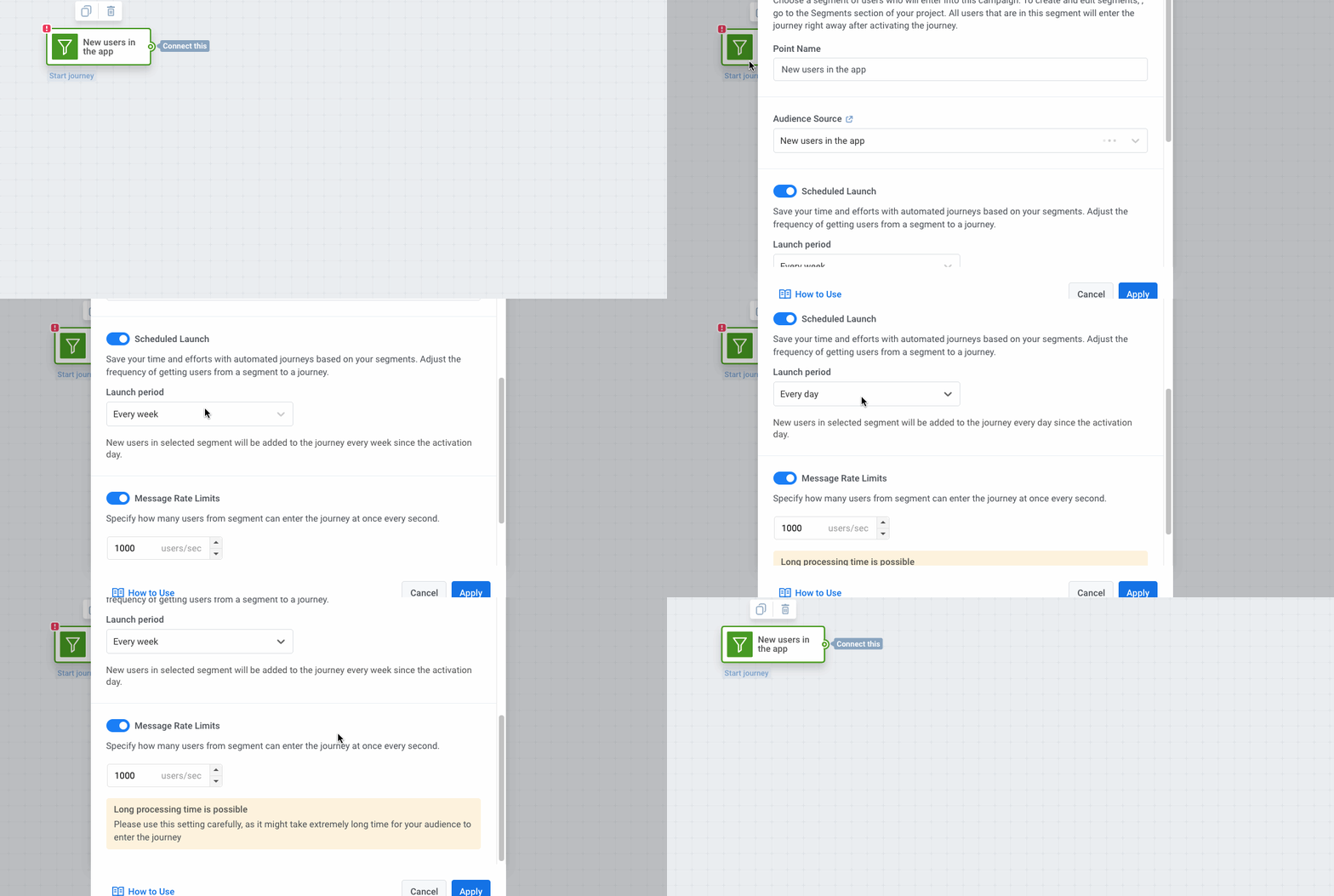
Besides, you can edit your scheduled communications to serve your needs best. Change your message content, segments, and start sending triggered events as frequently as you want.
When enabled, the Scheduled Launch refreshes the segment prior to every scheduled entry and lets those users into the journey who got into the segment after it started the journey last time. Users who are traveling the journey at the moment of the repeated start don’t enter it again.
You can schedule your journey’s daily, weekly, and monthly launches or choose a custom period or even specific dates to let new users in.
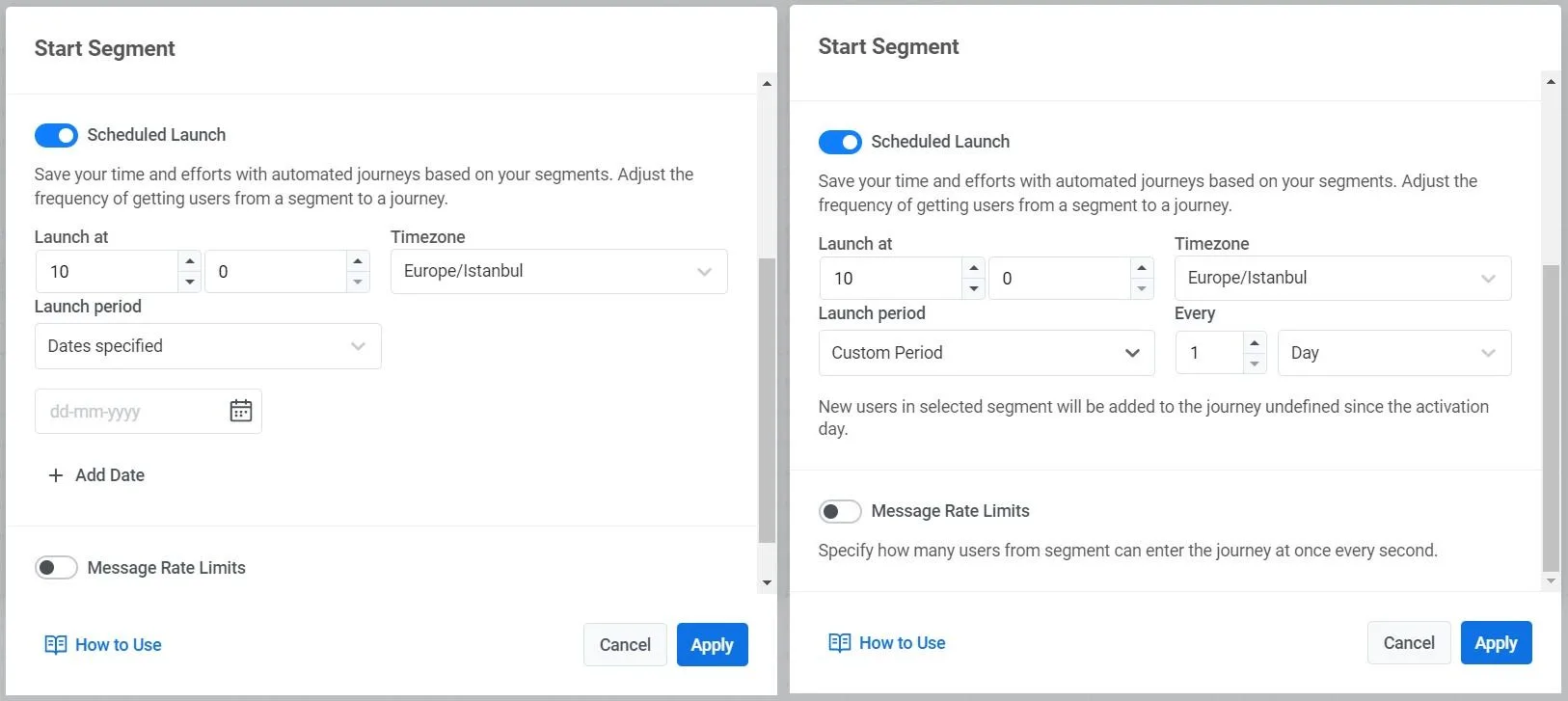
As a custom period, you can set Start Segment to repeat once in several weeks or months, or on specific days of the week or the month. For example, you can repeat your message every three weeks, send it three times a week or reserve it for odd-numbered dates.
You can also set the entry by segment to repeat on specific dates. It might come in handy when some events in your app occur thus updating the audience segment with new users.
Try out the Scheduled Launch feature in Pushwoosh and see how it can help you boost your app metrics!