In times of crisis, businesses often shift their focus from acquiring new customers to retaining existing ones. But now, when the growth-at-all-costs mindset is long gone, even retention marketing initiatives are being scrutinized in many companies as cost-cutting becomes the norm. Every aspect needs optimization, and even the marketers themselves are feeling the impact. Customers, too, are changing their behavior—subscriptions aren’t renewed, new subscriptions are declined, in-app purchases decrease, and average transaction values shrink.
To navigate these challenges and emerge successfully in 2025, it’s essential to examine your retention strategy closely. There’s undoubtedly room for optimization. Pushwoosh Team has taken the first step for you, assembling an action plan for customer retention cost optimization. Let’s delve in and discover ways to thrive in these dynamic times.
Calculate your customer retention cost: Three formulas for potential optimization
The way you measure customer retention cost (CRC) itself can give you a hint on optimization.
Most likely, you’ll be using the classic CRC calculation formula:

Using this CRC calculation formula is relevant when you assess the overall financial burden of retaining customers.
Another calculation method is needed when you seek an understanding of the long-term impact of retention efforts. In this case, you need to assess whether your investments in customer retention are justified throughout the customer’s lifetime:

This formula provides insight into how much the cost accumulates over the entire customer lifecycle.
Finally, businesses can analyze the CRC ratio to gauge the proportion of customer retention costs in relation to their overall revenue:

Using this formula helps you understand the percentage of your annual recurring revenue (ARR) allocated to customer retention. This perspective is valuable for decision-makers seeking to align their customer retention investments with revenue outcomes.
By applying these different formulas in various contexts, you can identify opportunities for optimization tailored to your specific business objectives.
Deconstructing customer retention cost
To start our journey, let’s dissect the components contributing to customer retention costs. By comprehending the breakdown of these costs, we can unearth potential areas for optimization.
CRC encompasses various costs incurred across marketing, sales, and customer success teams. These costs include:
💰 Salaries, commissions, and benefits for marketing, sales, customer success, and renewal team members.
💰 Staffing expenses for customer success, account management, implementation, onboarding, and training teams.
💰 Expenses related to paid advertising, encompassing PPC, search engine marketing, social media, and web retargeting.
💰 Initiatives and expenses linked to customer loyalty and retention marketing campaigns.
💰 Content development for blogs, social media, video platforms, and mobile messaging.
💰 Utilization of price comparison engines.
💰 Tools and platforms for customer engagement, including messaging providers, chatbots, and feature adaptation.
💰 Adoption of tools and software, such as customer experience or retention platforms.
Which of these related costs are ripe for optimization? And which cost reductions can effectively lower customer retention expenses without compromising retention efficiency? Let’s delve into the details.
🚨 Optimize with caution: customer retention can affect your customer acquisition costs
Strategic improvements in customer retention can foster loyalty and reduce customer acquisition costs (CAC). When you focus your efforts on enhancing conversion rates, it ultimately leads to lower expenses for acquiring new customers. Effective communication and strong relationships play a key role in this process.
However, caution is needed. While optimizing customer retention strategies is beneficial, rushing changes to your customer retention plan can negatively impact CAC and result in unforeseen financial consequences. So, whatever next step you take, keep a vigilant eye on the ROI for both customer acquisition and retention.
Customer retention cost optimization plan: effective ways to decrease CRC
To put it shortly, you don’t have to freeze your customer retention initiatives to reduce your customer retention costs. And you definitely don’t want to pause your contract with your customer engagement platform.
On the contrary, you may want to intensify your retention efforts, driving the maximum value from your customer engagement platform, such as Pushwoosh.
Now, let us break down this strategy into specific tactics.
Focus on your high-value customers
To allocate your marketing budget wisely, we recommend prioritizing retention strategies for top-tier customers instead of the average ones. This approach can substantially elevate ROI in these complex times.
First of all, you need to determine who your high-value customers are. These metrics will be your indicators:
Purchase frequency
Look at how often customers make purchases within a certain time frame. Customers who buy frequently are easier to retain, and they also tend to contribute more to your profits.
Average order value
The average order value provides insight into typical customer spending. It’s
wise to focus on customers with higher-than-average order values. Segmenting
customers based on their behavior can help you understand what motivates them to
make purchases.
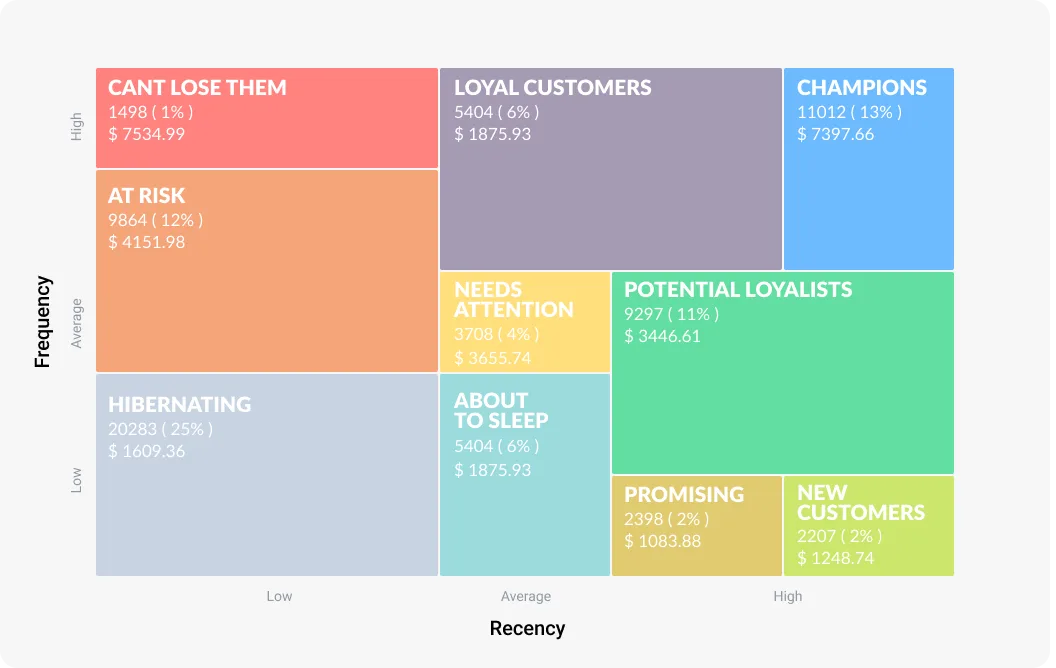
To decipher buying trends and identify your high-value customers, use the
RFM Segmentation tool
in Pushwoosh. It breaks down your audience by Recency, Frequency, and Average
Monetary Value criteria, allowing you to set up pinpoint targeting.
 😎Learn
how to communicate with each RFM segment, starting with
the most profitable ones.
😎Learn
how to communicate with each RFM segment, starting with
the most profitable ones.
Price sensitivity
Another aspect of your CRC optimization efforts should be evaluating how customers react to shifts in pricing. Some customers are drawn to discounts and offers, while others are less swayed by price fluctuations. To distinguish between these two behaviors, you need to segment out the customers who escalate their purchase frequency during discount periods. As a Pushwoosh user, you have two ways to do the job:
- Conduct comparative RFM analysis for two time periods: before and after a discount is announced;
- Do behavior-based segmentation, collecting information about customers who took your first full-price offer and those who only acted upon an incentive.
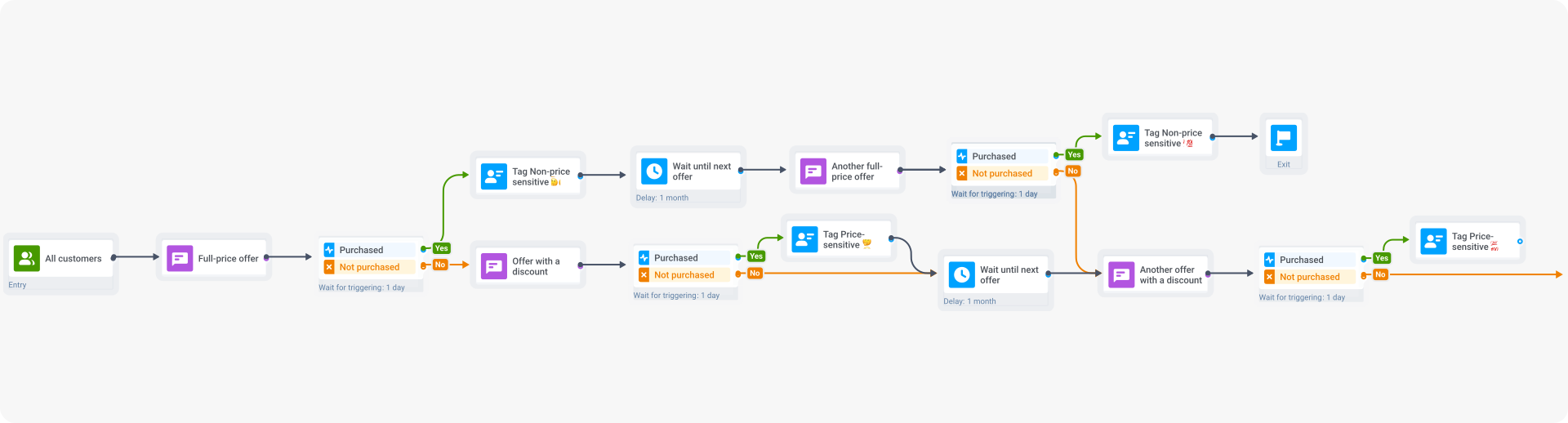
Next steps: Even though your non-price-sensitive can make a purchase without any discount, they still appreciate a personal touch in your offers. So, tailor offers to their preferences to build stronger connections.
Extra: Identify your high-impact customers
In addition to the customers contributing the most to your business revenue, you may want to define those who champion your business and sway others towards making purchases from you, thereby generating referrals.
These high-impact customers can potentially attract new users to your business. Strategically investing in maintaining their satisfaction translates into increased business growth without excessive acquisition costs. A worthwhile proposition, isn’t it? As a Pushwoosh user, you can identify high-impact customers in two ways:
Gather feedback
This approach aids in identifying your promoters, passives, and detractors. as individuals who possess the potential to boost conversions and exert a positive influence on your business. Essentially, they align with your high-value customers. Concentrating on retaining these promoters can elevate your business’s overall value.
Example: Most frequently, feedback surveys takes the form of an in-app message. You can customize it to your brand guidelines like Blossom did:

Once these promoters are identified, structure your marketing campaigns to engage this audience segment further:
💬 Request consistent feedback regarding their purchases.
🔔 Send them timely reminders for refills or restocks or suggest they schedule their next appointment.
🔎 Delve deeper into understanding the factors behind their positive NPS evaluations.
Do RF Segmentation
You can exclude the monetary component from your RFM Segmentation and identify your highly engaged advocates by analyzing their non-purchasing yet influential behavior. For example, such customers may have invited several friends to the app recently or are the most active users and adopters of your app features.
Approach customers via a wider variety of channels
Have you taken advantage of all the communication channels where your customers are present? Within your Pushwoosh subscription, you may leverage four extra channels besides push notifications: in-app messages, emails, SMS, and WhatsApp messages.
All of them can be combined in seamlessly automated omnichannel messaging campaigns or used alternatively to ensure higher reachability of the same message.
All of them—you guessed it—are available within the Pushwoosh platform.
Leverage in-app messaging to prompt engagement
In-app messaging provides a direct and personalized communication avenue within your app, allowing you to engage users when they are most active and receptive.
In-app messages can deliver tailored content, updates, and offers, fostering a sense of exclusivity and relevance. This real-time interaction strengthens user loyalty and encourages prolonged app usage, ultimately enhancing customer retention rates.
Depending on your case, adding in-app messaging as an alternative channel to push notifications or combining them in an omnichannel campaign may be most effective.
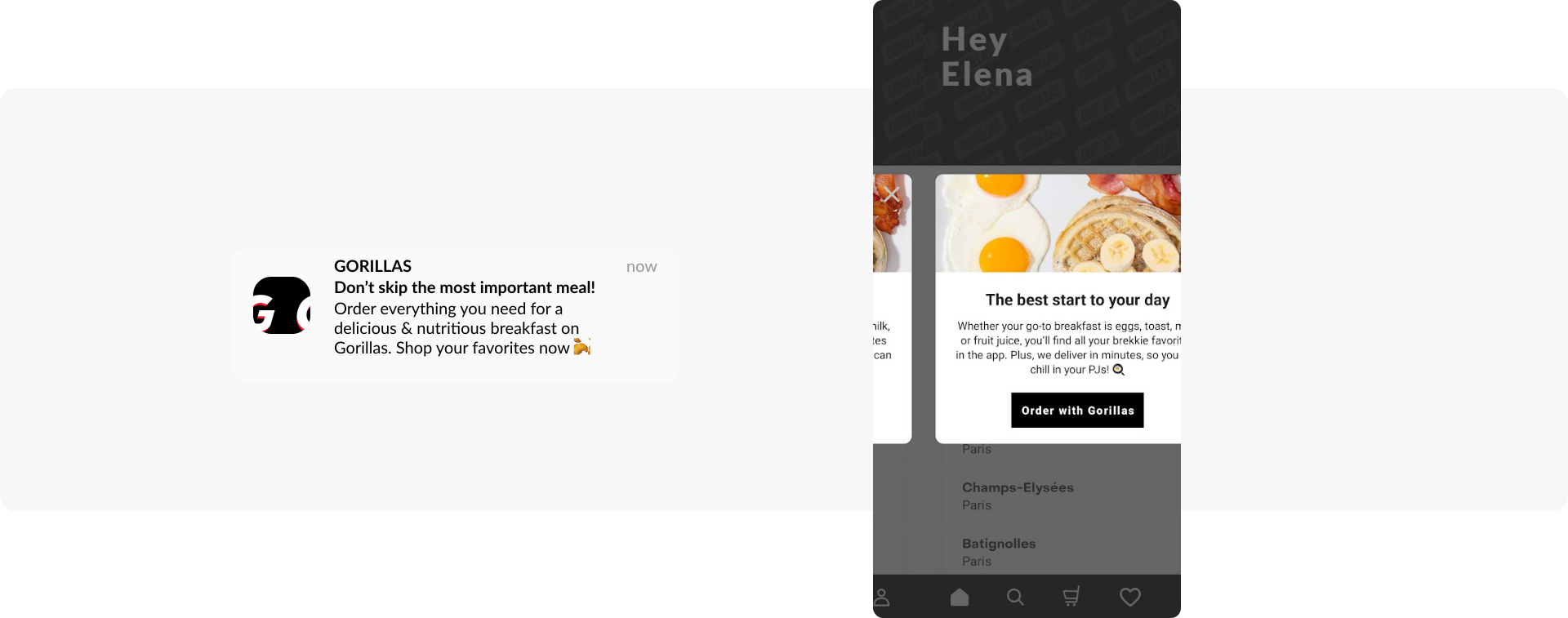
Check out Pushwoosh’s in-app messaging solution for free:
Add emails for flawless post-purchase communication, awareness campaigns, and re-engagement
Emails serve customer retention at various touchpoints:
📨 As a channel for transactional post-purchase messaging;
📰 As an extended content form for promoting new offers;
💌 As a way to re-engage your dear customers who haven’t purchased from you for a while.
And if you use emails along with push notifications, that can boost the ROI of both channels within your communication strategy!
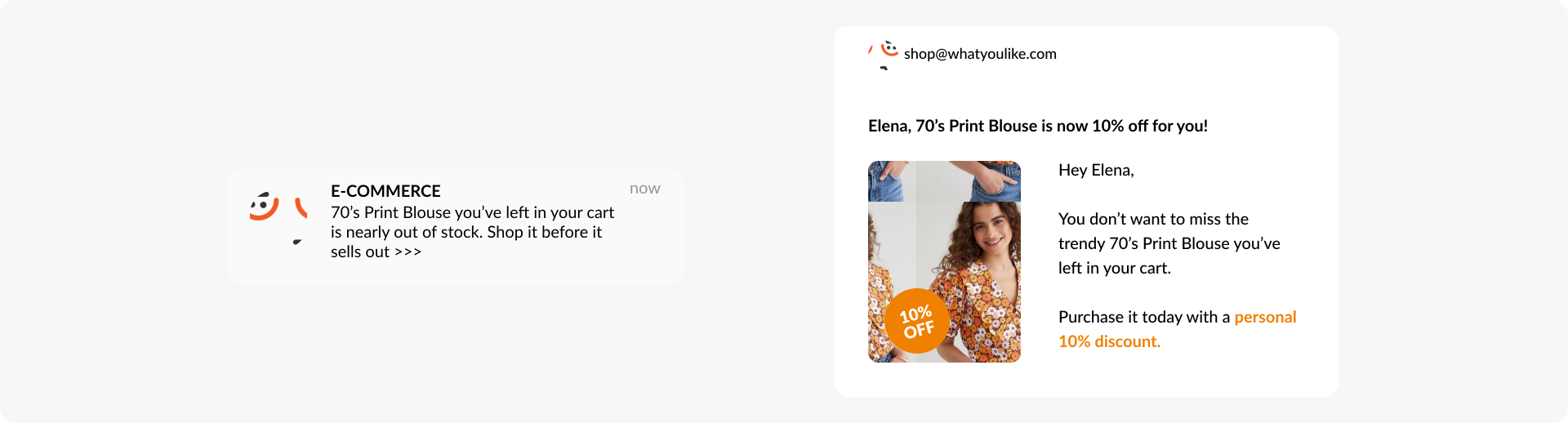
If you use SMS & WhatsApp Business messaging, connect them too!
To optimize your customer retention metrics, follow your audience where they are. That means if they are reachable via SMS or WhatsApp and these channels demonstrate the highest CTRs and CRs, use them in your retention strategy.
Level up your push notification strategy
Speaking of the channel you’ve likely mastered the most—push notifications—we suggest you take a fresh look at them and explore more advanced and effective tactics you may not have used. For example:
- Event-triggered push notifications, especially those synchronized with users’ personal schedules and events for maximum impact, made possible with the Dynamic Time Delay feature;
- Scheduled push notifications that you can send at the Optimal time for each user personally, plan repeatedly or pause for certain days of the week, etc.;
- High-speed push notifications—an extra feature for sports and news media—to deliver pushes faster than competitors, at lightning speed of 500k per second. While it comes as an extra to your Pushwoosh plan, the value it adds to retaining readers and news consumers is undeniable.
Encourage upsells and cross-sells to increase revenue
Revitalize revenue streams through strategic upsells and cross-sells to your current customer base. This approach effectively encourages customers to explore upgraded plans or additional features, amplifying revenue from existing patrons while reducing customer retention expenses.
Implementing limits on various user activities allows for triggering contextual messages once these limits are reached. These messages can showcase the potential benefits that customers stand to gain by seizing opportunities for account expansion. Such tactics can substantially elevate account upgrades and bolster customer retention rates.
Example: YouTube Music app users face an upgrade offer when they try (and fail) to use a premium feature
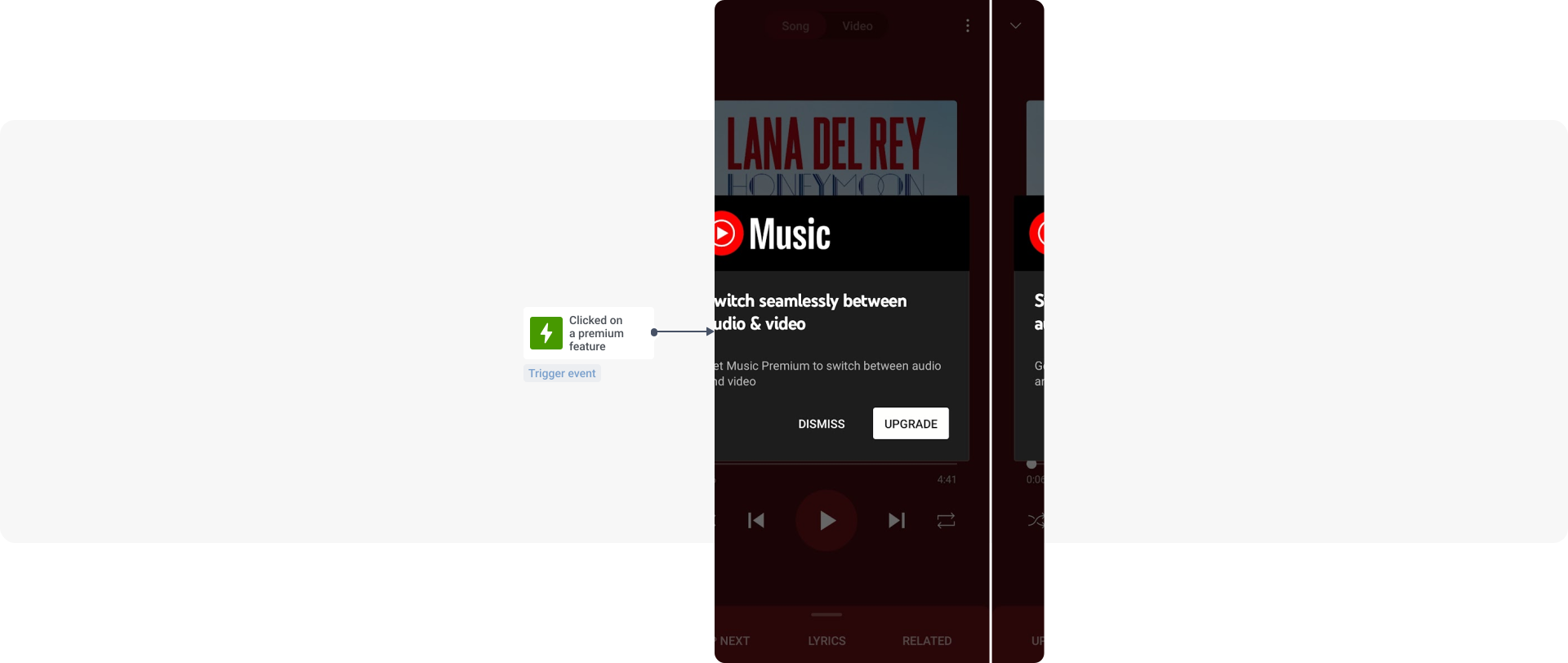
Use A/B/n testing to evaluate and calibrate your retention efforts quickly
A/B/n testing involves creating two or more versions of a campaign flow or message and randomly showing each version to different customer groups.
Now reinvented in Pushwoosh, A/B/n testing facilitates marketing experiments — especially as the test statistics are presented accurately, taking statistical significance into account.
Run a few quick A/B/n tests to pinpoint the most effective channels and offers that drive optimal conversions. Consequently, use the insights gained from these discoveries to refine your strategies, optimizing customer retention costs and reaching for the highest possible ROI.
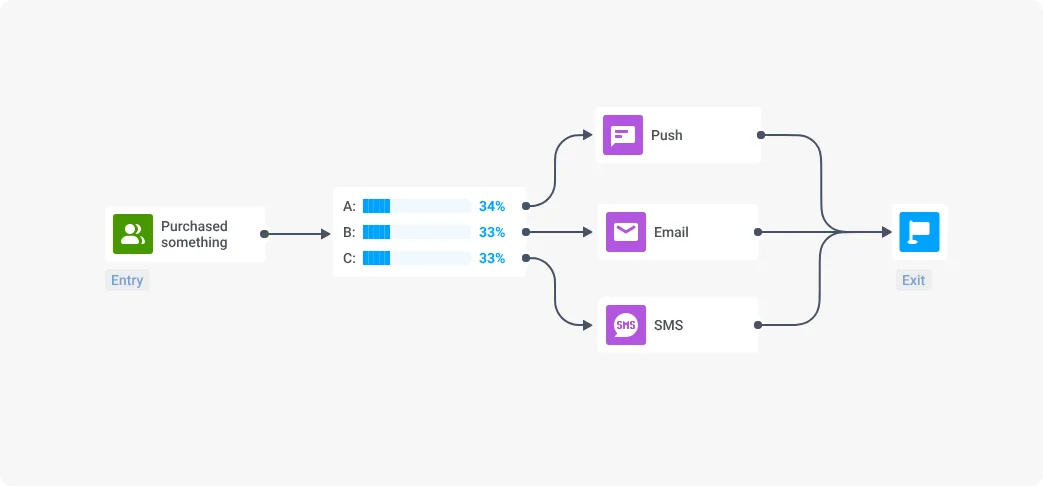
A simple A/B/n test done in Pushwoosh Customer Journey Builder
Interact and engage beyond conversion
Once you’ve taken care of your conversion messaging, it’s time to devise tactics that drive continuous sales, encourage repeat purchases, and foster lasting loyalty. Let’s dive in:
1. Transactional messaging
Keep customers from slipping away after making a purchase:
💌 Send a thank-you note and suggestions for “similar products in the app/on the website.”
✍️ Experiment with different elements like asking for feedback on the purchase experience or encouraging them to save their information for future purchases.
The idea is to deliver a pleasant customer experience at an emotional level and create a hook for the customer to return for another purchase before long.
2. Post-sale messaging
Successfully delivering an order is only part of the story. Your goal is to entice these customers to buy from you again.
Collect feedback on the product, send replenishment reminders, or present relevant cross-sell offers to bring them back to your app or website and drive additional purchases.
Example: Nocibé, a French perfume store operating both online and offline, has mastered post-purchase communications to enhance customer retention. Following the delivery of an order, the store initiates an email requesting feedback (on the left).
Six months after a perfume purchase, the brand anticipates the potential need for another and sends a replenishment reminder via email (on the right).
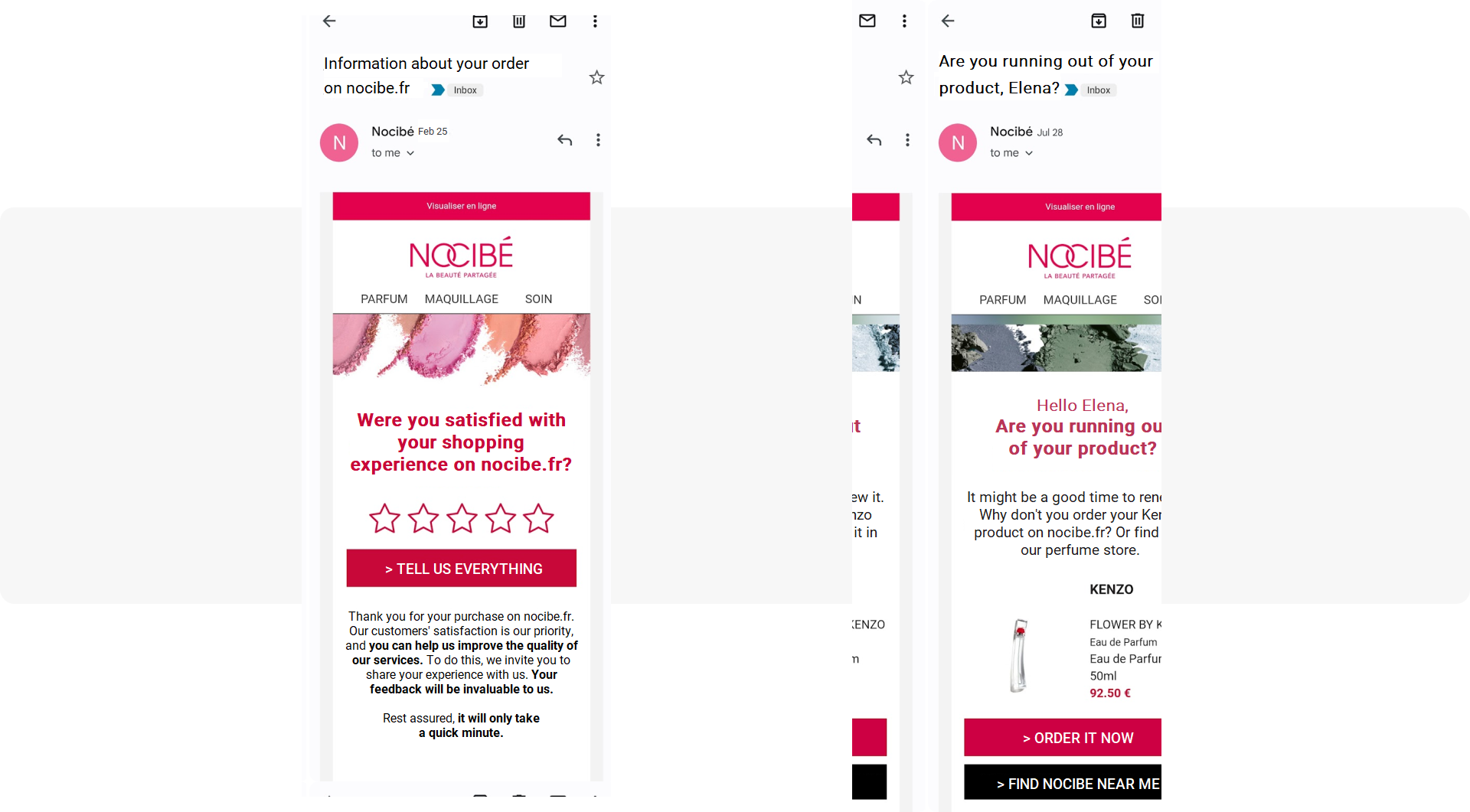
Translated from French
Keep building habit-forming experiences
When optimizing customer retention costs, marketers should remember to build usage habits in new users.
🤝 A positive first experience helps to establish a strong bond between the customer and your brand from the outset, diminishing further churn.
🫰 Fostering habits curtails the necessity for expensive reacquisition efforts and enhances the inherent value of your offerings.
This strategic approach sets in motion a self-perpetuating engagement cycle, ultimately resulting in substantial reductions in customer retention costs.
Refine your onboarding strategy in favor of a contextual approach
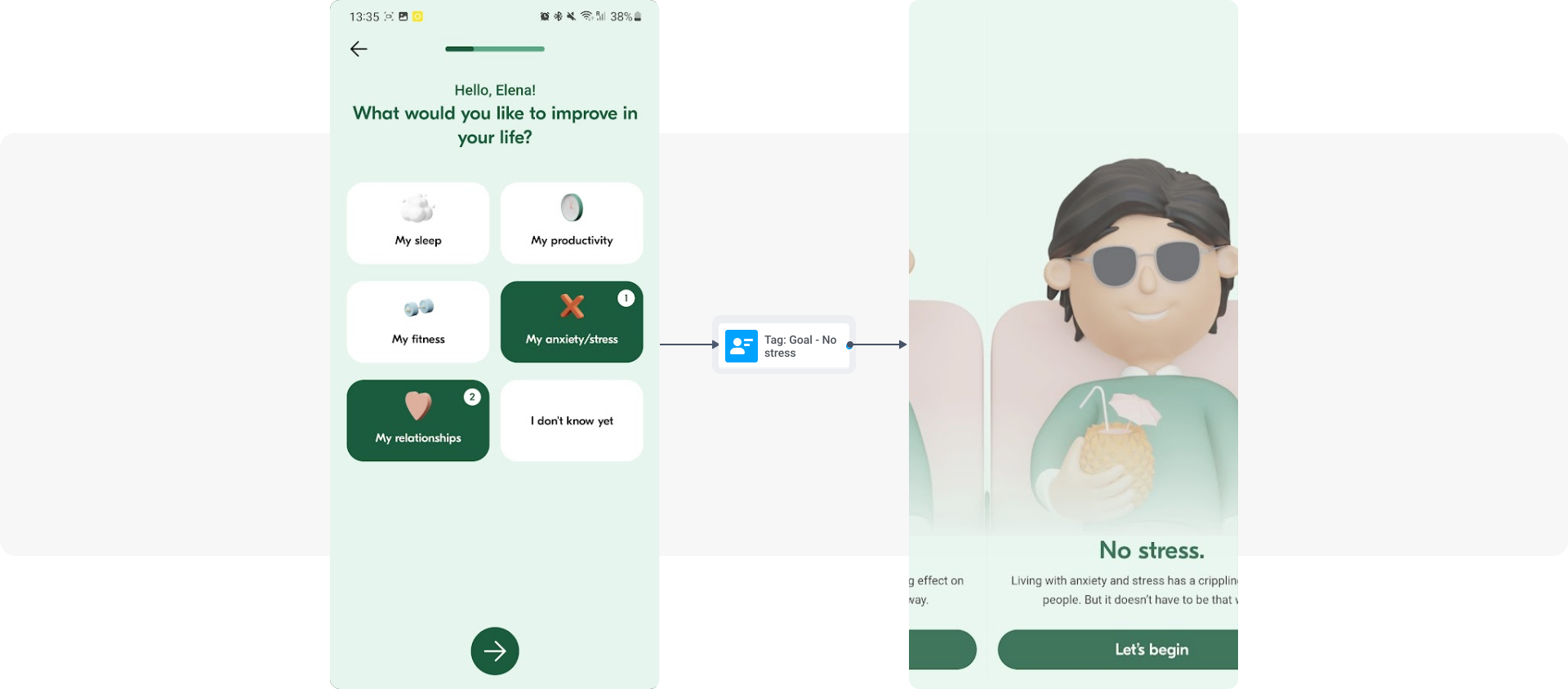
Elevate user engagement from the outset. Rather than just introducing, capitalize on welcome screens to gather insights into users’ unique needs and intentions. This data can fuel personalized onboarding, accelerating users’ journey toward product value.
Example: VOS suggests its newcomers pick a goal for their mindfulness journey. The app will remember the user’s choice to provide relevant, personalized recommendations.
Another option is to create contextually relevant user experiences from the beginning and provide new information on the app in bites.
Example: Design Home provides new players with a starter pack of in-game Diamonds to enhance user activation. Once the player exhausts their initial supply, the app displays in-app messages explaining how to earn additional in-game currency.
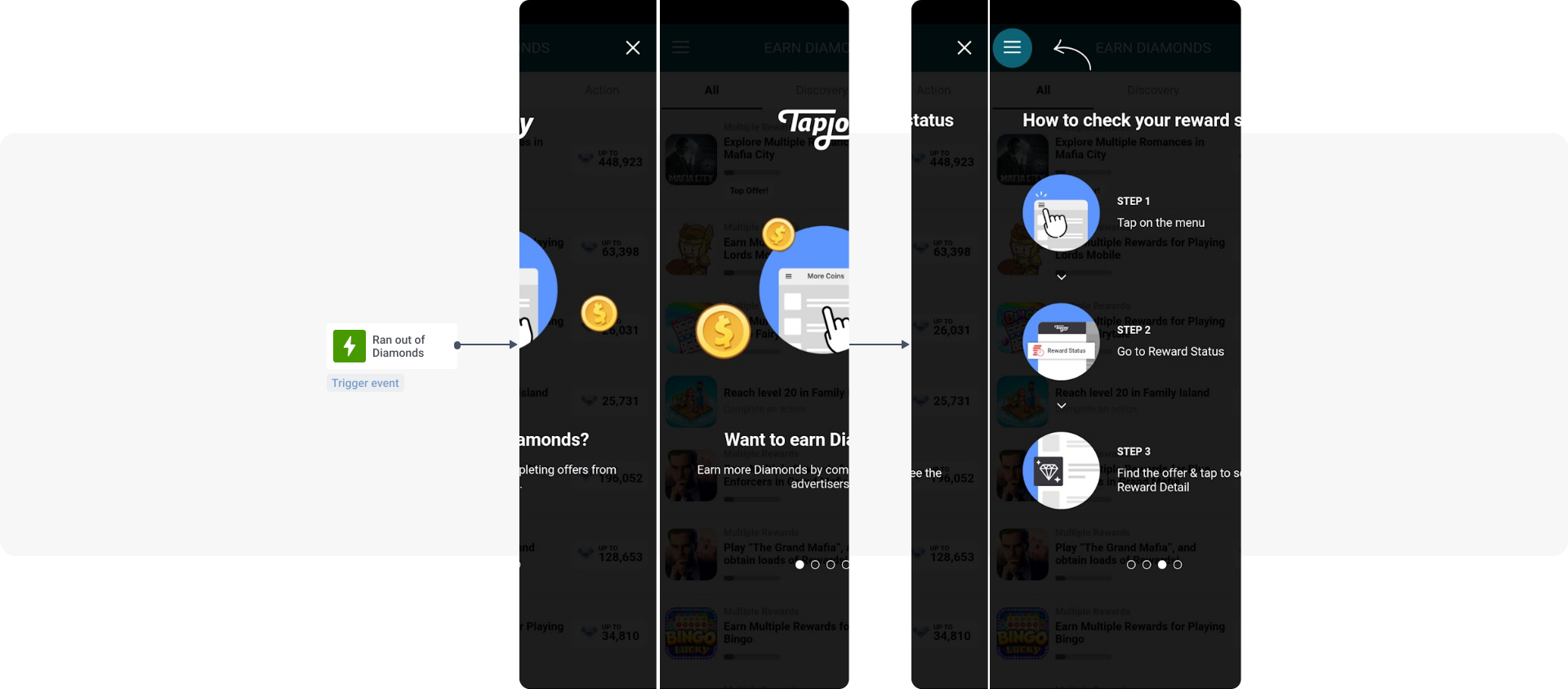
You can accomplish similar cases with behavior-based segmentation and event-triggered messaging powered by Pushwoosh.
Send reminders based on user (in)activity
To sustain ongoing engagement, recognize periods of activity and dormancy through user behavior analysis, and proactively dispatch timely reminders aligned with user preferences.
Example: PunchLab suggests its new users set up a training schedule and sends automated reminders at the specified times.

Or, as an on-premises business, you can remind your customers to plan their next visit, ensuring they stay loyal to your services:

By embracing these strategies in your Pushwoosh usage, you can create a habit-forming experience, increasing user retention and satisfaction.
When optimizing your CRC, make the most of your tools for customer retention
The key to optimizing CRC lies in strategically enhancing your customer retention efforts. Instead of simply reducing expenses on teams and tools dedicated to customer retention, a more effective approach is to maximize the value of your existing contracts.
Concentrate on your highest-value customers, those driving significant conversions, and delve into the capabilities of your current customer engagement platform, such as Pushwoosh. By leveraging these capacities to their maximum potential, you can unlock untapped opportunities for boosting customer retention and yielding the best possible ROI.
If you’re willing to review your customer retention plan, act now: sign up to Pushwoosh for free and try out solutions that will help to optimize your costs.