It’s the beginning of a new year and the perfect time to define new objectives and strategies to maximize growth. This article will help you further understand the 2022 user acquisition trends you’ll need to keep an eye on to succeed in the fast-growing app marketing industry.
Conversion optimization to gain even more importance
With the right strategic approach and significant investment in creative production, Apple’s Product Page Optimization and Custom Product Pages can be a game-changer for conversion optimization. With these new tools, marketers now have the right means to test and learn on a bigger scale to optimize conversion rates.
About Product Page Optimization (PPO)
Product page optimization (PPO), Apple’s new native A/B testing tool, allows developers to try up to three product page variants against their original product page. PPO enables testing for creatives (icons, screenshots, and app previews) for up to 90 days.
Each version of a product page is shown to a percentage of randomly selected App Store users and the tests’ results can be found on App Store Connect. Developers can then select the best performing variant before displaying it to everyone on the App Store and (hopefully) improving their product page conversion rates.
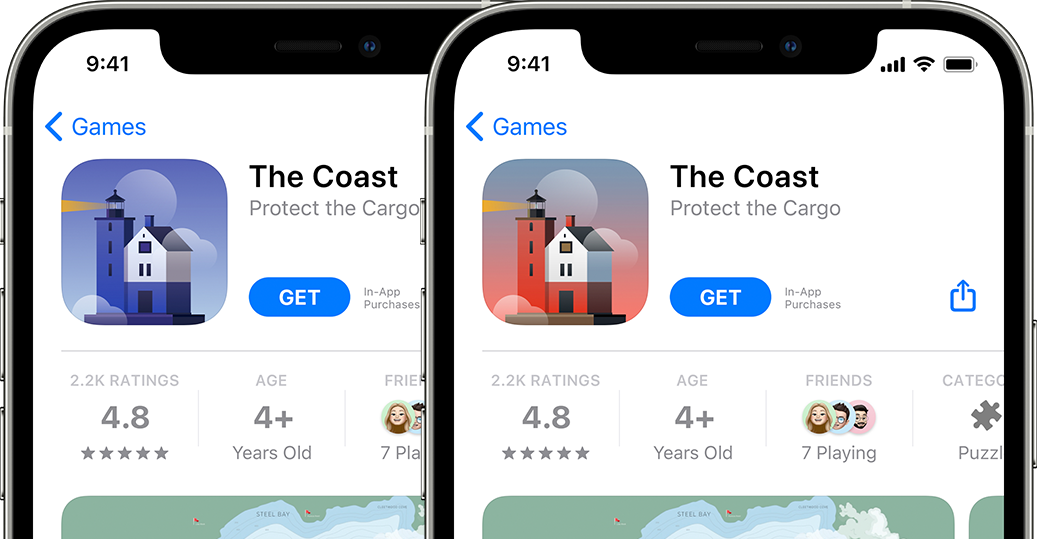
App developers will be able to create up to three different product page versions to test icons, screenshots, and previews (source: apple.com).
The product page optimization feature was supposed to be a game-changer for anyone working to improve conversion rates on the App Store. Unfortunately, some ASO teams that have tested it were initially left disappointed, as PPO appeared to have a few unexpected limitations. We can only hope that Apple will hear these concerns and make its tool more comprehensive and flexible to accommodate the work of both developers and marketers. Once it has been improved, the PPO tool should become a true force for organic conversion rate growth.
About Custom Product Pages (CPP)
With Apple’s new custom product pages (CPP), developers can create up to 35 variations of their product page to showcase other functionalities than those on their app’s default page. App developers can add different screenshots, app previews, and promotional text to highlight specific functionalities.
These custom product pages, only accessible via a URL link, are the perfect asset for app marketers to boost the efficacy of paid marketing campaigns and stand out to specific user demographics.
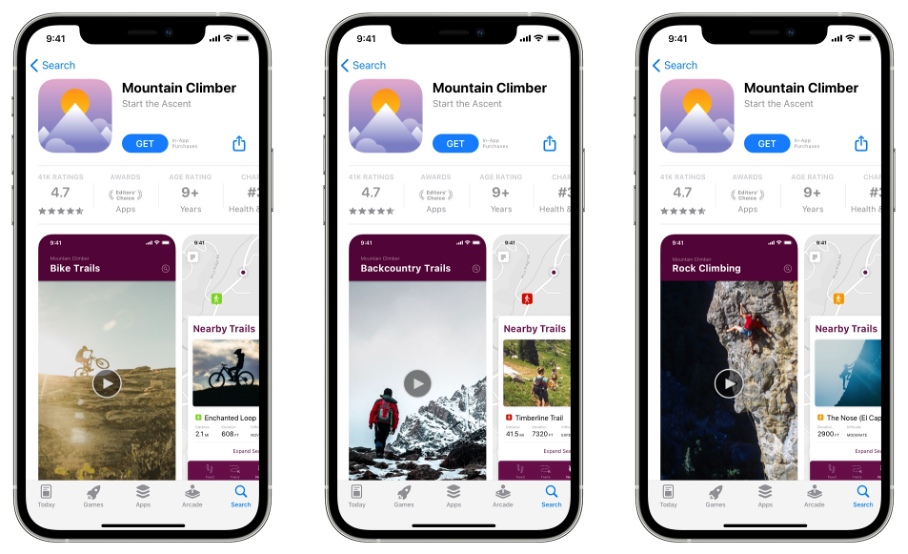
An example of Apple’s custom product pages on the App Store (source: developer.apple.com).
Because CPPs are still new (up until now only two ad networks including Apple Search Ads allowed for the use of CPPs) we have not yet witnessed their true force. It is, however, certain that custom product pages will have a dramatic impact on conversion rates, cost-per-install, and paid growth rates. CPPs will also bring new data from App Store Connect, helping marketers better measure the impact of their paid campaigns.
Role of ASO or UA manager to become more versatile
The role of ASO itself and the division of ASO and ASA is also likely to further fade away in 2022. As CPPs gain traction, UA teams will rely on ASO teams to share their know-how on how to create effective product pages. UA teams on the other hand will be able to share valuable insights on the performance of the different product pages.
On top of this, with the introduction of in-app events, Apple provides marketers with yet another new tool to reach new users, engage current users, or reconnect with lapsed users, further blurring the lines between ASO, UA and retention.
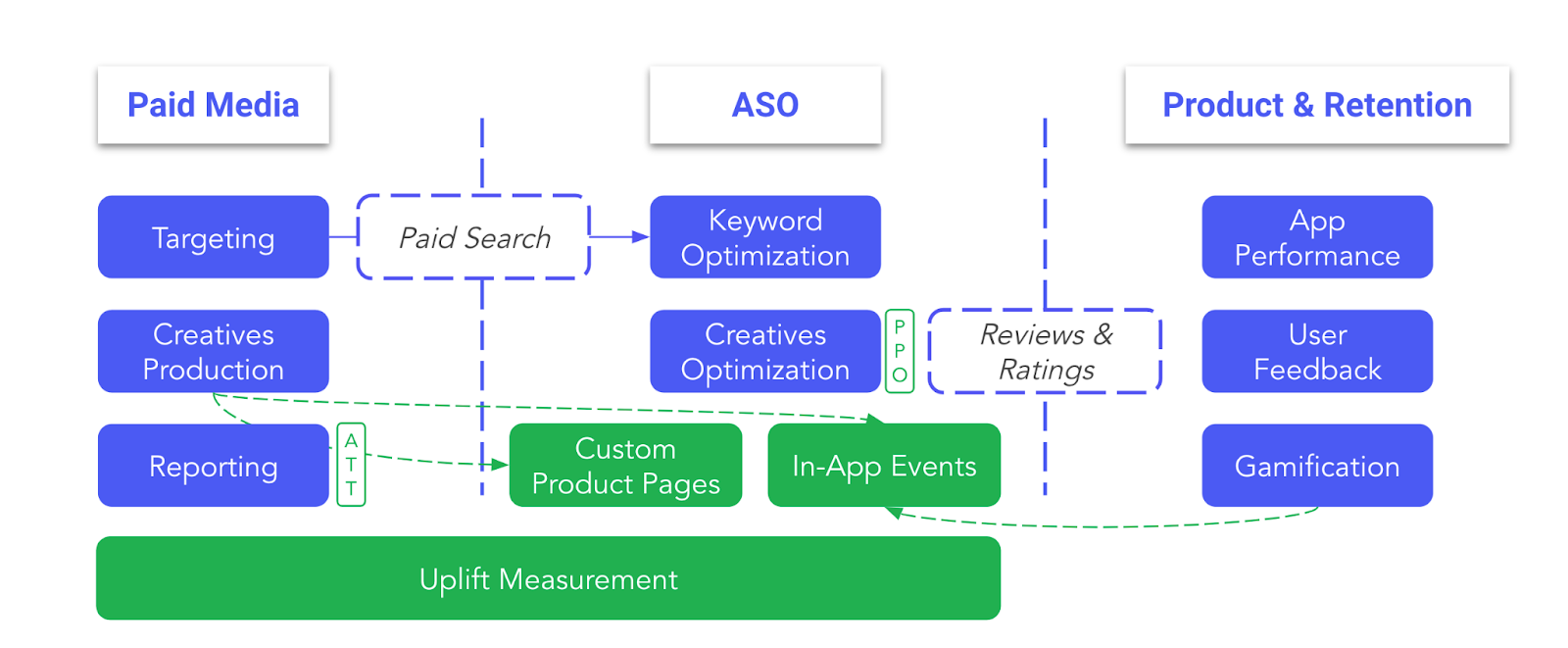
The blurring lines between organic and paid (source: AppTweak).
🤝Discover what mobile marketing experts have to say about the evolving relationship between user acquisition and retention
About In-App Events (IAEs)
With in-app events (IAEs) marketers can promote events competitions or major app updates via an event card that will appear in multiple places throughout the App Store. Here are some examples of events that you can promote via IAEs:
- Competitions (tournaments, battles)
- Live events (live-streamed events like news or sports)
- Major updates (release of a new version)
- New seasons (new levels or characters announcements)
- Premieres (release of exclusive new content)
- Special events (achievement of a milestone, time-limited events)
Event cards appear on product pages and directly in the search results and display event details such as an event name, a short description, an image, or a video.
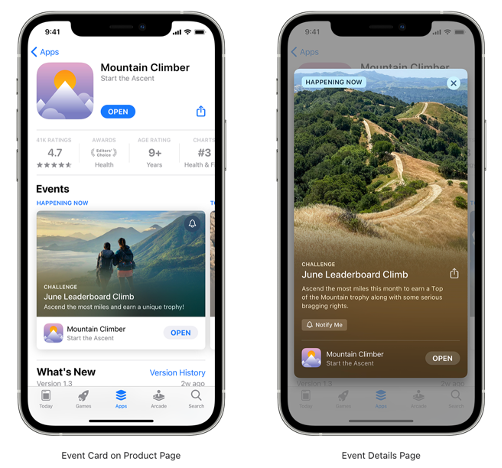
An example of an in-app event on the App Store (source: developer.apple.com).
ASO teams can leverage in-app events to increase an app’s visibility in the search results. Furthermore, event cards replace the screenshots in the search results for users who have already downloaded the app. This provides marketers with a new opportunity to re-engage current users, increasing ASO team’s role in user retention. Who knows, maybe Apple will allow marketers to create campaigns that send users straight to an event card, further blurring the lines between ASO and UA.
Google to further improve discovery on Google Play
In 2021, Google implemented a few updates aimed at improving app quality and discovery on Google Play.
First, Google updated its metadata policy guidelines, requiring apps and games to reduce their title from a maximum of 50 characters to 30 characters (the same limit as on the App Store). Google has also prohibited the use, in the app icon, title, and developer name, of elements that can mislead users regarding the performance of an app such as “best”, “top”, “free” or “no ads”.
Later in the year, Google announced they changed the way they display app ratings on an app page to make them more relevant to users. Instead of showing the average global rating, Google now shows average ratings by country. In 2022, Google is to further break it down and show ratings by device type.
Both updates indicate Google is investing in providing a better browsing experience in the Play Store. Combined with the little-known fact that the Google Play search results in Japan already show app videos and screenshots are potential clues that Google may consider revamping the UI on the Play Store.

Google Play Search Results in Japan
Apple has recently released new personalization and advertising tools that will become increasingly popular this year. To harness the full potential of each tool, developers, UA teams, and marketing teams will have to work closely with each other iterating and assessing results. Finally, keep an eye on Google Play for updates on future launches.
Catch up with mobile marketing trends beyond user acquisition — anticipate the evolution of data privacy, 5G technology, and promising revenue streams.
Up your app marketing game with omnichannel communications. Discuss your opportunities for mobile-driven growth with Pushwoosh Team.