
Pushwoosh has evolved from a well-developed push notification solution into a full-scale customer engagement platform, working effectively as a CDP and a messaging solution for mobile and web channels. Our product team does its best to make all the features easy to find and start using; nevertheless, some use cases and functionality may have gone unnoticed for you. To help you (re)discover Pushwoosh, one of our most involved and successful customers, Bladestorm, has agreed to share some less evident tips from their experience of using the platform. Over the last year, the publisher of the GC.SKINS app achieved a 16.62% increase in MAU and 4.58% revenue growth with the help of Pushwoosh — keep reading to get first-hand knowledge and gain the most value from the platform.
And we’re giving the word to Evgeny Cherdantsev, UA & Product Manager @ Bladestorm:
1. Pushwoosh is great for A/B testing
Through experiments, we’ve discovered that psychology plays a huge role in customer engagement. And since psychology is largely an empirical science, we could only come to a certain conclusion through practical A/B tests. It turned out:
Gratitude is engaging
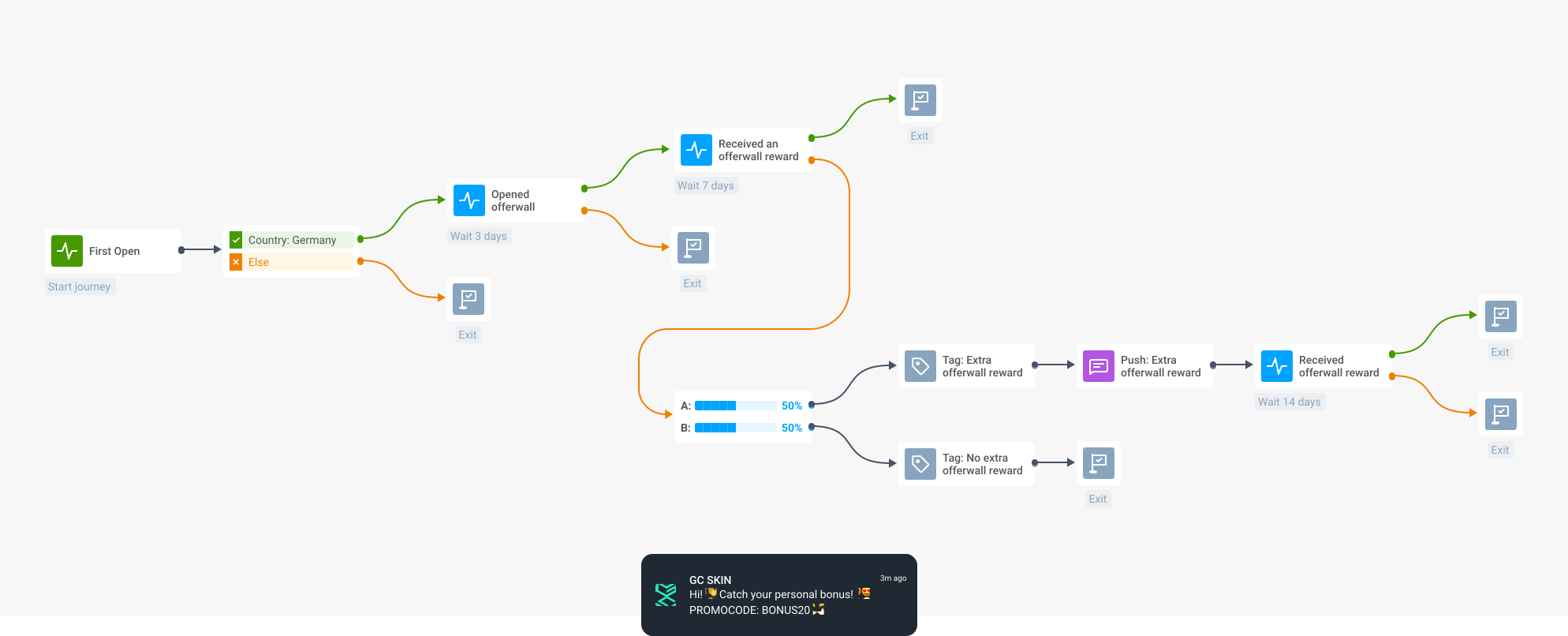
One of our best-performing A/B tests questioned whether a thank-you message sent after an offerwall reward would stimulate further user engagement. And it did! Furthermore, those who were receiving thank-you notifications even had 1% higher ARPU!

So our next hypothesis is: showing gratitude for any useful action taken by a user will boost their engagement later on. I encourage you to test it in your app!
Straightforward pushes are repelling
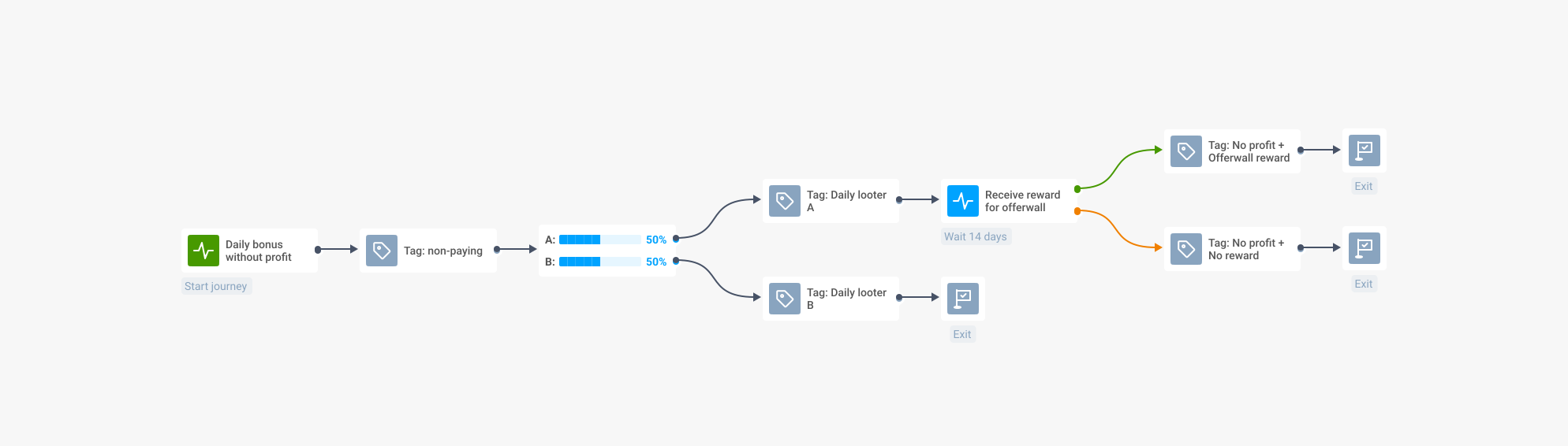
We attempted to motivate non-paying users: one group of them received a push notification with a very straightforward CTA, and another one did not.
To our surprise, the players who received a message showed 11% lower ARPU.
Bottom line: users don’t like being pushed to action. This double-confirms the hypothesis above: praise for taking the target action is valued more than persistence.
Extra tip: Expect your hypotheses to fail. For example, we bet on welcome in-app messages (aren’t they known to be effective for all the other apps in the world?), but they didn’t bring any significant improvements. That is to say, you have to A/B test everything and never assume anything.
2. As KPIs from working with Pushwoosh, you can confidently choose monetization metrics
As you could guess from our A/B test descriptions, Bladestorm prioritized ARPU over any other indicators, and we expected automated push notification campaigns to improve our monetary metrics. We elaborated a formula to calculate the revenue we receive from a push and started working. The rest is history: in the course of the following eight months, we saw a 4.58% revenue increase!
🏆Read the complete success story
3. For long-term objectives and long-time campaigns, go for Pushwoosh Customer Journey Builder
We found Pushwoosh’s automated campaign builder perfect for addressing long-term challenges. You only need to set up a messaging sequence once, and it will automatically send relevant communications when this particular user arrives at that particular point in their journey.
By long-term challenges I mean any activities that drive retention, for example:
- Notifying the audience of recurring weekly promotions
- Asking for reviews in Google Play
- Promoting other services of our company
- Reminding players of their daily bonus
- Updating users on the new features and encouraging to try them
- Getting back to the users who haven’t opened an offerwall or a giveaway page
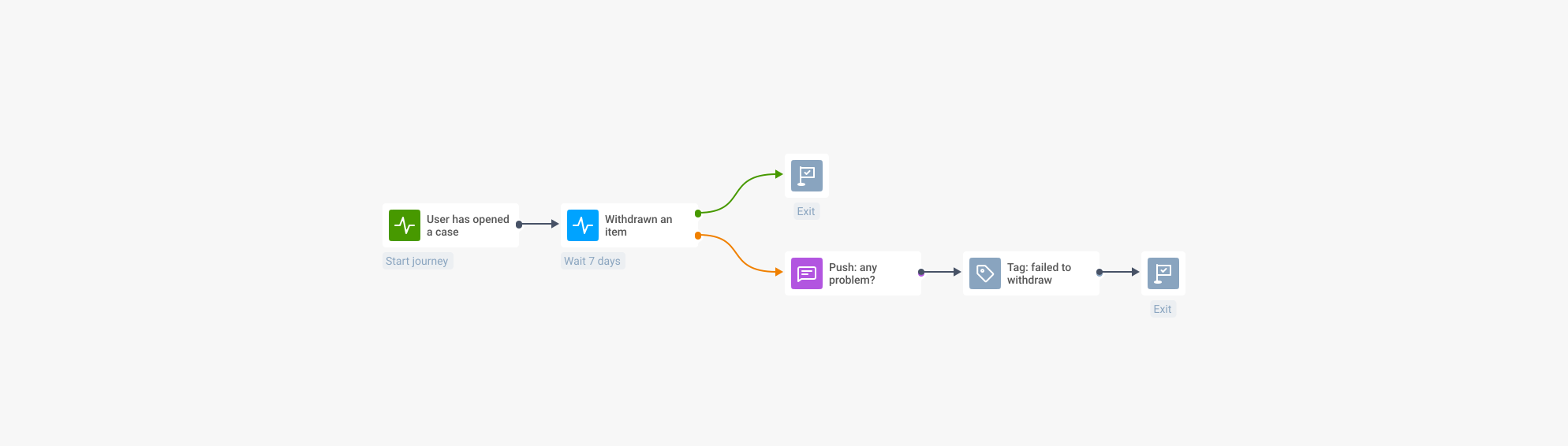
- Motivating gamers to complete more tasks — sometimes, it’s as simple as actually thanking them when they’ve done a task.
4. For quick and easy short-term promo, single-channel campaigns in Pushwoosh are a go-to
As much as we love using Pushwoosh Customer Journey Builder, we find it easy to use One-time push to send simple one-off communications that don’t require any sophisticated segmentation.
For example, if we wish to carry out a survey, we just upload a file with the survey’s target audience to Pushwoosh and send a ready-made push with a link to the questionnaire to all of these users. As we have over 200 Presets for all occasions, we only need to choose one, tweak its copy, set the audience, and schedule a push. It’s quick!
5. Scheduled campaigns are a breeze with Pushwoosh
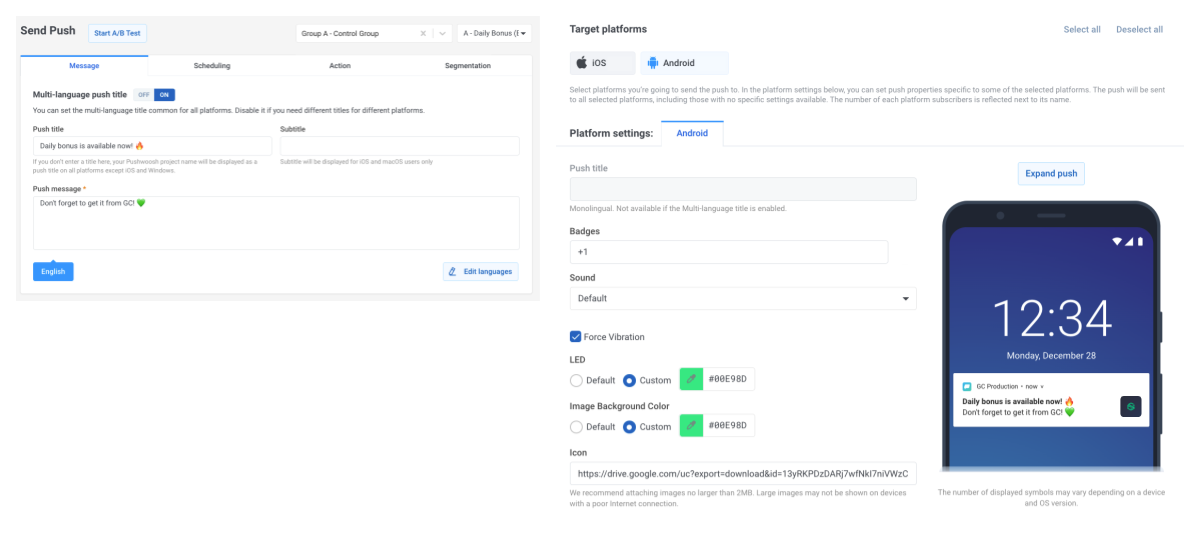
One of the most effective tactics Bladestorm has used is sending push notifications with daily offers on a schedule. They are very well-received by our gamers — the CTRs reach 28.21%! — as the bonuses are time-limited and, oftentimes, country-specific.
 📅Read
more about
scheduled push notifications
you can send with Pushwoosh⏰Get an overview of the
features for effective scheduled campaigns in Pushwoosh
Customer Journey
Builder
📅Read
more about
scheduled push notifications
you can send with Pushwoosh⏰Get an overview of the
features for effective scheduled campaigns in Pushwoosh
Customer Journey
Builder
6. You can conduct customer surveys with the help of Pushwoosh
As I’ve mentioned, Bladestorm conducts regular customer surveys and promotes them via push notifications. As we’ve gained experience in it, the response rate has grown by three times! This is how we optimized the process:
- We targeted a narrow user segment
We created behavior-based cohorts in Amplitude and imported them to Pushwoosh. We matched data by User ID and got to target our messaging at a very precise user segment — this is what typically brings the best results, and we’ve seen it for ourselves!
- We promised a reward for taking a survey
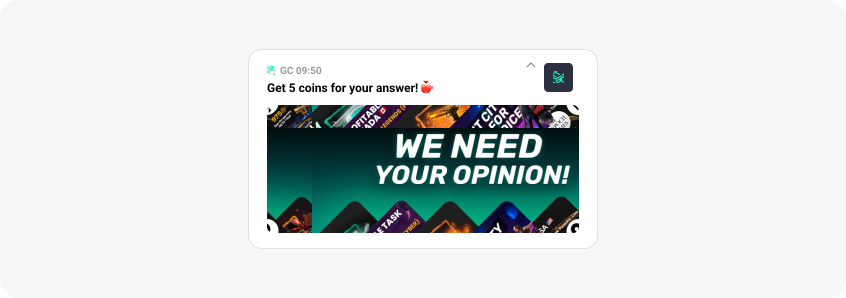
Instead of suggesting users “participate in our survey” we wrote “get coins for an answer”. Although the incentive was tiny, it motivated users from the countries as profitable for us as Germany!
It was a psychology lesson that we learned: players value the expectation of reward, not its monetary value.
Extra tip: customer surveys are very effective as an ongoing user engagement technique and a way to gather feedback for further product development, that’s obvious. But also, surveys are indispensable when, for one reason or another, you can’t monetize your app at the moment. During an unprofitable period, you can use surveys to stay in touch with your audience and improve your app/product in the meantime.
7. There are some channel combinations that should be a must-have for every marketer
For example, Bladestorm leveraged the “push-to-in-app” pair for user retention:
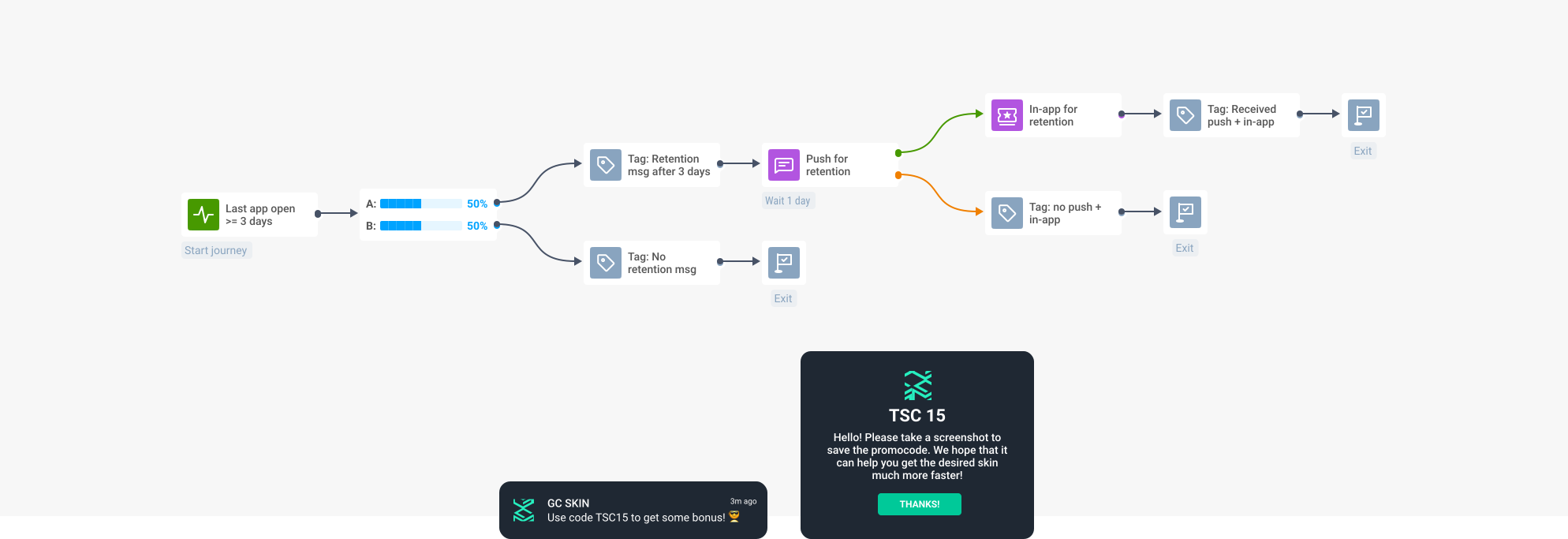
What we liked about the “push-to-in-app” combination:
✓ It is technically impossible to send a message to the wrong audience: the in-app is displayed only to those users who’ve opened the push.
✓ There is more space for giving detail of a promo offer.
✓ Users have no problem remembering the promo code. Otherwise, if it was sent directly in a push, they might open it, never save the code (and, subsequently, never apply it), and then flood our support with requests. When the promo code is saved in an in-app message, both our users and our team can rest easy.
So, it’s definitely worth trying and setting up a retention flow with the use of the “push-to-in-app” pair as the technique will serve you for a long time.
8. You can easily send geo-based offers
Probably, even geo-targeted push notifications are no news to you, but here is our take on country-based segmentation and messaging.
As game offers differ from one country to another, we targeted our users with the daily tasks relevant for their location, which makes sense.
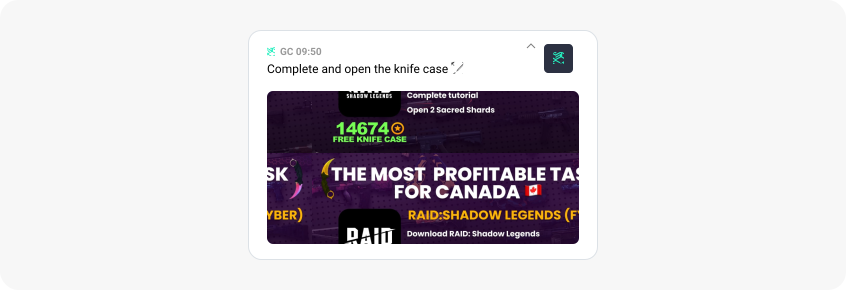
What remains offscreen, though, is the fact that more expensive tasks are reserved for the countries that bring us the highest profit. We know it for sure as each offer contains an AppsFlyer’s OneLink, and it allows our community manager to track the efficiency of our communications.
9. You can determine the best moment to show your message
If you’ve ever run after the best time to send your notifications, here is my answer: the best moment is when your user has just triggered the most relevant event.
For example, in our user feedback campaign, the best time to send a “rate the app” request is when a player has just withdrawn a skin. This is the time when the user is the happiest, so they are most likely to give us 5/5 stars.

10. To jumpstart your event-based marketing, you only need to configure events
in your app
Sending event-triggered communications is easier said than done, you may think, and you are partly right. But there is a lifehack I am willing to share.
If you wish you set up your first Journey Starting by Event, all you need to do is configure Events in your app — you don’t have to integrate Tags into your app. Instead, I recommend you Set Tags right in a Customer Journey flow. This will take less time and effort from your app development team, and you’ll surely appreciate the easiness and shorter time-to-launch.
11. You can use push notifications to boost your social media presence
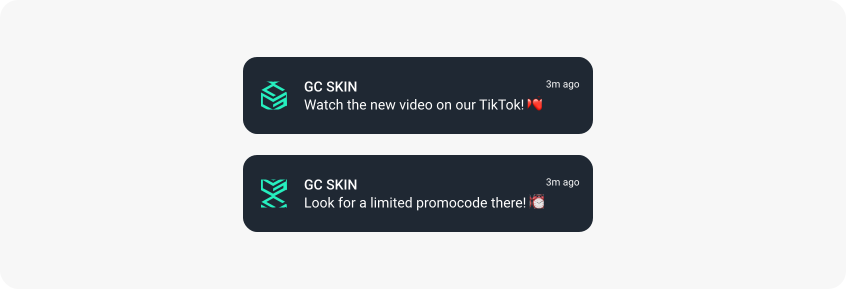
Push notifications sent with Pushwoosh helped us grow GC.SKINS’ communities on social media: we’ve attracted 1k–3k users from one push!
Most recently, we’ve launched a TikTok channel for Germany, and we’ve acquired our very first subscribers to it with a few push notifications, can you imagine? Now we keep driving visibility of the videos we publish there — again, by using pushes.
From time to time, our notifications may feature our Facebook, Twitter, Reddit, and Discord content as well.
12. You can make push notifications part of your influencer marketing campaigns
As you can push any links to external content, you may think that push notifications are also a great channel to promote your placements in influencers’ videos. That’s true: this is how we’ve even managed to get videos featured in Recommendations.
A general algorithm behind it: when a new video attracts a large target audience and gains great numbers of views, likes, and shares shortly after release, the system determines that the content is of high quality and includes it in Recommendations.
The only pitfall of promoting influencers’ videos with pushes is that you’re using your owned media to drive traffic to somebody else’s channel…
To resolve this, now we prefer to push links to the content published on our own accounts. It works as great as ever, and we’re not missing out on any traffic that was supposed to stay engaged with our brand messaging.
13. Pushwoosh is great for working as a team — but you don’t need a lot of people to work with it
Who stands behind all these experiments with messaging, engagement, and retention? There is actually one person directly working with Pushwoosh tools and two more people in the team who help me with doing some simple tasks, like writing copy and boosting posts via push notifications.
And if I was ever concerned about my less-experienced colleagues ruining anything in our all-set account, I could limit their access to certain features.
So the truth is, you can **invite your team members ** and educate them to work with Pushwoosh but you don’t need a bunch of extra people to maintain the platform.
14. Pushwoosh works great combined with external analytics tools (including Amplitude and AppsFlyer)
- We exported cohorts from Amplitude and sent segmented communications to them with Pushwoosh. For a product manager, this is indispensable as it facilitates quantitative and qualitative custdev surveys.
- When we did A/B testing, we exported its results from Pushwoosh and added the data to Amplitude. There we matched users by their ID and ARPU.
- And, if you’ve read about our experience with social media and influencer marketing, you know that we like using AppsFlyer’s OneLink.Here are just some scenarios that have worked best for us, and I am sure you may come up with many more ways to make use of Pushwoosh integrations (such as the recent one with Mixpanel and data export/import features.
Pushwoosh Team thanks Bladestorm for their trust and invites anyone who wants to explore our platform and its use cases on a personal product tour:
Not ready to discuss your cases yet? Find out the reasons why other brands like yours have entrusted their customer engagement to Pushwoosh: