About Instories
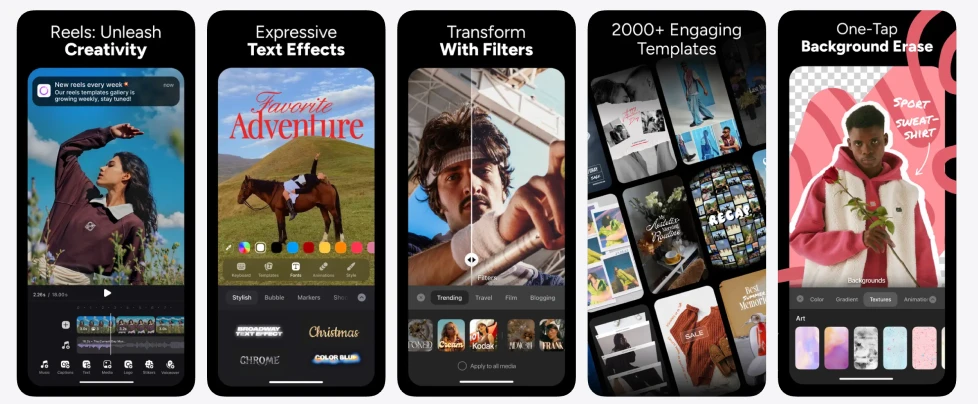
Instories is a mobile creative app with 15M+ users across 20+ countries, generating over 30 million videos every month. It gives everyday creators and small businesses access to professional-quality Stories and Reels — templates, editing tools, and one-tap sharing built into a single product.
The app operates on a freemium subscription model with a free tier, trial periods, and a Pro subscription, making conversion and retention the central levers of its business.
TL;DR
The challenge: the right message for every stage of the funnel at global scale
Apps like Instories all run into the same problem: a freemium model only works if you can move users through a funnel with several distinct stages, each with its own conversion dynamics and its own drop-off risks. For Instories, that funnel runs from install to onboarding, trial, paid conversion, and renewal — and a user can churn at any one of them.
The first few interactions decide everything: shown a paywall almost immediately, a user converts to a trial, skips it, or bounces. Getting them to that first meaningful action — an upload and a share — is the inflection point that predicts conversion to Pro. After that, the challenge shifts to renewal: keeping subscribers engaged enough that they don’t cancel before the next billing date.
Every stage needs a different message, a different urgency, a different hook. And with users across hundreds of countries and time zones, all of this had to run around the clock and at scale, while still feeling personal.
None of that works without a platform that can instrument every stage of the funnel.
The solution: Pushwoosh-powered automation across the subscription lifecycle
Tasks like this rely on a steady stream of fresh, well-synced data. Instories integrated Pushwoosh into their stack and mapped the entire user journey with 459 custom events — most of them flowing in from Amplitude, the rest from the app and the client’s own backend, all kept in constant sync. Those events feed a system of 31 always-on journey automations — out of 224 built and iterated across the product’s lifetime.
Knowing this much about each user, Instories can put the full toolset to work: push notifications and email work as a coordinated pair, all orchestrated through Pushwoosh’s Customer Journey Builder across every critical stage of the subscription funnel.
Journey architecture: 4 funnel stages, each with push and email tracks
Instories organize their journeys into 4 categories. Each one runs parallel push and email automation.
1. Acquisition / onboarding
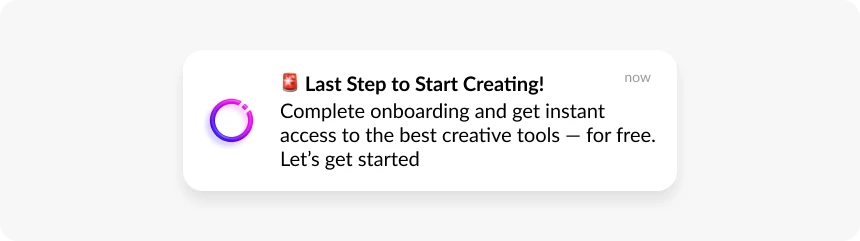
The entry point is a push-based onboarding journey that fires on install. A short welcome push sequence introduces the app, and a corresponding email onboarding welcome journey handles users where email is the better fit.
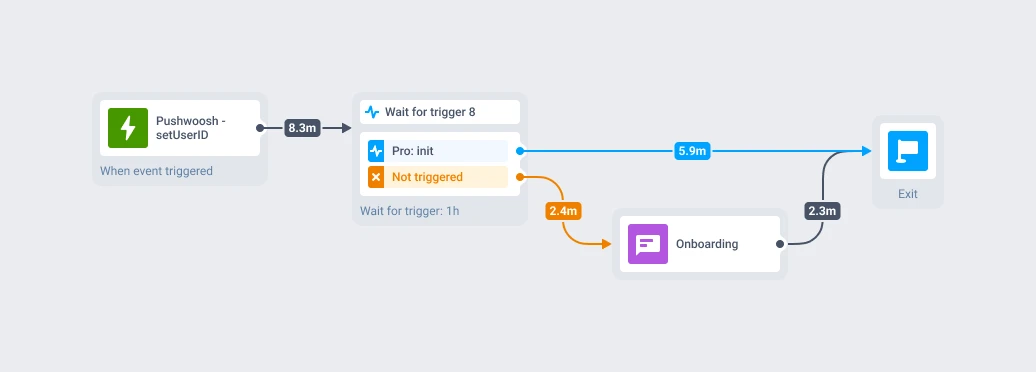
The journeys check whether users have reached the paywall and fire targeted messaging to those who landed on it but didn’t convert. That branch alone uses 8 push sends, 2 emails, and 4 webhooks, with A/B testing built directly into the flow.
2. Trial activation: getting free users to their first share
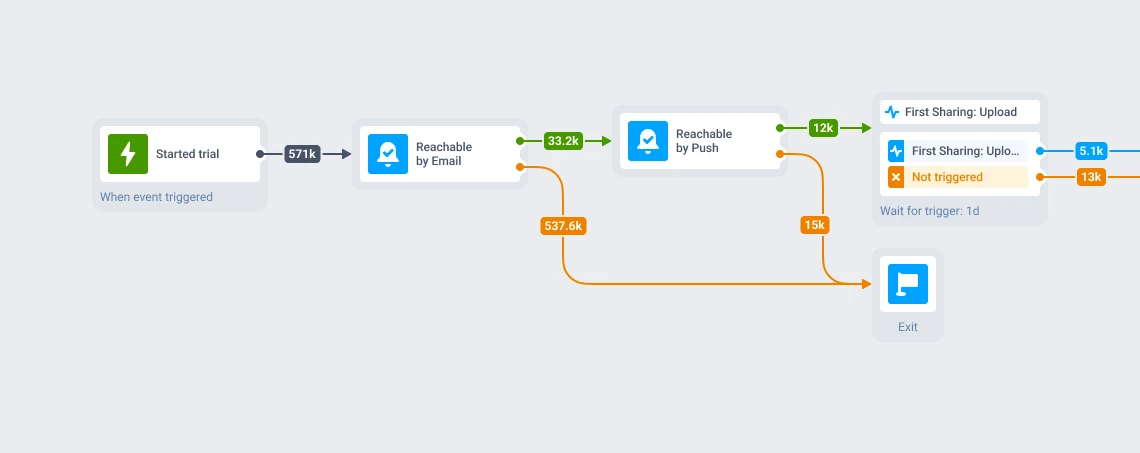
This is where Instories’ journey design gets sophisticated. Their most complex live journey — the one that moves paid subscribers toward creating and sharing their first piece of content — contains 57 push sends, 27 boolean splits, 56 filters, and 38 wait-event points. It’s a branching, event-responsive sequence, and it routes each subscriber differently at every checkpoint based on what they’ve already done.
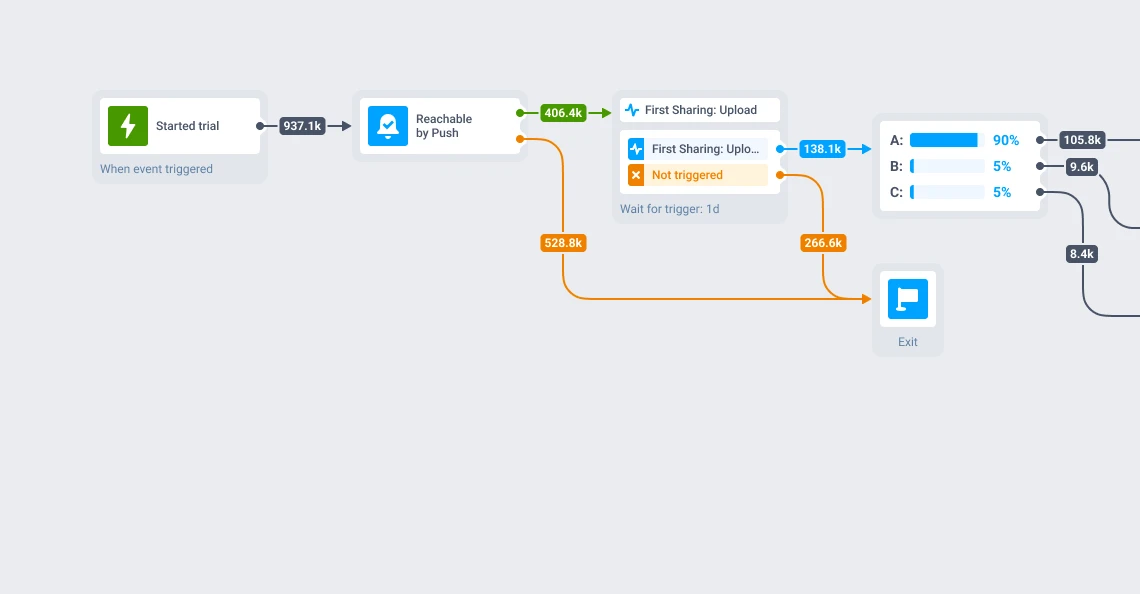
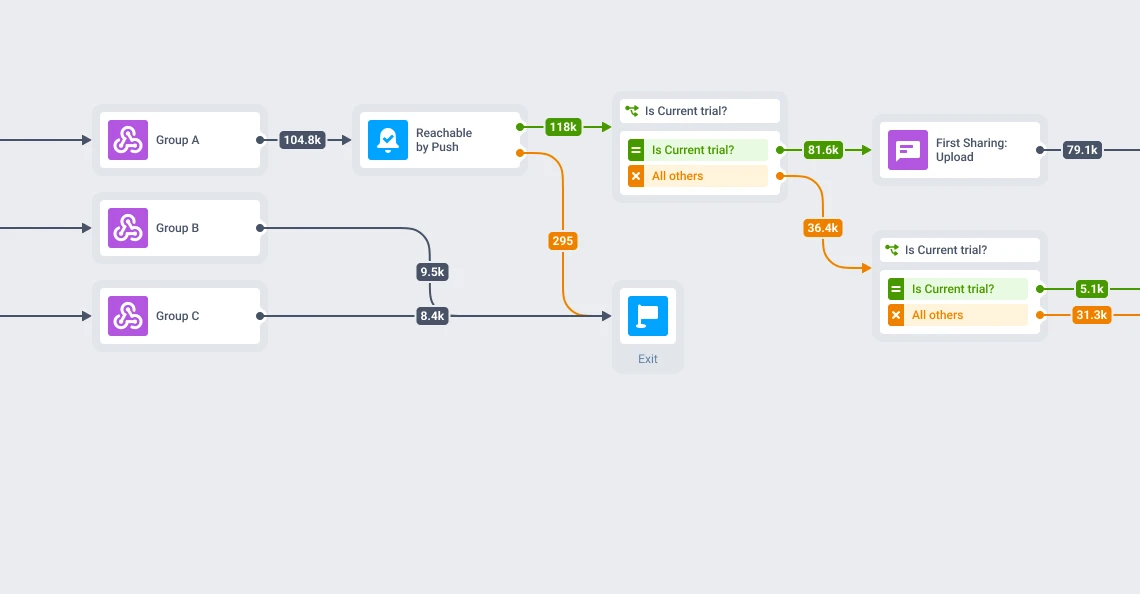
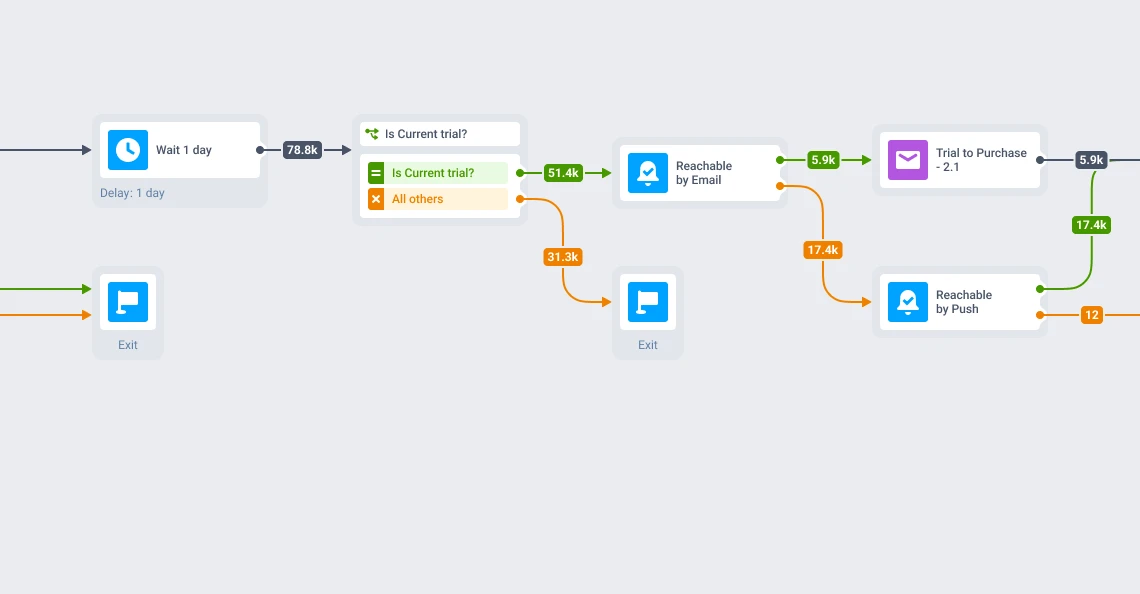
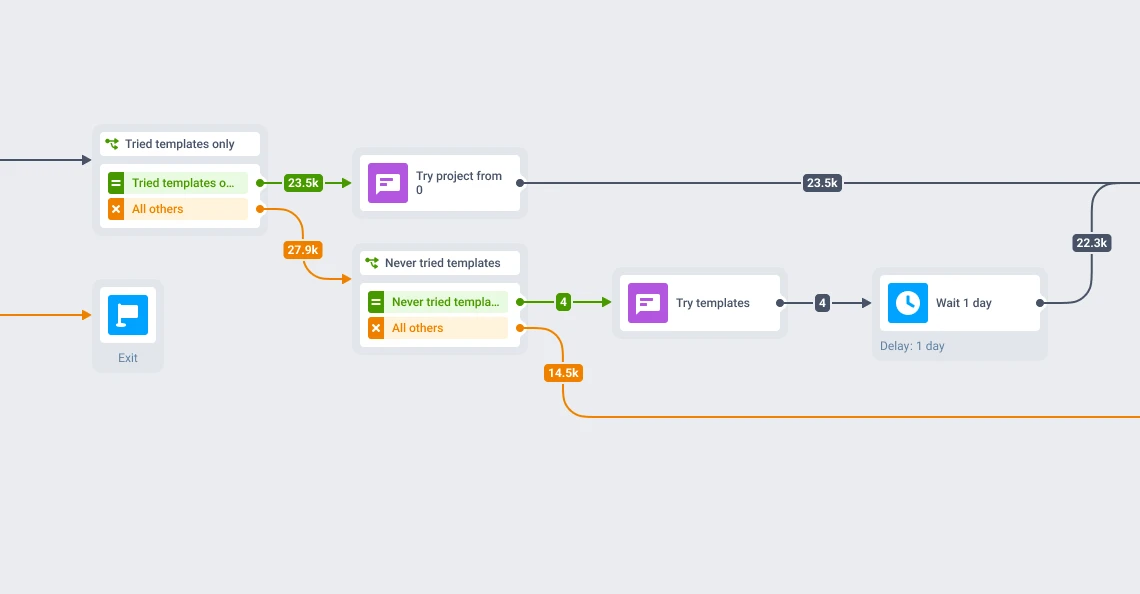
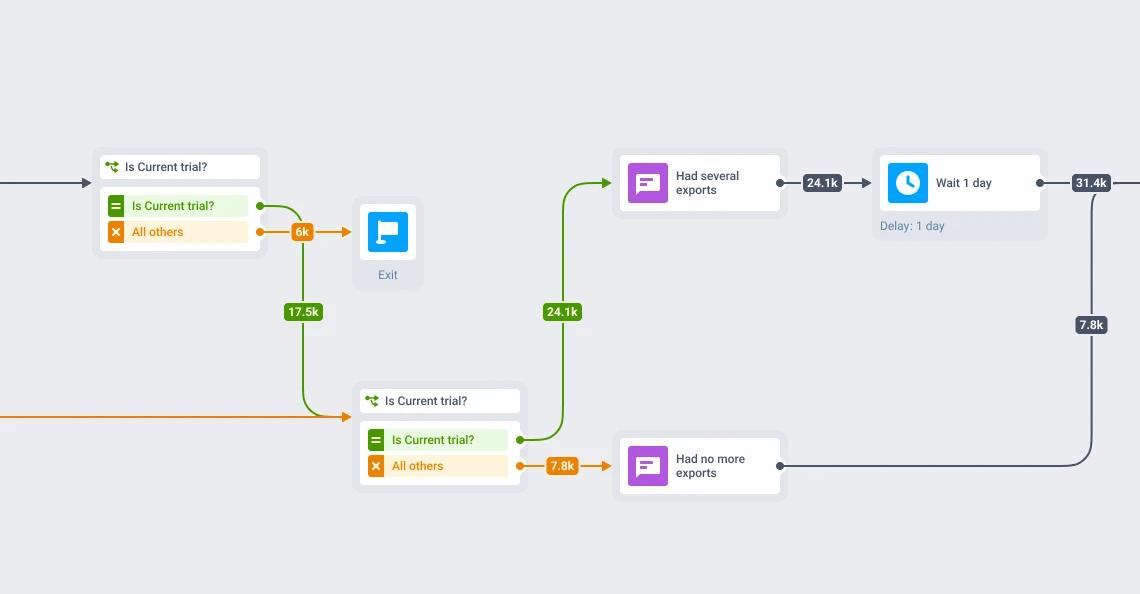
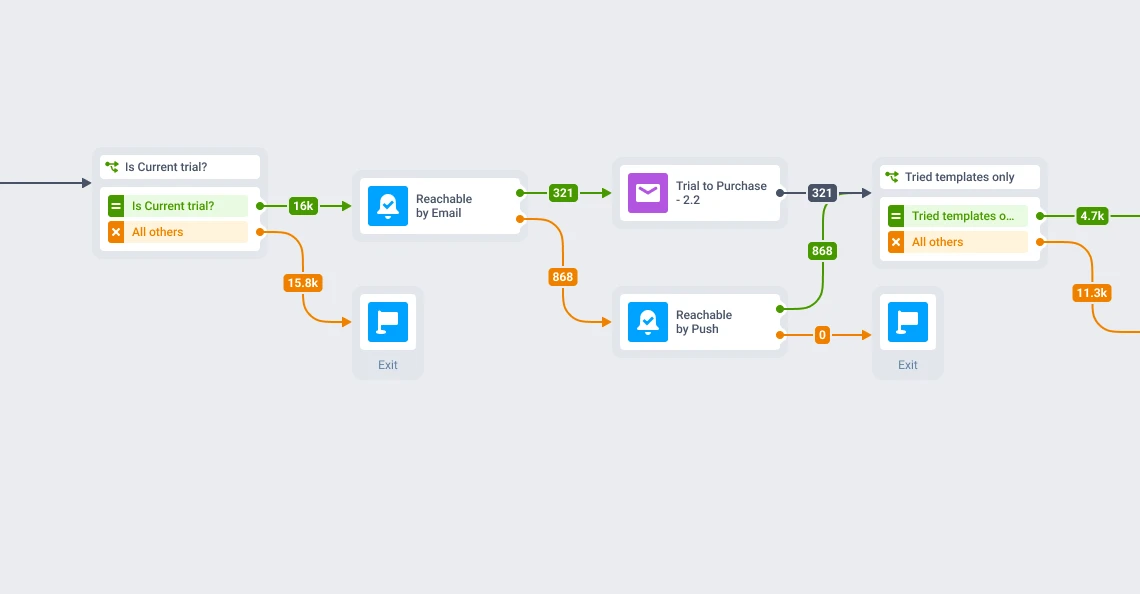
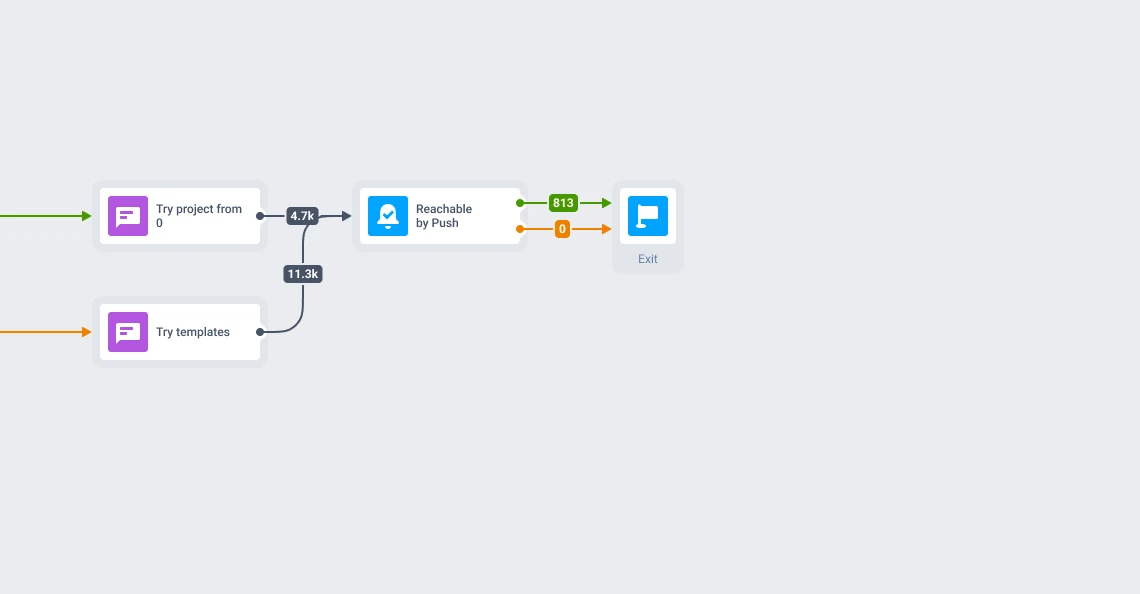
For trial and free users, separate journeys run alongside it:
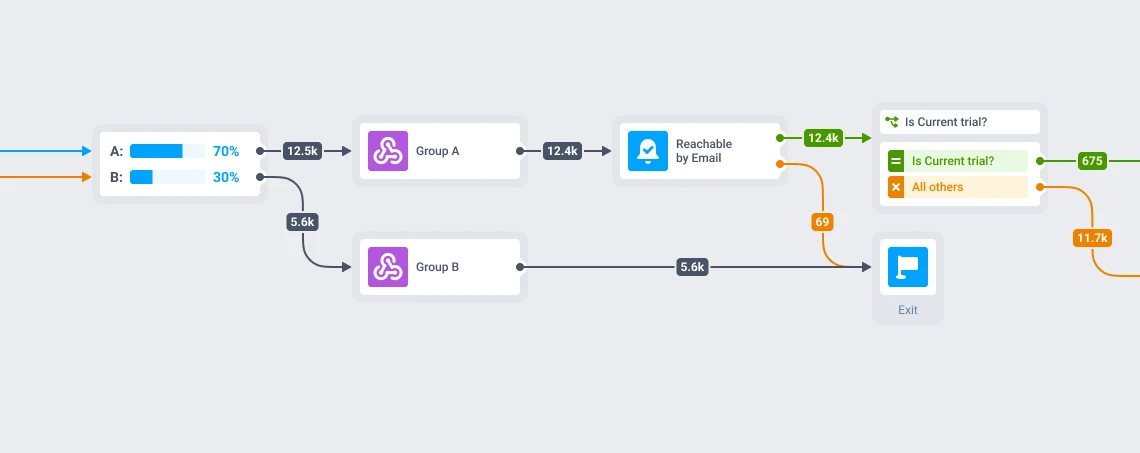
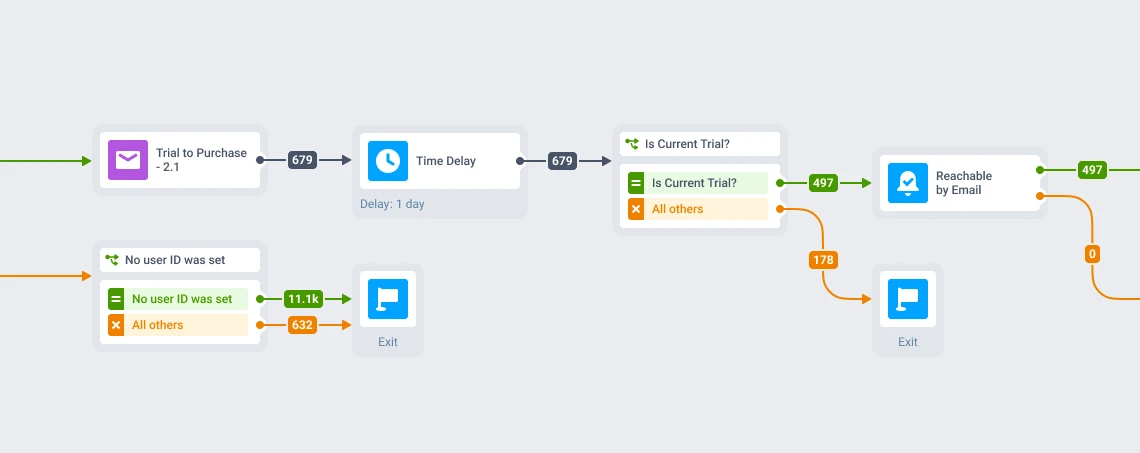
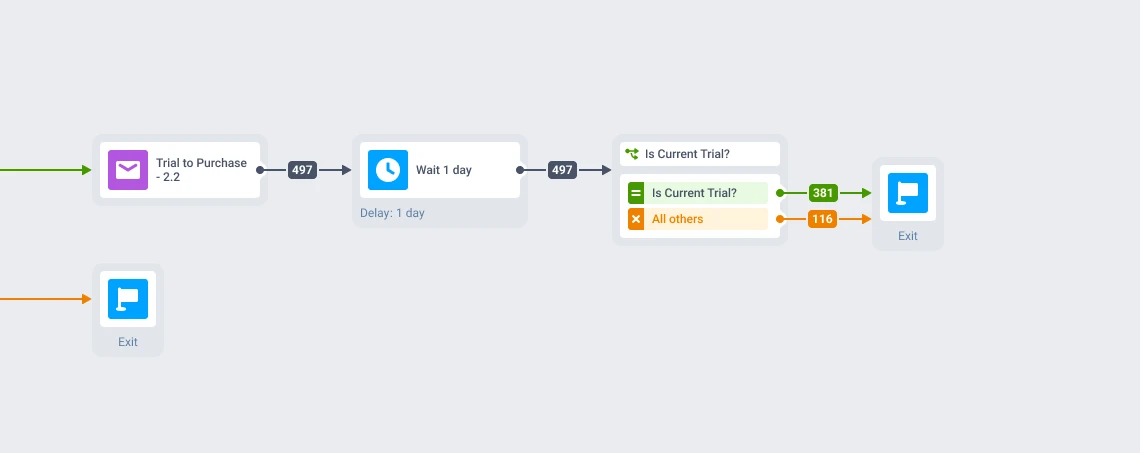
- Trial start to first upload — triggers when a trial begins, with 5 A/B test splits, 3 condition splits, and 9 push sends driving toward the first content upload.
- Extended trial to first upload — mirrors the above for users on an extended trial, with 11 pushes and an email fallback.
- Free tier to Pro — targets free users with 7 pushes across 9 conditional paths, measuring conversion in a 1-day window.
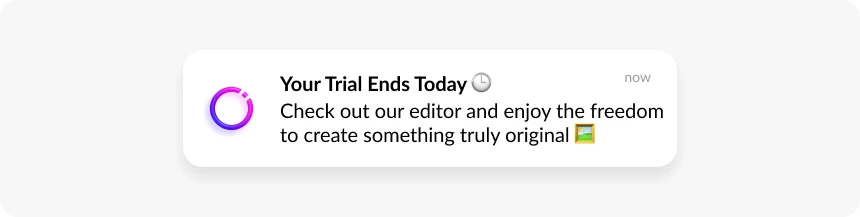
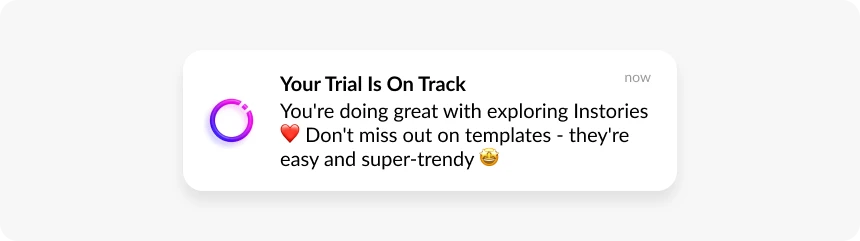
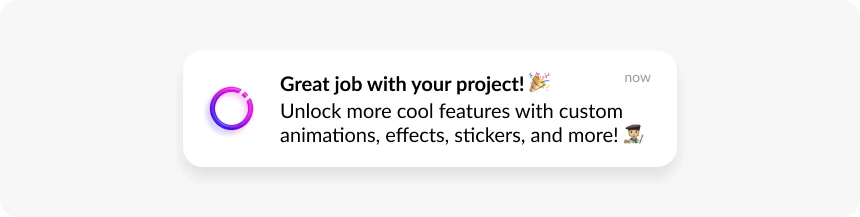
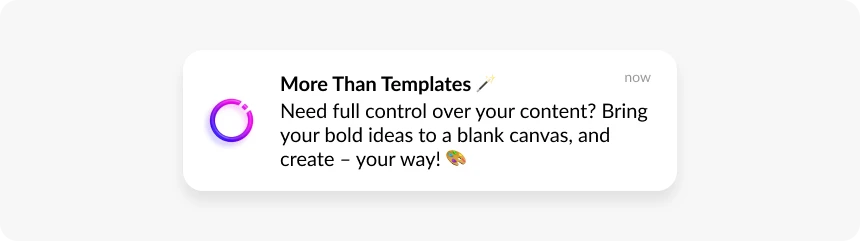
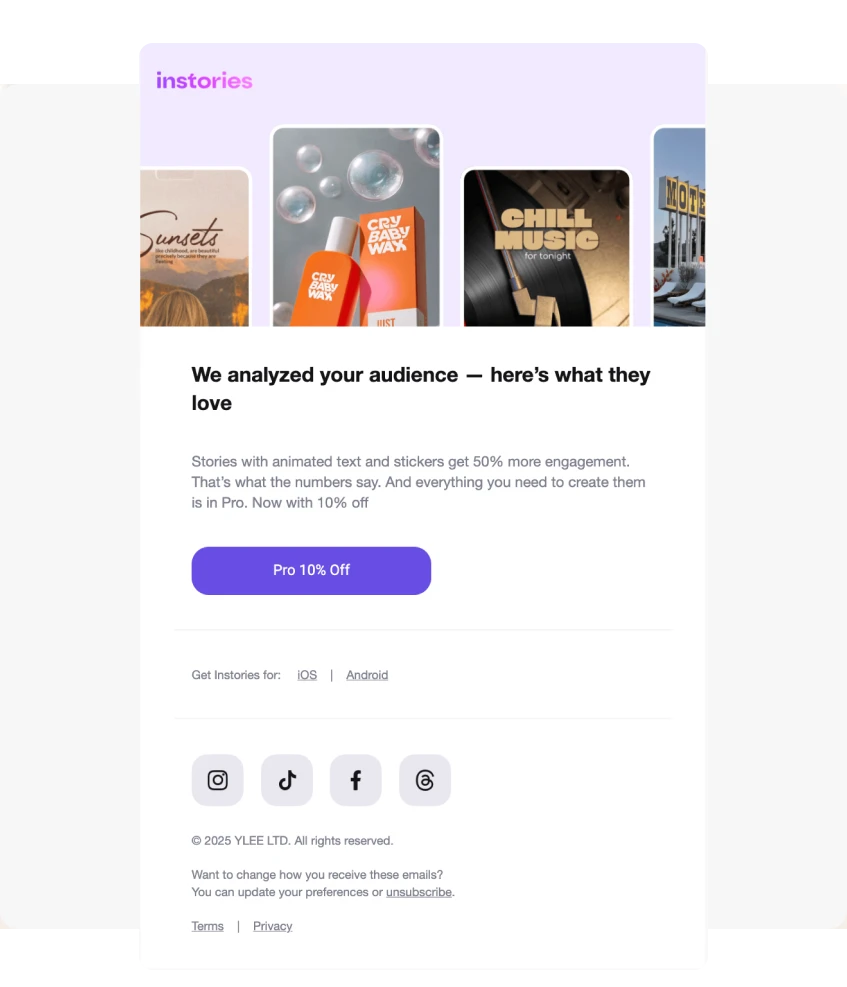
Each of these has a matching email variant running at the same time. Users who don’t engage with push get a second touch in the inbox.
3. Cancellation prevention
When a subscriber shows cancel intent or hits a cancellation event, Instories fires a dedicated cancellation-recovery journey: a 31-day, 11-push sequence with 3 A/B splits, 12 wait-event nodes, and goal tracking across 3 conversion events. A lighter sequence fires in the final days before a subscription reaches its renewal date.
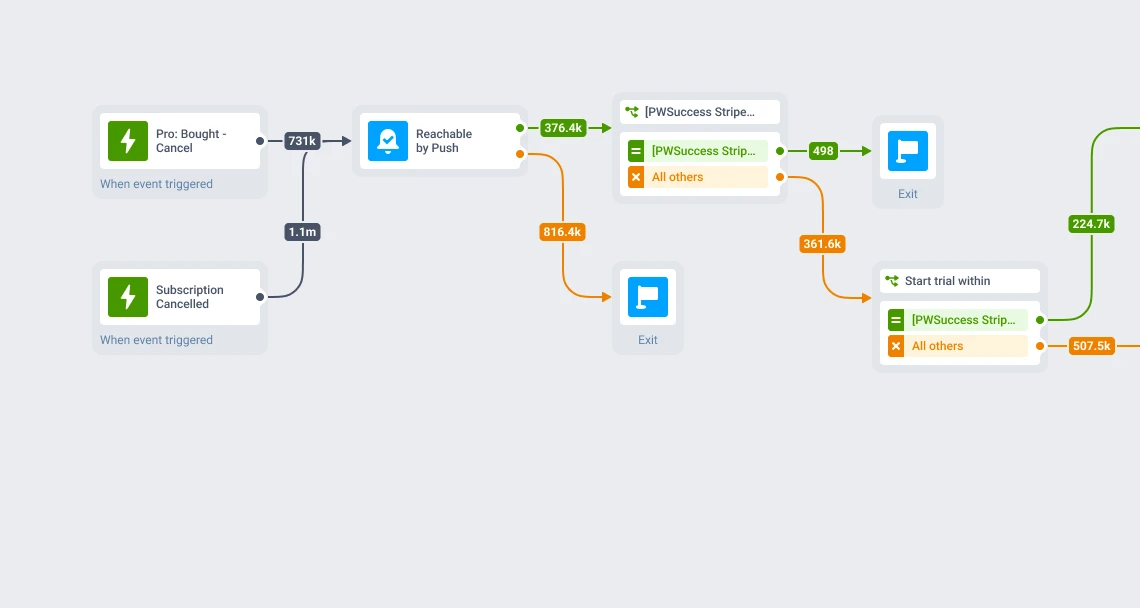
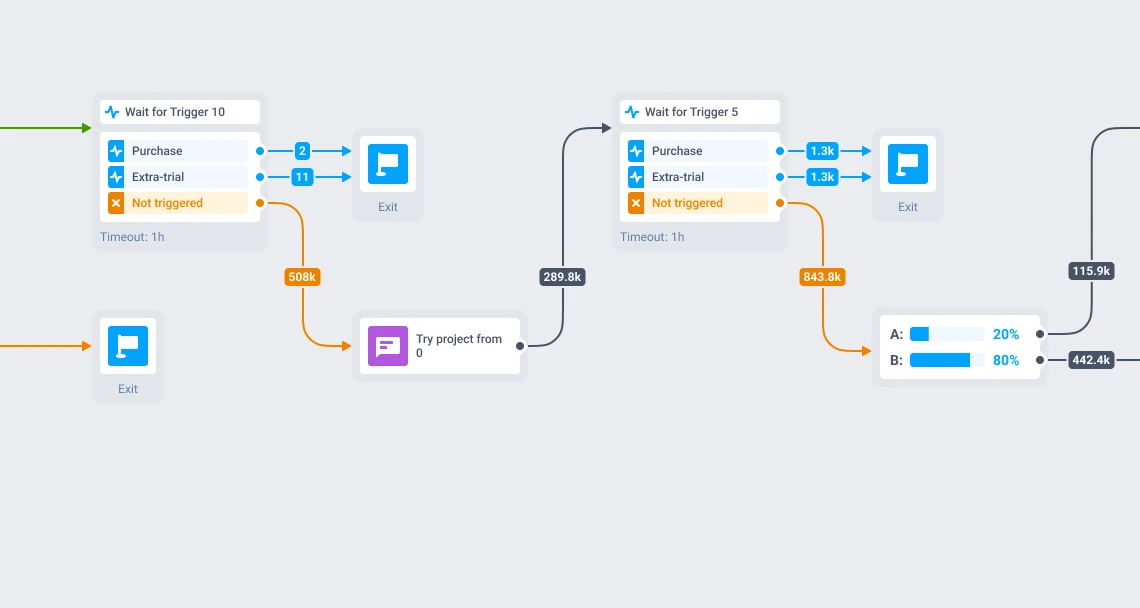
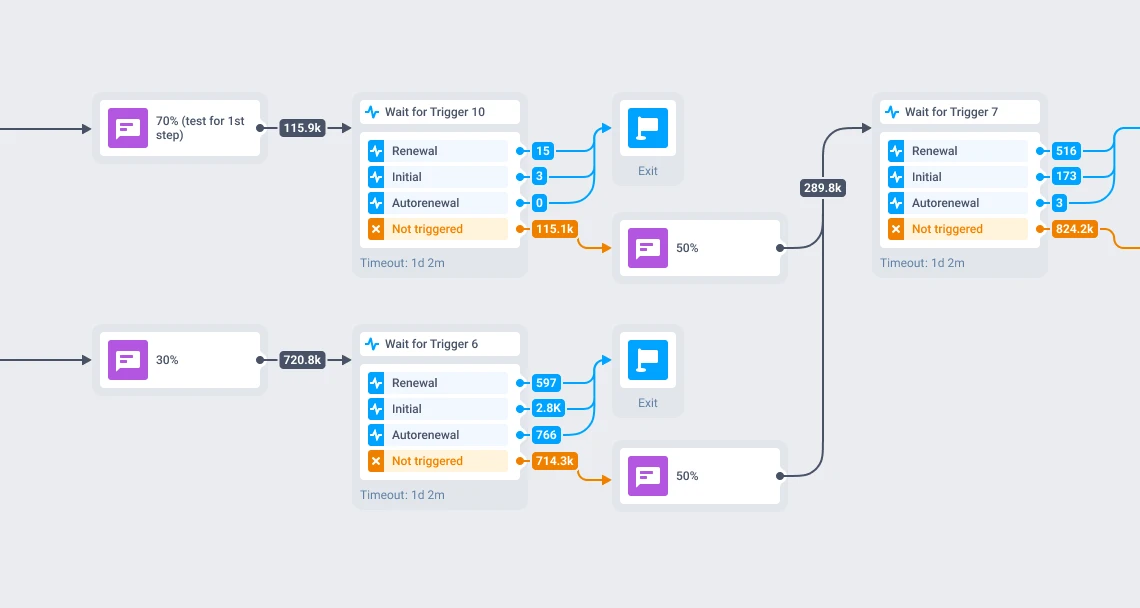
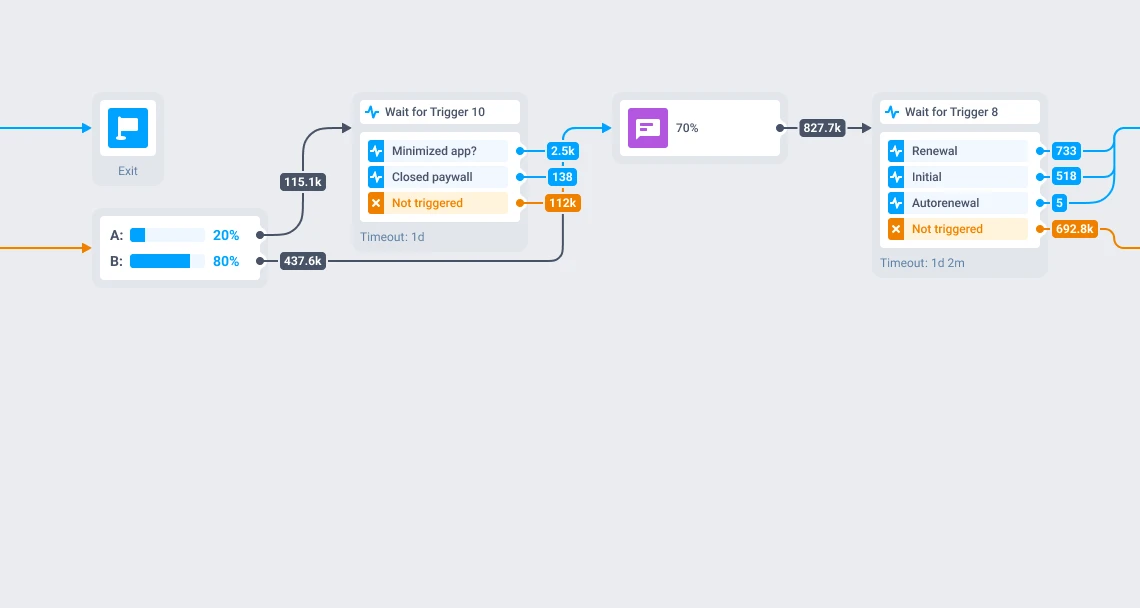
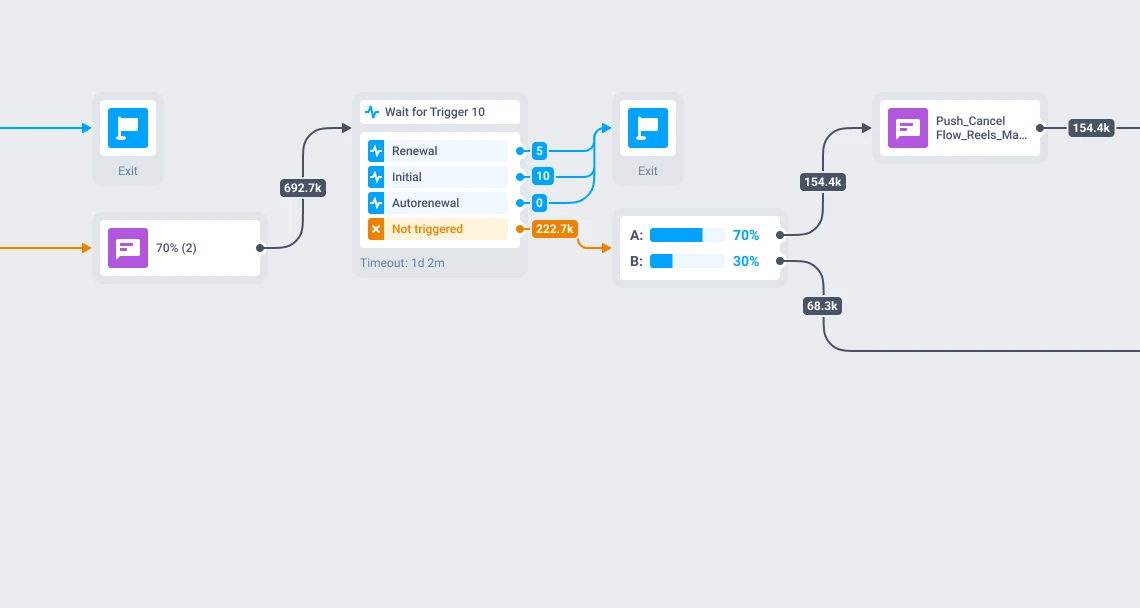
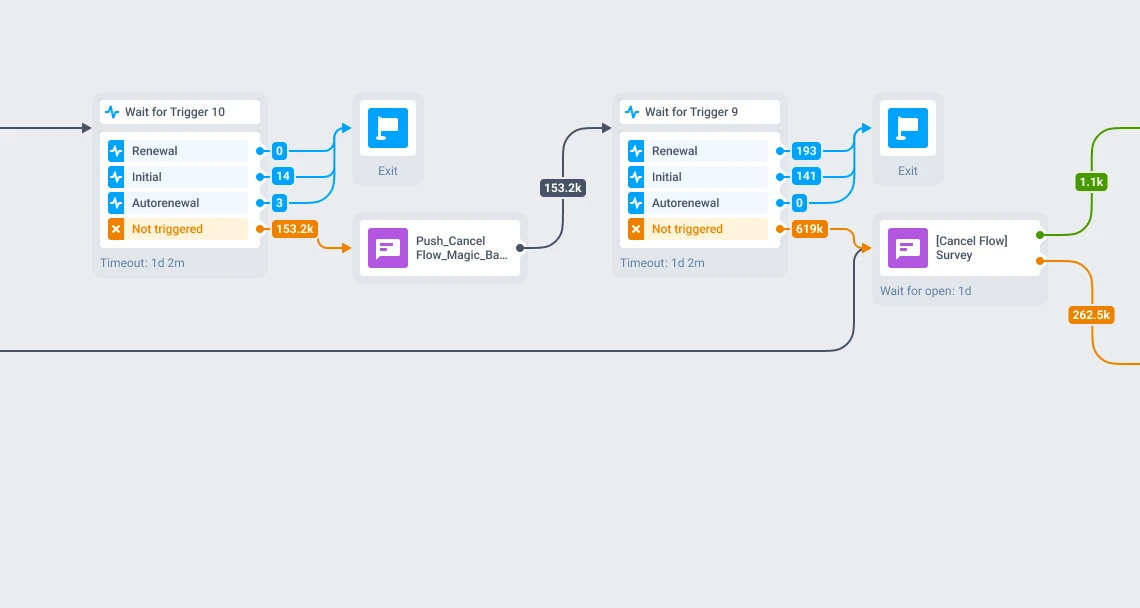
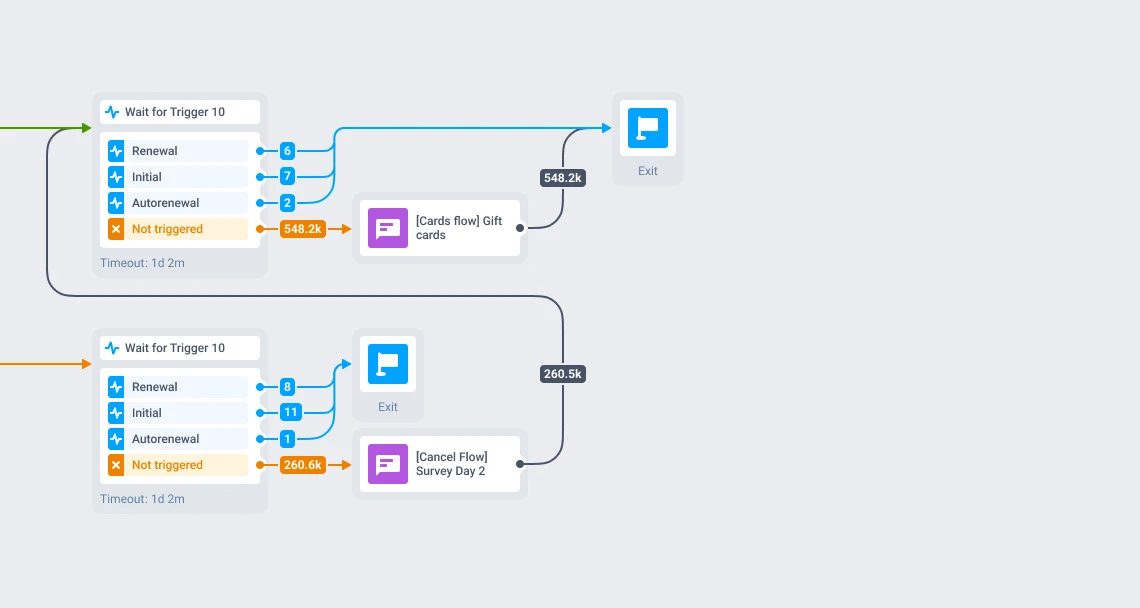
On the email side, Email — cancel trial or initial campaign catches users cancelling a trial or entering post-onboarding, with 4 transactional emails split by boolean conditions.
4. Renewal automation
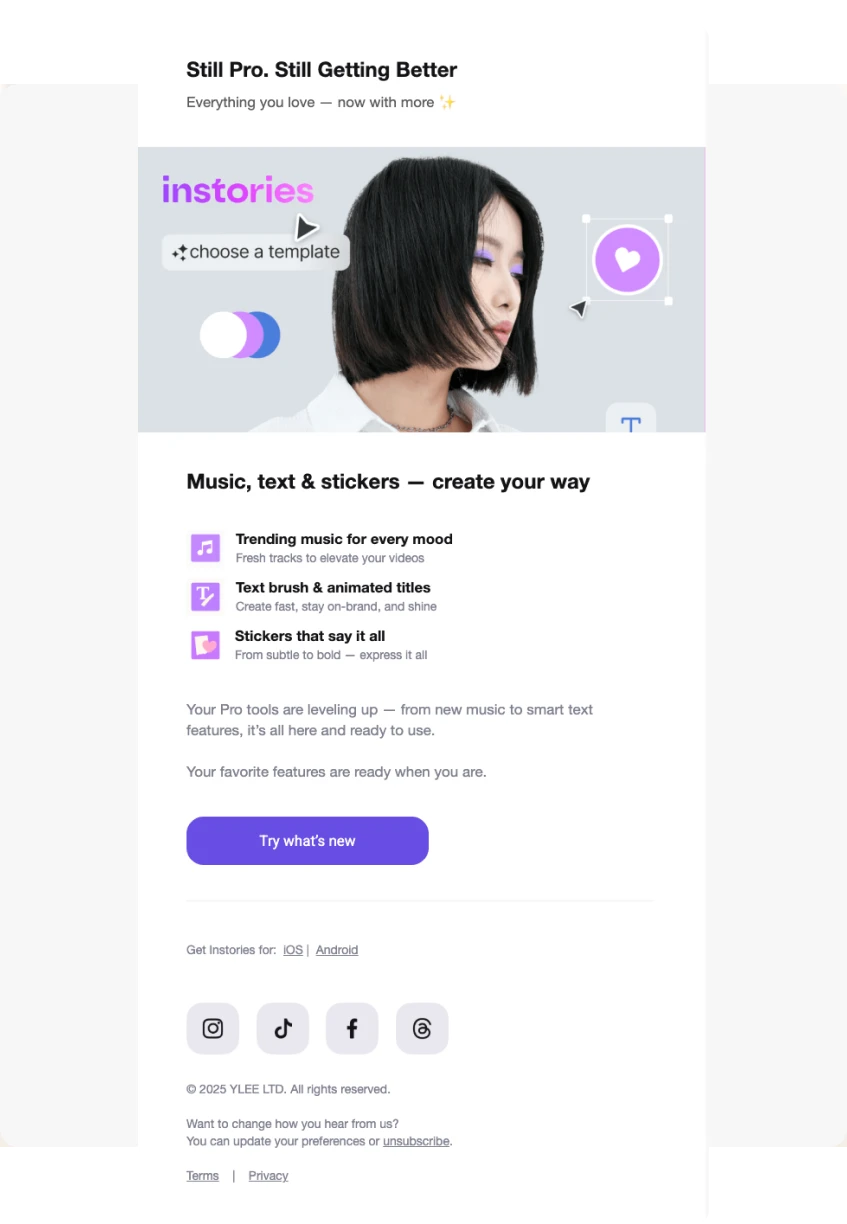
For existing subscribers, Instories runs a complete pre- and post-renewal sequence:
- 30 days before renewal — advance reminders in both push and email, with A/B testing and a 30-day conversion window.
- 14 days after renewal — follow-up sequences for users who renewed, to keep them engaged in the weeks after billing.
- Lapsed annual subscribers — re-engagement campaigns aimed at yearly subscribers who didn’t renew, with 8 combined push and email touches and 4 webhook calls back to their backend.
Going beyond the funnel: personalization by content niche
Instories is a content-creation app at its core, so what a user actually makes matters as much as where they sit in the funnel. So Instories personalizes messaging by content niche, not only by funnel stage. When a user installs the app, Pushwoosh journeys detect or infer their primary content focus and route them into a niche-specific track — food, beauty, travel, art/music, or vacation/lifestyle creators.
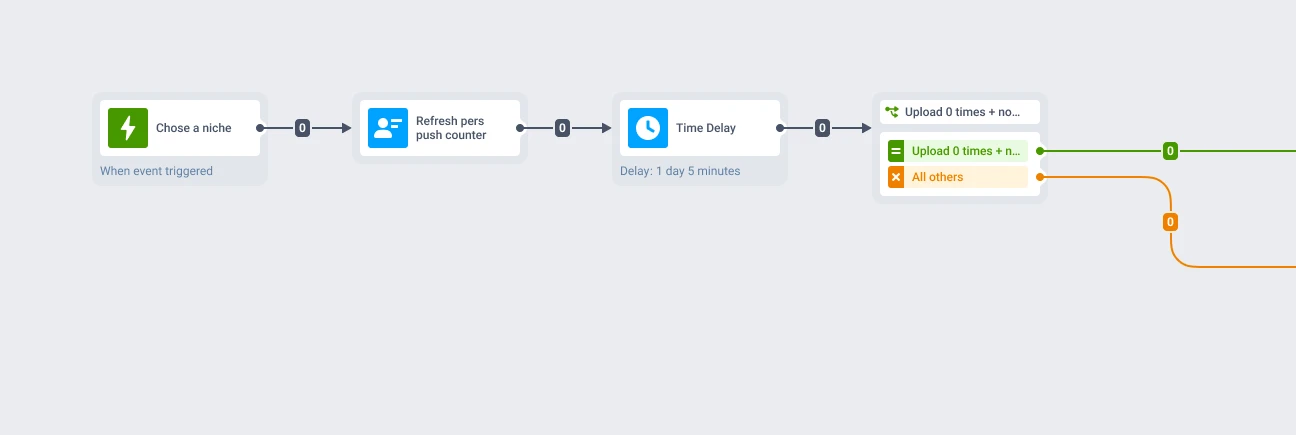
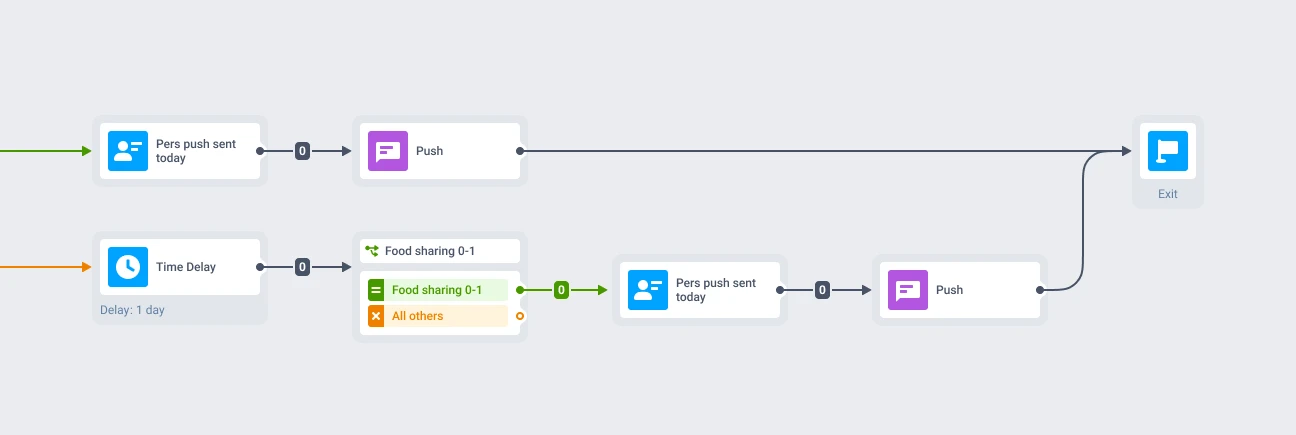
Each niche journey sends 2 personalized push messages with relevant messages, then tags the user’s profile in Pushwoosh for ongoing segment-aware messaging.
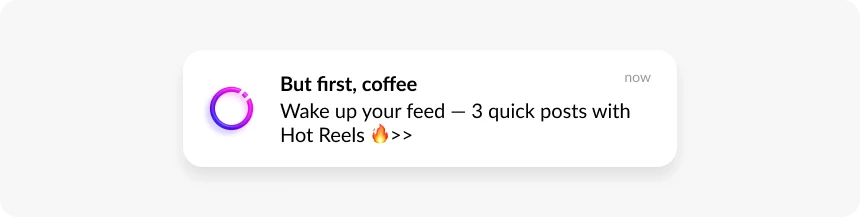
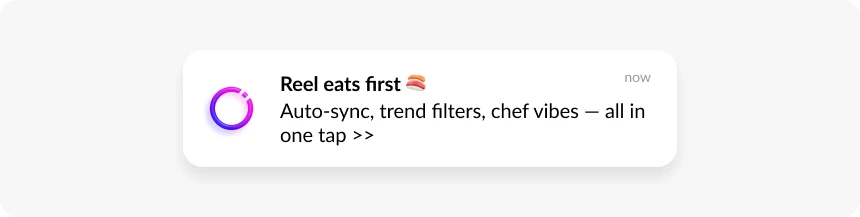
A daily tag-reset journey fires every morning at 8am to clear the daily push counters. That stops users from receiving too many messages in a single day across overlapping journey paths.
The experimentation set-up: A/B testing
Instories takes optimization seriously, and the A/B testing architecture across their journeys shows it. Almost every production journey has an ab-splitter node — Pushwoosh’s built-in A/B mechanism — at its key decision points.
Their most complex journey alone contains 27 condition splits alongside its 50+ push sends. The result is a personalized branching tree where user behavior at each step determines what comes next. The team tracks conversions against precise goal events (the first share or upload) with tightly scoped 3-hour conversion windows, so they can tell whether a given messaging sequence is actually driving the action they care about.
The analytics integration: event streaming to ClickHouse database
Instories stream Pushwoosh data straight into their own ClickHouse instance. The stream covers both push and email events (in-app is on the roadmap), and it goes well beyond sent events — the analytics team receives the full set of delivery events for every message.
This closes the loop between campaign performance and business metrics: Instories can correlate message engagement with subscription outcomes — including whether a given campaign moved trial-to-paid conversion or renewal rate — in the same environment they use for the rest of the product.
To get a more accurate view on campaign effectiveness, the team also runs a Global control group — a fixed share of users held out from all marketing messages. They compare results from users who got the messages against the holdout. That shows whether a campaign actually drove the outcome.
Scale and results
Nowadays Instories runs communications among push subscribers and million email subscribers on Pushwoosh, across 100+ language locales (English, Spanish, and Portuguese the largest).
The setup spans 400+ custom events and 150+ journeys built since the integration began, with 31 always-on today covering every stage from install to renewal — all automated.