Trying to figure out which factors really influence your game app growth? Pushwoosh has got you covered! Get your FAQ answered in this blog post based on our hot-off-the-press game apps data study. Put the guesswork aside and learn for sure which metrics you should focus on to maximize your marketing performance.
12 essential metrics for game apps
For starters, let’s synchronize our watches and define the metrics we’ll cover:
12 essential metrics for game apps
The metrics won’t be new to you, but the benchmarks you may find in our data study will be. Here are the definitions and calculation formulas we used:
Game app messaging performance metrics
- **Push notification opt-in rate******
One of the indicators of app messaging engagement. Shows the share of current app users who have their push notifications enabled. Pushwoosh calculates it as 100% * (number of push-alerts-enabled devices) / (number of registered devices).
- **Push notification CTR******
In the current research, click-through-rates of non-transactional push notifications sent in the analyzed period. Average CTRs for each game apps were calculated as arithmetic means of all pushes’ CTRs for a given app. Respectively, Median CTRs reflect median values of pushes’ CTRs for a game app.
- **User CTR******
Pushwoosh Team introduced this metric to reveal the share of the entire mobile game audience who has engaged with the app messaging to any extent. Calculated as 100% * (number of users that opened a push sent by the app at least once) / (number of users that were sent a push at least once). Counted for all types of pushes, including transactional ones.
Game app engagement metrics
The key indicator of app user engagement. In the current study, calculated as the percentage of unique users that opened the game app within the last day.
Another key indicator of app user engagement. Calculated as the percentage of unique users that opened the game app within the last month.
Game app retention metrics
- **Retention Rate (D1, D7, and D30)**
Some of the most important KPIs for mobile game marketers pursuing their app growth. Indicates the share of users that stay with the app on a certain day after the app install. In this data study, calculated as the percentage of users that didn’t uninstall the game app on D1, D7, and D30 accordingly.
- **Churn Rate (D1, D7, and D30)**
Indicates the share of users that stopped using a game app after a period of time. Calculated as the opposite to Retention Rate — in our research, as the percentage of users that uninstalled the game app on D1, D7, and D30 accordingly.
Game app growth metric
- **App Growth Rate******
Proves combined effectiveness of user acquisition and retention efforts (or lack thereof). Calculated as the relation of app installs to the number of devices at the beginning of the analyzed month.
❗Important note: the correlations and recommendations given below are effective against game apps, the only app category that we focused on in our recent research. In other industries, trends may be different — or even the same; to provide you with correct and accurate guidance, Pushwoosh Team will keep studying data and share its analysis later. Stay tuned!
Does user engagement with the app’s messaging correlate with user activity in the app?
Yes, in our most recent game apps data study, we’ve confirmed that higher CTRs and User CTRs correlate with higher numbers of DAU and MAU:
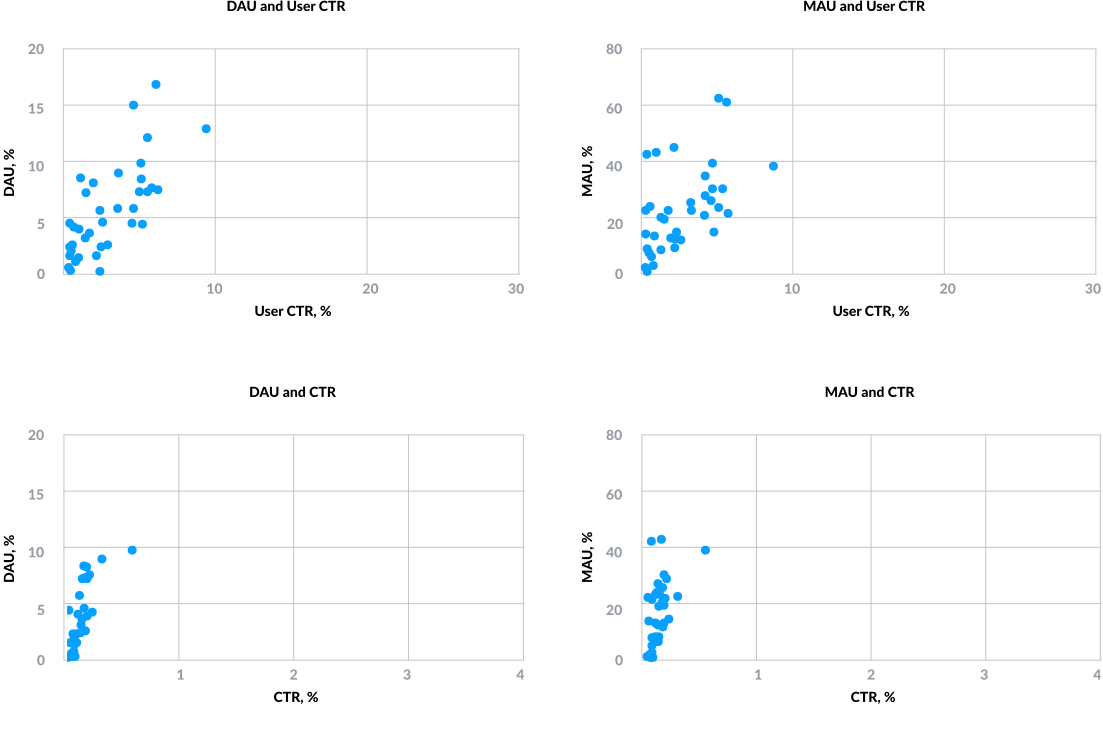
On iOS, there is a direct dependency between messaging engagement and app engagement metrics. Source: Pushwoosh Game Apps Data Study
The graphs show a linear relationship between the app user engagement metrics.
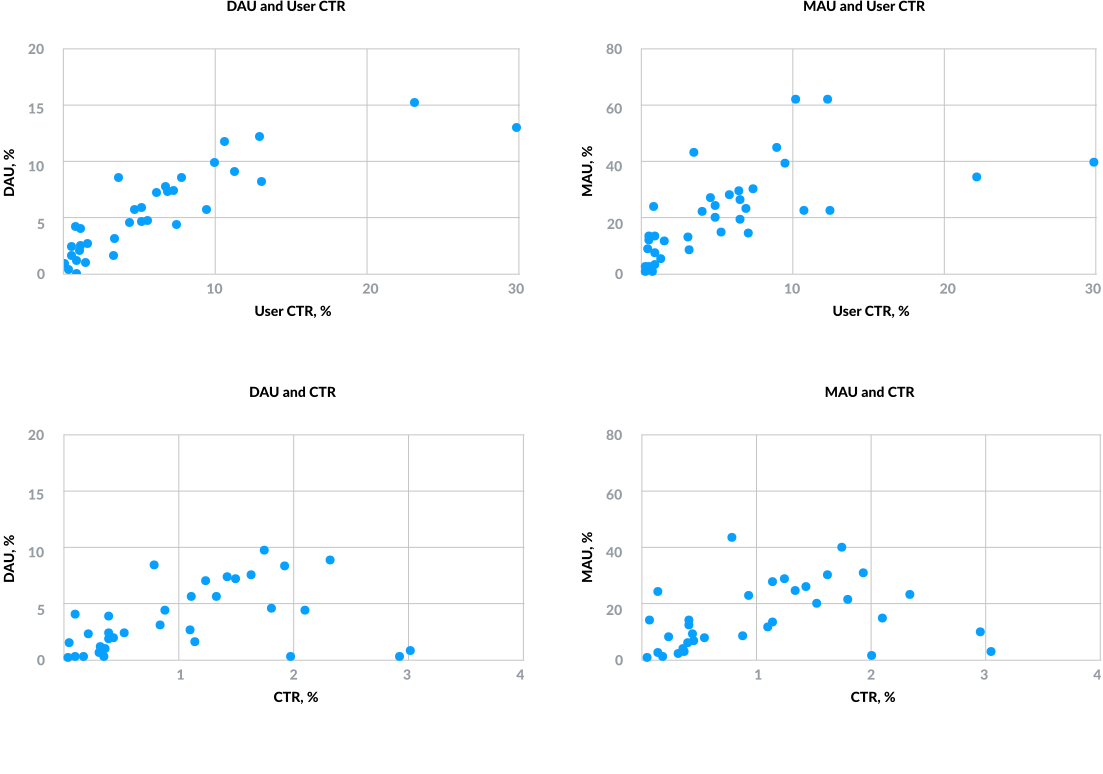
On Android, the linear relationship between DAU/MAU and Average CTR/User CTR is confirmed
Act on the insight:
Invest in driving your game app messaging CTRs:
🤑 Brainstorm the most appealing offers
💌 Put them into engaging push notification copies
📆 Set these pushes on a regular schedule
Most importantly, keep experimenting:
🤽 🤾 Segment your mobile players by their in-game performance, activity, and purchase history
🔊 Try alternative channels within the omnichannel approach
🥇 🥈 A/B test your ideas to get even higher results than you may expect
If game app users opt in for push notifications, does this keep them engaged?
Yes, we can see a pattern: game apps with higher push notification opt-in rates are more likely to have higher numbers of DAU.
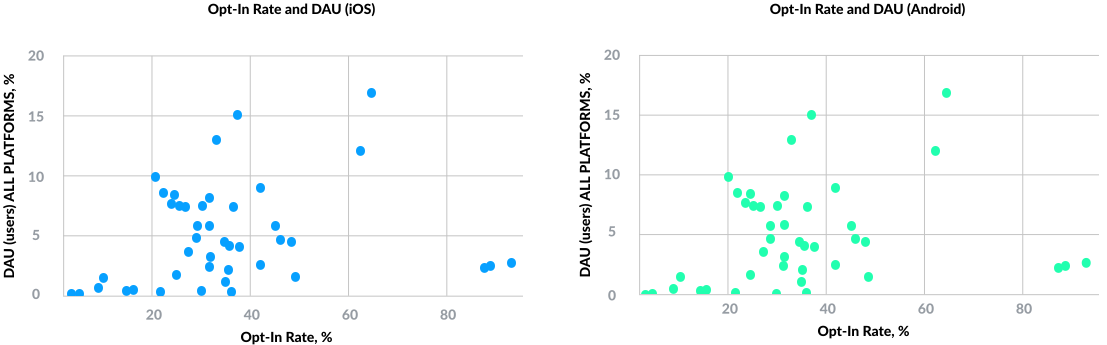
Game apps with high opt-in rates tend to have high numbers of DAU — both on iOS (on the left) and on Android (on the right)
Act on the insight:
Getting users to opt in for your push notifications is the first thing you want to do if you are serious about taking your number of daily active users to the max.
🚀Adopt the well-proven tactics to boost your opt-in rate — read the guide on Pushwoosh blog.
Do push notifications really help to keep game app users engaged?
Yes, as we see, game apps with high push notification opt-in rates also have high CTRs and User CTRs. And, as you already know, such mobile games also have higher numbers of DAU – looks like a very clear dependency!
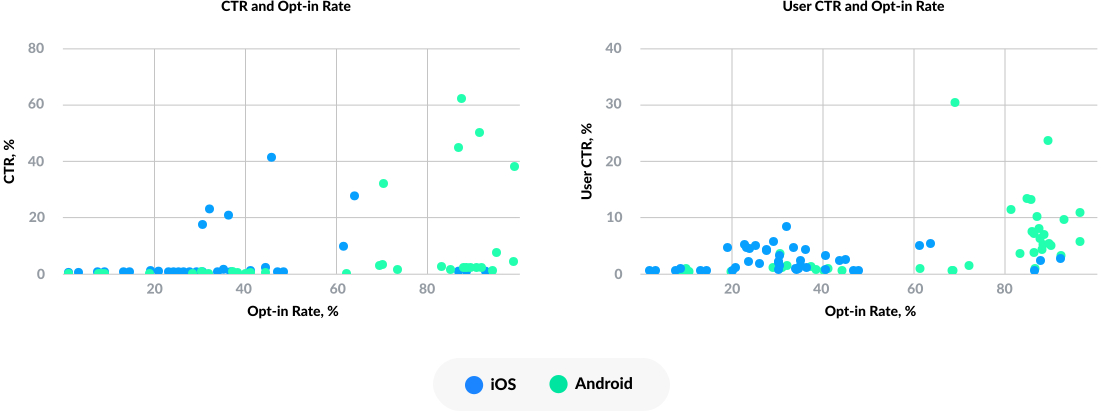
Game apps with high opt-in rates tend to have high numbers of DAU — both on iOS (on the left) and on Android (on the right)
Are opted-in users necessarily retained after Day 1?
No, according to Pushwoosh data, game app users may opt in to receiving push notifications and never return to the app after that.
In the chart below, you can find a variety of game apps with low, medium, and high opt-in rates. All of them have their D1 Retention Rates distributed between 20 and 60%.
Can you single out one app with high D1 Retention (77.9%) and high opt-in rate (86.5%)? But you may also find another app with low D1 Retention (22.4%) and an even higher opt-in rate (92.2%)! So we can’t state any correlation between the two metrics at all.
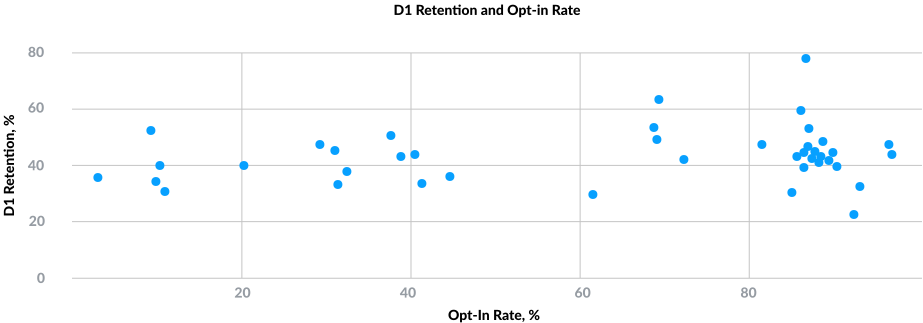
High push notification opt-in rate doesn’t automatically guarantee high D1 Retention (Android game apps data)
Act on the insight:
On Day 1, do more than simply ask a user’s permission to send them push notifications. Take your newcomers on an informative and engaging onboarding tour.
Use the power of in-app messaging to the max:
📝 Add unobtrusive tooltips that will explain your gameplay
🏆 Display colorful full-screen popups to grant your new player with welcome rewards, for example
➡️ Find more examples in Pushwoosh’s collection of great in-app messages. It has a dedicated chapter for game apps!
But does a high opt-in rate promise high D30 retention?
No, but we recommend you research further.
Our data hasn’t revealed any linear relationship between game apps’ opt-in rates and D30 Retention. The chart looks similar to the one about D1 Retention we have above: D30 Retention Rates remain within certain values at any opt-in rate.
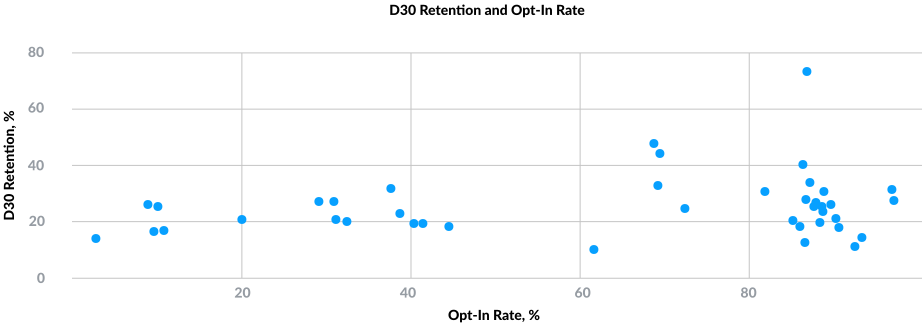
D30 Retention can be high or low at any push notification opt-in rate (Android game apps data)
Act on the insight:
☝️ Although we haven’t found a linear relationship between push opt-in rates and
D30 retention in our scope of data, you could try and prove the hypothesis by
studying your particular app data.
👨🎓 👩💼 Create user cohorts to track which exact players have opted in for pushes
and distinguish the exact devices where your game app has been uninstalled.
This way, you will find out if getting more users to opt in actually serves your
goal to boost retention.
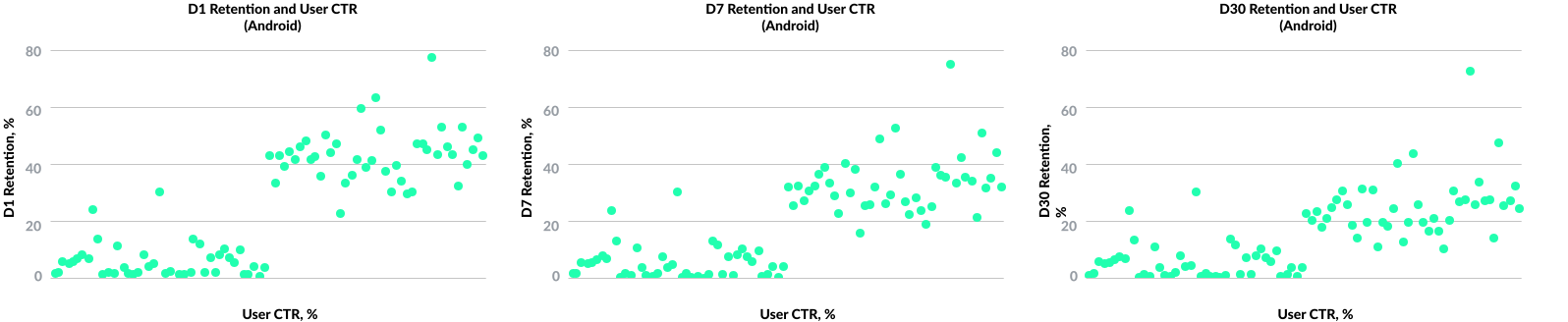
If I get a larger percentage of users engaged with my push notifications, will I retain them in the game app?
Yes, if you keep your User CTR high, you have all chances to have high Retention Rates.
Act on the insight:
Work on keeping the majority of your game app users interested in the content you send them via push notifications:
⏳ Make limited-time offers
😉 Get playful or even teasing in your push notification copy and CTAs
🤩 Promote something NEW: in-game items, levels or challenges — to excite players’ curiosity
Do high churn rates hamper game apps’ growth?
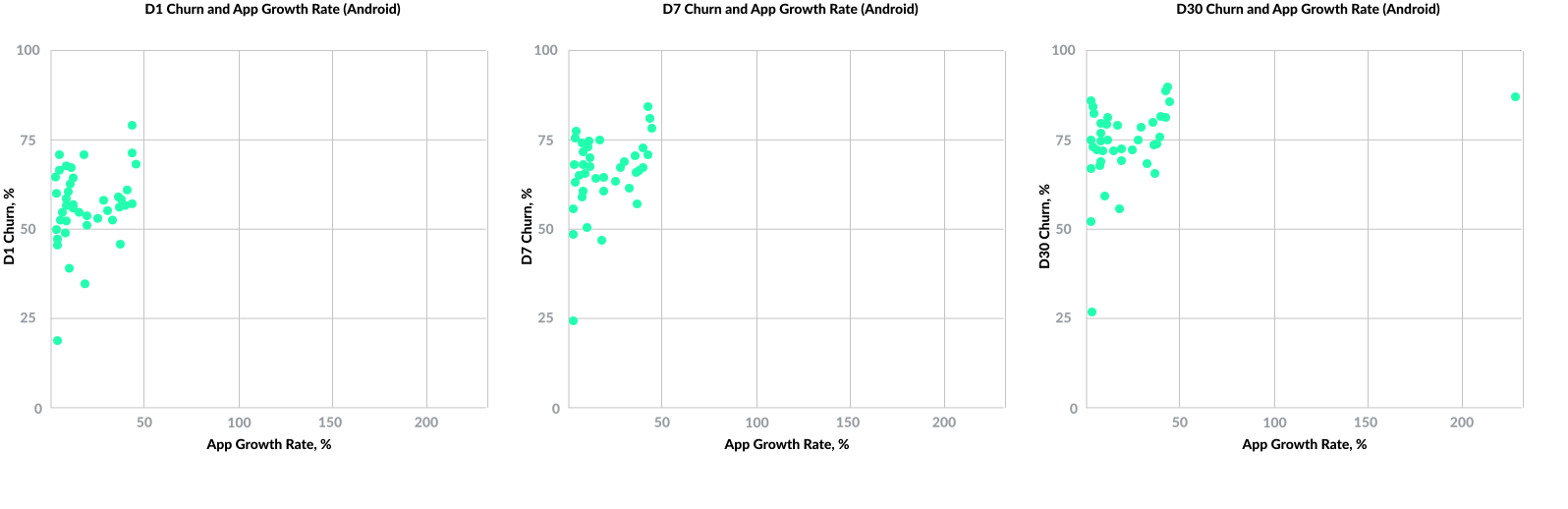
Yes, we’ve found out that high churn on Day 1, 7, and even 30 is the most possible in two cases:
- when the app growth rate is lower than the median;
- when the app growth rate is significantly higher than the median.
Act on the insight:
Game apps may grow rapidly at the expense of acquiring irrelevant audience. If this is what you suspect from observing your app churn rates, you may want to review your acquisition and retention strategies alongside.
At that, slowly-growing apps may serve as inspiring examples to your anti-churn efforts — even and especially if your game has got a large audience. We have observed quite a few cases of mobile games with low growth rate and low churn rates.
If a game app fails to retain users on Day 1, should it expect high Churn Rates on Day 7 and Day 30 too?
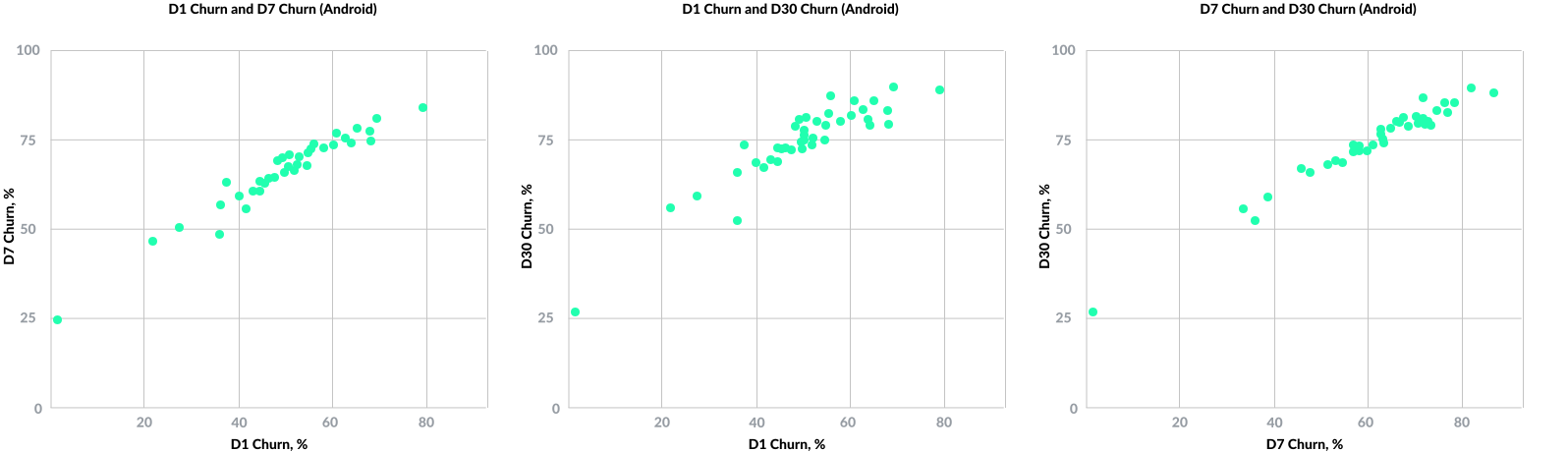
Yes, there is a strong correlation between Churn Rates on Day 1, 7, and 30. This means the game apps that fail to retain newcomers in the first 24 hours also go wrong with retention efforts on the following days.
Act on the insight:
High churn is a very common problem among game apps, but it doesn’t mean you have to accept it.
🕵️ Investigate which events users trigger (or don’t trigger) before churning. For Day 1 churners, a failure to go past the activation action may be the problem. And for Day 7 churners, you may notice a lack of app opens during this first week.
🪝 Equipped with the knowledge, apply appropriate strategies: invest in improving your onboarding flow, brainstorm daily challenges that you can promote via push notifications to increase app opens, etc.
If users stay active in the game app, does it prevent them from churning?
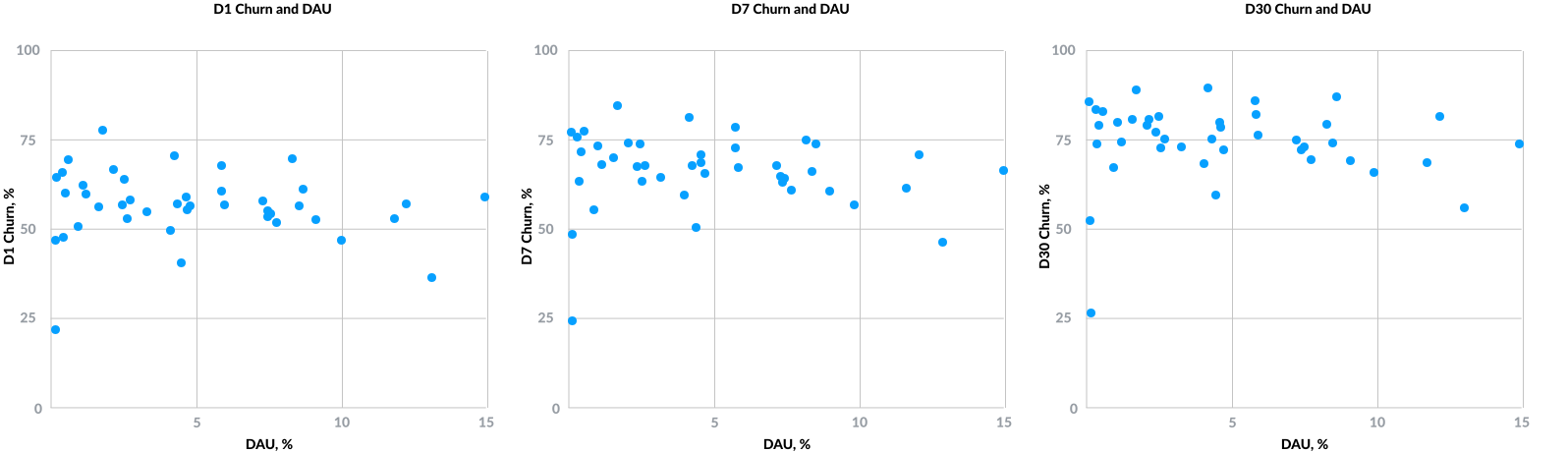
Yes, the higher the number of DAU, the lower the Churn Rate. And vice versa: high churn is more probable for a game app with low DAU (under 5%).
Act on the insight:
Work on growing the number of DAU in your game app:
📅 Promote daily offers, like our stellar customer, Bladestorm, does in its GC.SKINS app. Thanks to automated scheduled push notification delivery, the mobile game has grown its DAU by 16.62% in the course of eight months.
⏰Discover the features that helped Bladestorm execute effective scheduled campaigns
👆 Work on improving clickability of every push you send — don’t hesitate to follow the best practices of other mobile business verticals and try advanced segmentation. A great tip from our e-commerce customer, Bantoa: personalize your push notifications religiously, and you may see your CTRs skyrocket up to 91.9%!
Can a game app grow too fast?
Yes, and it may lead to problems with user retention.
Pushwoosh Team has discovered that excessive user acquisition is as alarming as a failure to acquire any significant number of new users – both result in low Retention Rates (on Day 1, 7, and 30).
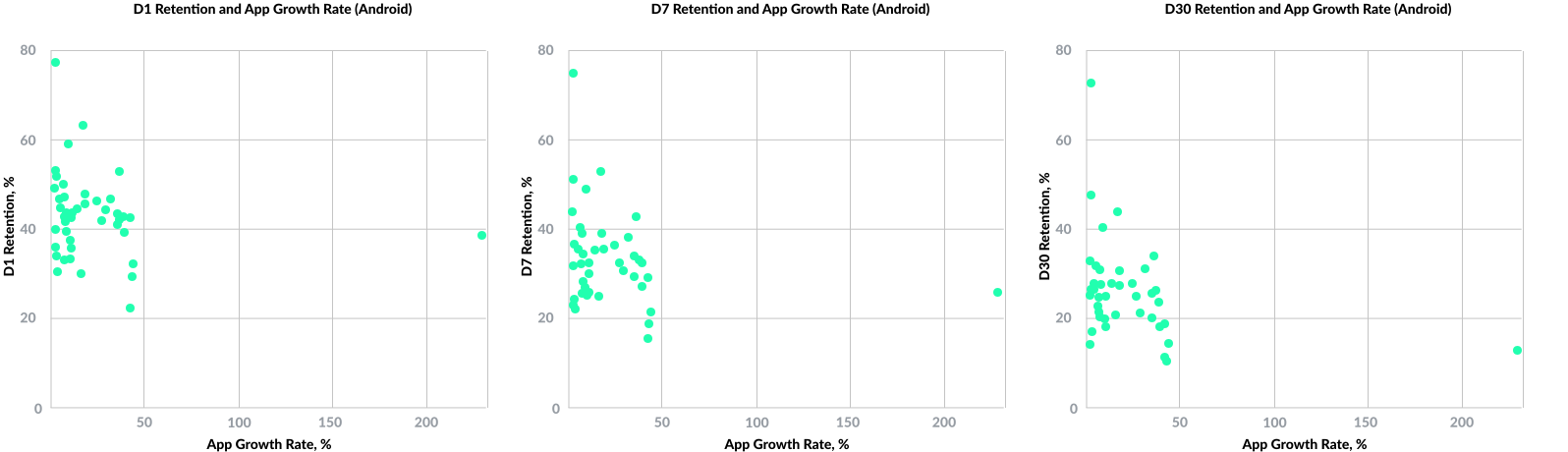
Could irrelevant audience acquisition cause this? We believe so.
Act on the insight:
If you aim at growing retention rates in your game app, unobviously, rather than optimizing your retention efforts you may need to review your acquisition strategy. Ensure you’re only targeting your campaigns at relevant audiences, and that your contractors or agency you’re working with are just as attentive.
🤝Learn how mobile marketing experts advice to approach the acquisition vs. retention dilemma
Do game apps with high Stickiness Rates grow faster?
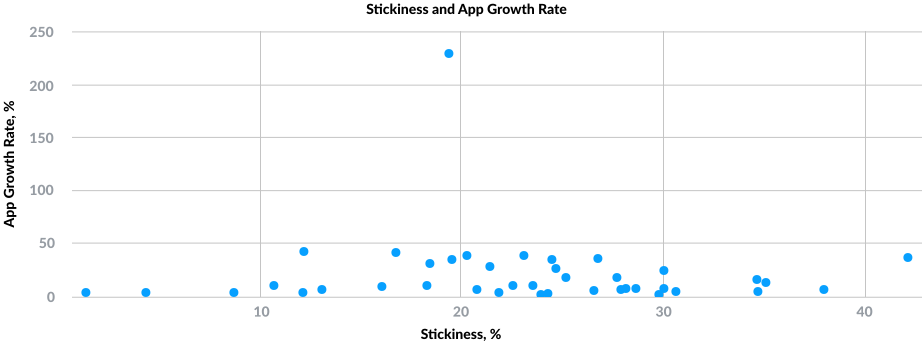
No, you don’t have to pursue a higher Stickiness Rate to ensure a solid game app growth rate.
We have detected the highest growth rate for the apps with median stickiness (between 16% and 32%). In some cases, though, an even lower stickiness rate may come along with a high growth rate.
Act on the insight:
You don’t have to chase an incredible Sickiness Rate to succeed. What you may have to do, though, is keep an eye on maintaining its healthy level. This will as an extra support leg to your game app growth.
So, how do you grow a game app?
A short answer will be: by following a three-pillar strategy we have explained in detail in our 58-page ebook. Download it now and proceed to taking your place among the top game apps that have become leaders and keep growing.