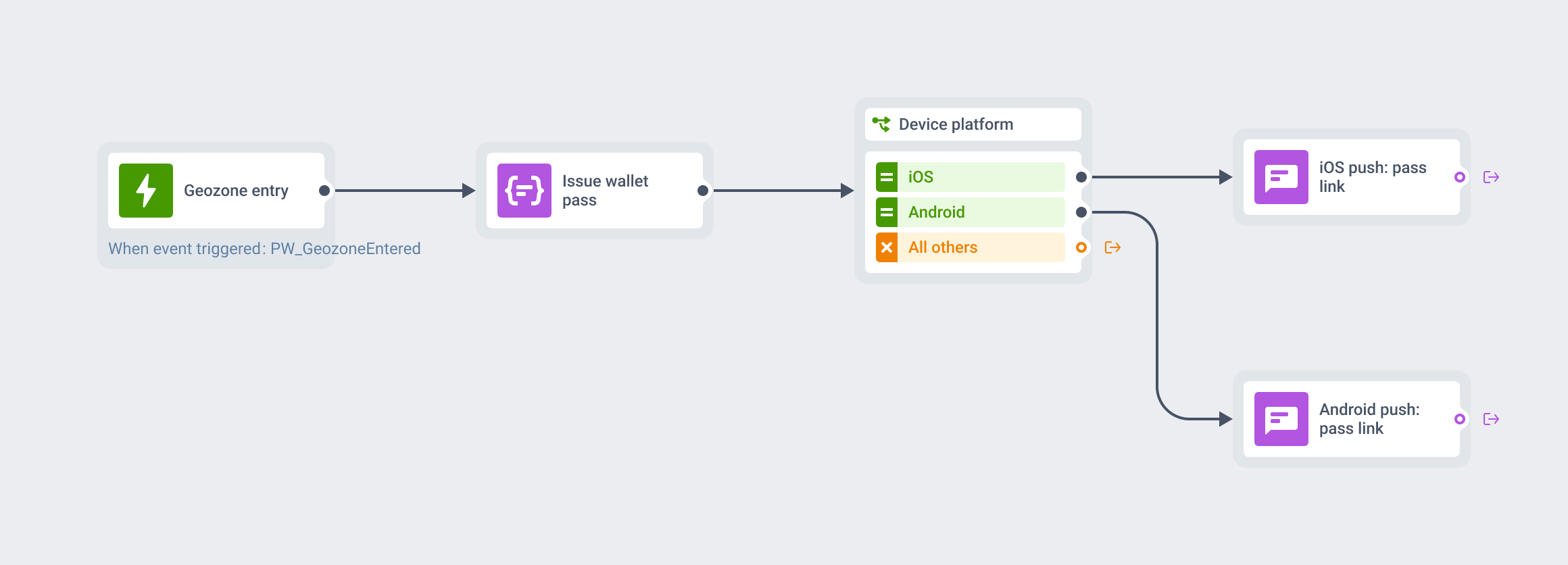
Pushwoosh Geozones let you deliver relevant, well-timed location-based push notifications to your audience. You set a virtual boundary around a spot on the map, and the message fires the moment someone enters that zone. Geofencing makes your communication far more engaging, because it reaches people when their location makes your offer actually useful.
How location-based push notifications work
The mechanism behind geo push notifications is simple. You drop a pin on a map and draw a radius around it, creating a geozone. When a user who has granted location permission crosses into that radius, the app detects it and triggers the push you set up for that zone.
Three pieces make this run:
- The geozone. A virtual perimeter around a physical location, a store, a stadium, an event venue, usually a few hundred meters wide.
- The trigger. Entry into the zone (and, if you want, exit or dwell time) is the event that starts message delivery.
- The message. A push tailored to why that location matters: a nearby discount, a live update, a reminder to use points close to a partner store.
Because the message depends on a real-world action rather than a calendar, geofencing push notifications tend to land at a moment when the user can act on them right away.
Why use geo-targeted push notifications?
Whether you’re sending a personalized message to people near your retail store or a discount to shoppers who just visited a competitor, location-based marketing works well when you need to engage potential customers through a targeted campaign.
A few clear advantages of geo-based messaging:
- Higher efficiency: tied to a user’s location, these messages are personal and relevant, which lifts their impact on buyers considerably.
- ROI: since geofencing lets you send offers to people near your store, you can measure the response directly and optimize spend for better ROI.
- Engagement: consumers are more likely to engage with your brand when you offer something relevant at the right time and place.
How businesses use geo-targeted push notifications
Geo-targeted messaging suits stores, restaurants, and any venue that wants to catch the attention of people passing by. Set up a geozone around your cafe, and every time a user walks past, they get a notification about the breakfast special of the day.
How does Pushwoosh handle users’ geolocation data?
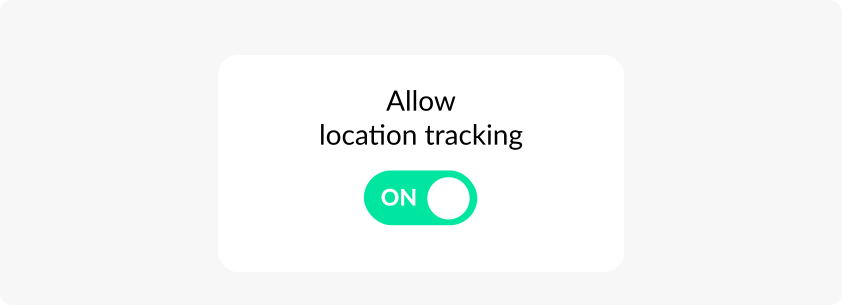
By default, Pushwoosh has no access to a user’s geolocation data. It can track that data only under two conditions:
- The developer of an app running the Pushwoosh SDK enables geolocation tracking by implementing the Pushwoosh Geozones feature and declaring the permission in the AndroidManifest.xml or info.plist files.
- The user gives explicit permission for the app to access their location.
Pushwoosh uses that geolocation data only to deliver relevant marketing offers to the app’s users, and never shares it with third parties.
Case #1: Providing personalized tips based on location
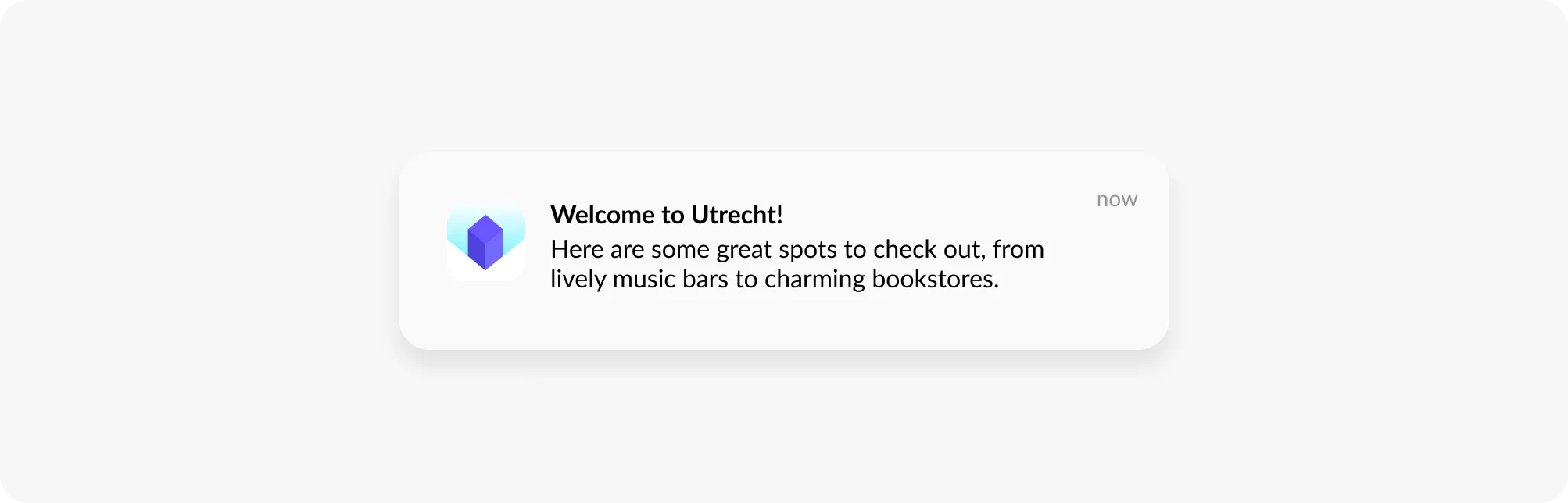
Map Your City, a Dutch startup, connects users with local businesses, events, and venues through geo-personalized push notifications. With Pushwoosh Geozones, the app detects when a user enters a specific area and sends tailored recommendations.
Arrive in Utrecht, for instance, and you might get a push nudging you to explore local venues:
Case #2: Delivering real-time updates at major events
FIBA, the International Basketball Federation, uses geo-based push notifications to tighten communication during major tournaments. By geofencing key locations like stadiums and media zones, FIBA gets the right updates to the right people at the right time.
During the World Cup, journalists received automated alerts about press conferences and flash interviews the moment they entered a designated area. That real-time messaging kept event coordination smooth and stakeholders in the loop.
Case #3: Driving revenue with geo-targeted special offers
Pushwoosh customer Telepizza, a major worldwide pizza chain, uses Geozones to tell app users about discounts and special offers at their nearest restaurants:
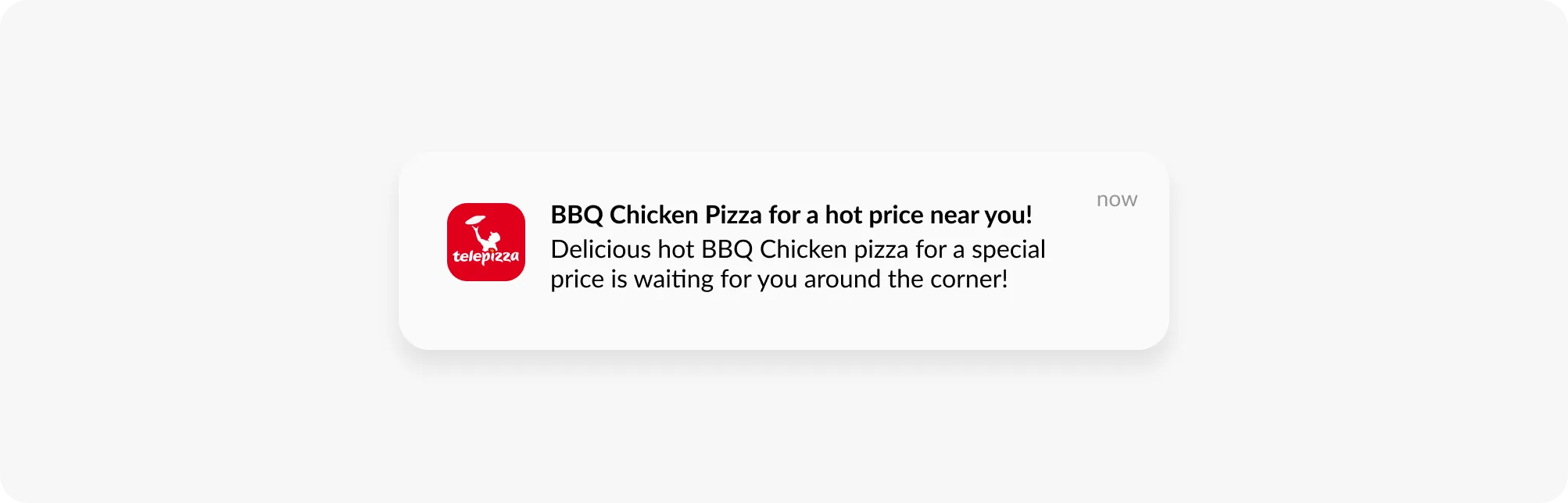
Customizable location-based push notifications for different geozones let Telepizza flag local offers at high-impact moments. When a customer comes within a geozone (usually 300 to 500 meters from a restaurant), they get a push about a deal, say, “Pizza of the week for a special price.” The right time and the right place together drive a high CTR and real sales.
Broadcast push notifications about offers lift revenue too. More than 850,000 Telepizza app users are subscribed to pushes. These notifications average a 0.8% CTR and a 4 to 7% conversion rate, so a single send brings Telepizza 300 to 450 orders ($2,400 to $3,600, at a minimum order value of $8).
Case #4: Boosting customer engagement with geo-targeted push notifications
Another Pushwoosh customer, Avianca, a Latin American carrier with a fleet of over 200 planes, uses Geozones to automate its loyalty program and make it more engaging.
Geo-based automation reminds frequent flyers to spend reward miles on trips and on purchases from Avianca partners, retailers, gas stations, hotels, and banks. When LifeMiles members shop with one of the company’s commercial partners, they get a message about earning miles on the current purchase or spending miles on that partner’s products.
These location-based push notifications encourage customers to spend their LifeMiles, which raises sales for Avianca and its partners. Relevant and well-timed, they get a strong response rate and lift engagement.
Get in touch with our team to see how Pushwoosh Geozones can help your business: