With omnichannel presence carved into every marketer’s mind and annual strategy, it’s easy to lose track of which channels work best for your audience. Today, we’re looking into two major mobile-friendly communication strategies to help you build an omnichannel presence for your business: SMS and push notifications.
Wait, SMS? But we’re no longer in 2007! Well, the latest report suggests that 75% of customers would like to communicate with business via SMS, and 60% read texts within the first five minutes of receiving them. Isn’t that a lovely business opportunity? Especially since more than 85% of SMS gets delivered successfully.
Pushes, in turn, may have a slightly lower visibility due to their placement; yet, they still capture users’ attention effectively, especially when accompanied by sound, vibrations, or rich media. Pushes are known for much higher cost-efficiency compared to SMS, making it an attractive option for budget-conscious businesses.
Imagine the results you could achieve by having both of these communication strategies in your arsenal! But first, let’s quickly recap each channel and how it could become a powerful tool in your marketing communication arsenal.
SMS and push notifications: Where each kind shines
SMS: surefire yet costly delivery of sensitive data and urgent updates
SMS is a communication channel that businesses can use to send concise, targeted
text messages to customers’ phones. SMS offers impressive deliverability and
immediate reach, making it ideal for communicating urgent and time-sensitive
reminders or updates. You can also leverage SMS marketing when users prove to be
unresponsive to your push campaigns, capturing more customers.
It’s an irreplaceable channel for industries like finance & banking, insurance,
and travel, where immediate communication is needed. Yet, the benefits of SMS
come at quite a high price for the business. Moreover, their interaction
potential is limited, usually leading to links or simple responses.
Push notifications vs. SMS: more cost-effective for retention-driving messages and promos
Push notifications, in turn, are real-time alerts sent directly to a user’s mobile or desktop device from an app or website.
Pushes are more cost-effective, and they can contain interactive elements, such as buttons, images, and GIFs, allowing for more engaging content than SMS. Users can take action directly from the notification, such as liking a post or making a purchase. This makes push notifications a smart choice when a business needs to grab users’ attention with updates, promotions, or tailored content. As a direct and instant form of communication, pushes can boost engagement, retention, and conversions. The general recommendation is to use pushes to maintain brand presence and nudge user engagement with personalized promotions at lower costs. And SMS will stay your go-to channel for time-sensitive and secure messages. With the right automation engine, you can ensure each channel works seamlessly.
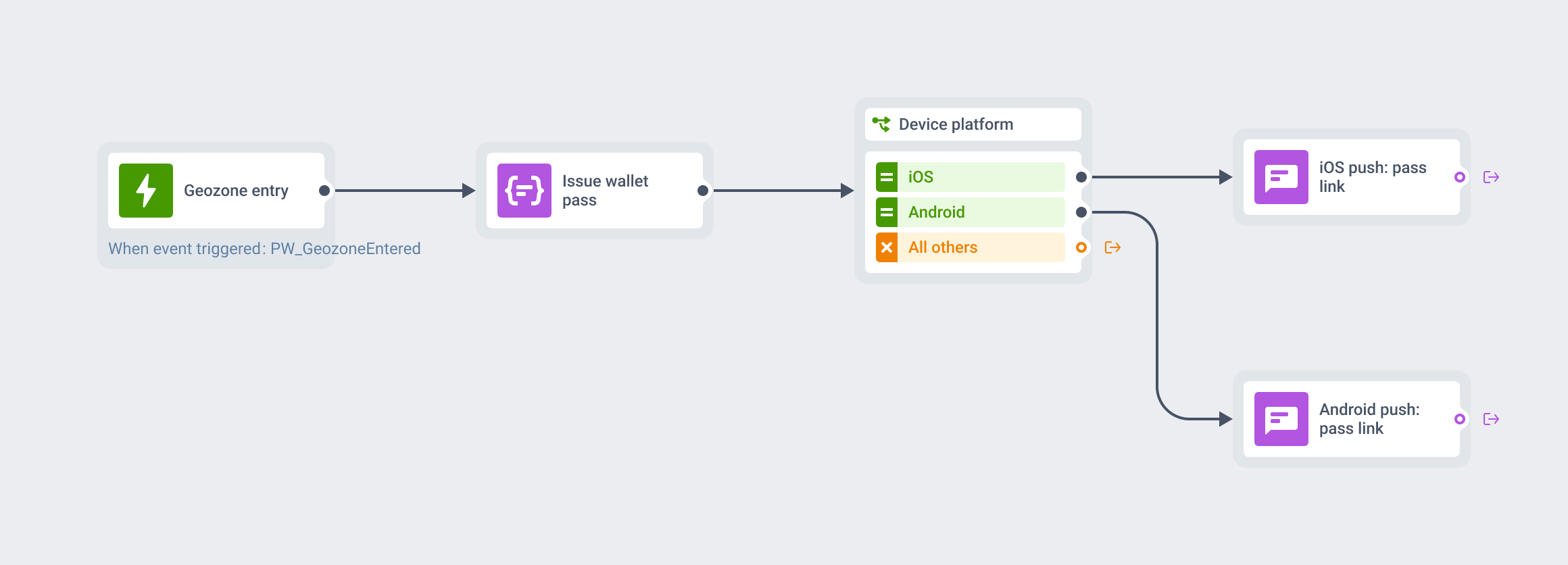
Pushwoosh Customer Journey Builder allows you to alternate and combine SMS with push notifications, choosing the optimal channel for your specific case:

The difference between push notifications and SMS
| SMS | Push notifications | |
|---|---|---|
| User opt-in | User shares their phone number and explicitly agrees to receive text messages | User confirms they would like to receive push notifications from within the app or a website |
| Delivery method | Over a cellular network to the mobile phone. No internet connection is required. | From a downloaded app to a mobile device, such as a phone or a tablet; or from a website to a user’s desktop, only an internet connection is required. |
| Interaction opportunities | Limited, usually leading to links or simple responses. | More options of interactive elements, such as buttons, images, and GIFs, allowing for more engaging content. Users can take action directly from the notification, such as liking a post or making a purchase. |
| Industries that can find them irreplaceable: | • Finance • Insurance • Healthcare • Airlines • Hospitality • Retail | • E-commerce • Gaming • News & Media • Travel • Education • Lifestyle and other subscription apps |
| Best used for (although in some cases, can be interchangeable): | • Urgent communications • Delivery updates • Appointment reminders • Security alerts | • Behavioral triggers • Personalized promotions • Habit building • Product updates • Breaking news • Welcome messages • Feedback requests |
Each of these channels shines bright on its own, yet it is omnichannel we are talking about, so “bright” may not be enough. Instead, you need to be able to predict any possible touchpoint and react if the customer deviates from the path you’ve envisioned for them. To pick up a slack, if you wish.
That’s why we strongly encourage you not just to choose between either push notifications or SMS but to incorporate the two concurrently into your marketing strategy. The results will impress you!
When push and SMS notifications come together: real-life use cases
Let’s look at some real-life examples of how you could use SMS and push notifications to build a comprehensive omnichannel presence for your brand. We’ll be providing examples from different industries as we go, not to overpower you with theory.
1. Enhanced personalization
We all know about the importance of personalization. But what if you could personalize beyond the content and rely on messaging to show your customers that you care?
Let’s say your business operates in the travel industry. There are tons of messages you could be sending, ranging from special deals on flights from their hometown for Christmas to transactional communications about their flight status. Should you go with mobile or web pushes, or is it better to send an SMS? Assuming the contact has opted in for receiving both types of communications, you could adjust your channel based on the event type, further enhancing their personalized experience. For example, your push notifications could go off several hours before the flight, inviting the user to check in early. Airlines do it all the time:

Since the message doesn’t require any urgent action but has the potential to drive the user back to the app, the airline is not losing anything vital if the user chooses to ignore the push.
If, however, the information could significantly affect the user’s travel plans, it’s advisable to do both: send a push notification hoping to catch the user on their phone and send a follow-up SMS with more details regarding the situation:
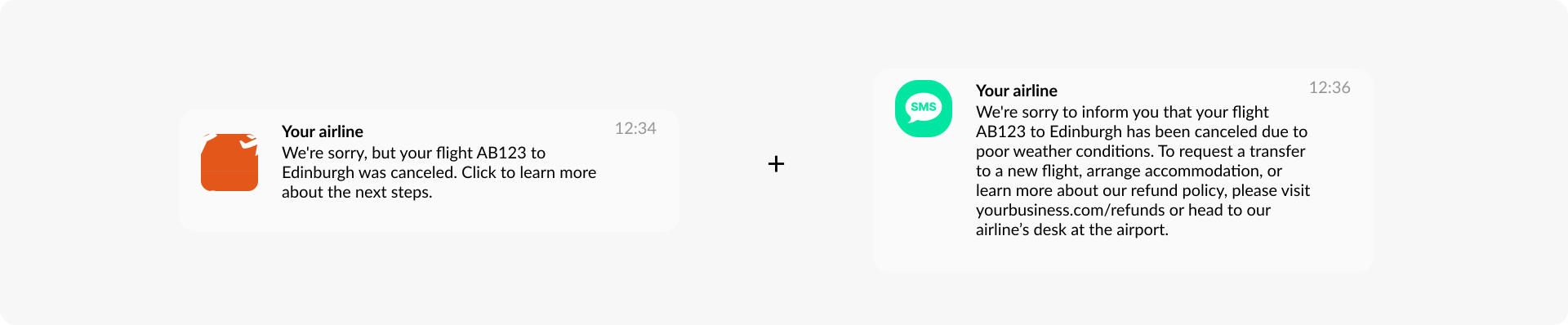
This way, the airline ensures the user gets all the critical details and the course of action in one message. Sending the push ensures you’ll reach the user even if they have already switched off their phone preparing for the flight.
With Pushwoosh Customer Journey Builder, you can send SMS and push notifications in response to any important events. Start your messaging journey with a Webhook-based entry, and such critical information as flight cancelation will be passed to the Pushwoosh platform in an API request. Then, plan an SMS and a push notification to alert affected customers.

2. Loyalty programs & rewards
Selecting the right messaging channel for driving loyalty to your brand can make or break the deal in most industries. But let’s take retail as an example here.
Imagine running a coffee shop and wanting to double your foot traffic and conversions through the loyalty program. You want quick results, so you may announce a limited-time offer that is only valid until the end of this week.
Since it’s a promo, push notifications will be the best channel to attract your loyal customers’ attention. And since you want to drive conversions quickly and you only target your offer at a limited number of your loyal coffee lovers, you can add SMS to the campaign to maximize engagement.
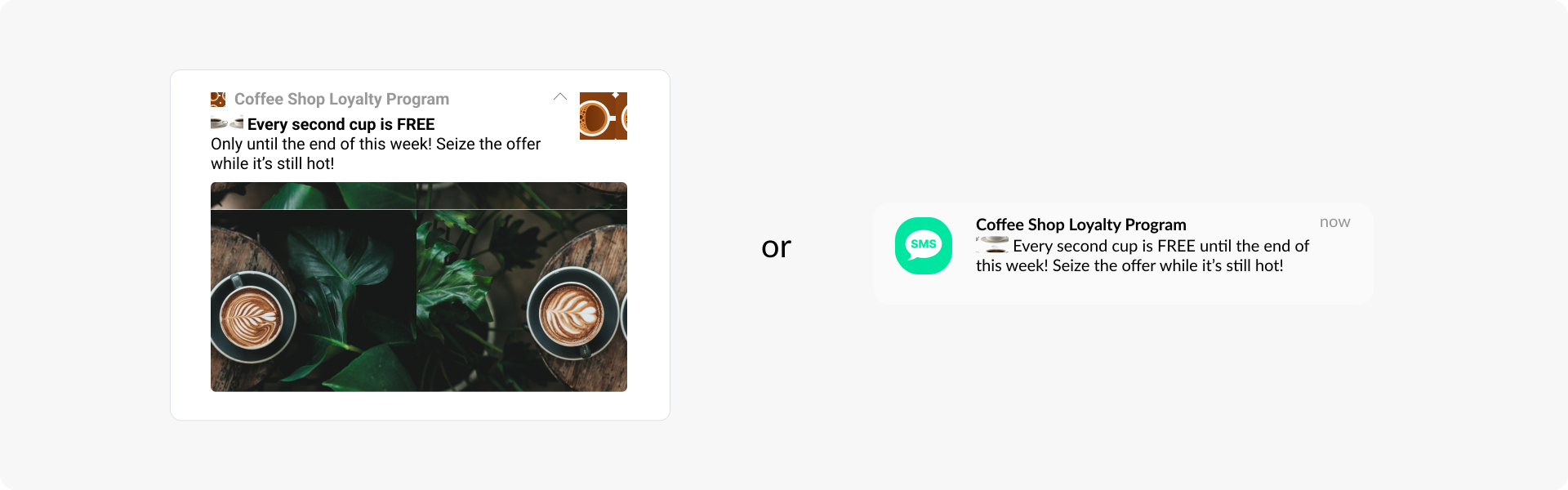
To attain your targets, you don’t need to send both. Instead, make sure you track user behavior on your automation platform and only use SMS for reaching customers who haven’t converted after a push notification. This way, you can maintain your campaign budget while increasing your reach and boosting conversions.
One way to always keep track of your customers’ reactions to your communications channels is to use Pushwoosh Customer Journey Builder – it will help you choose the best promotion strategy based on each user’s engagement and purchase history.

3. Learning & development
Another way to benefit from push notifications and SMS marketing is a popular use case in the edtech industry. Here, you can leverage different messaging channels to improve your students’ experience with your platform and communicate important updates in the most effective (or the most engaging) way possible.
Duolingo really excels at their push notifications going viral:
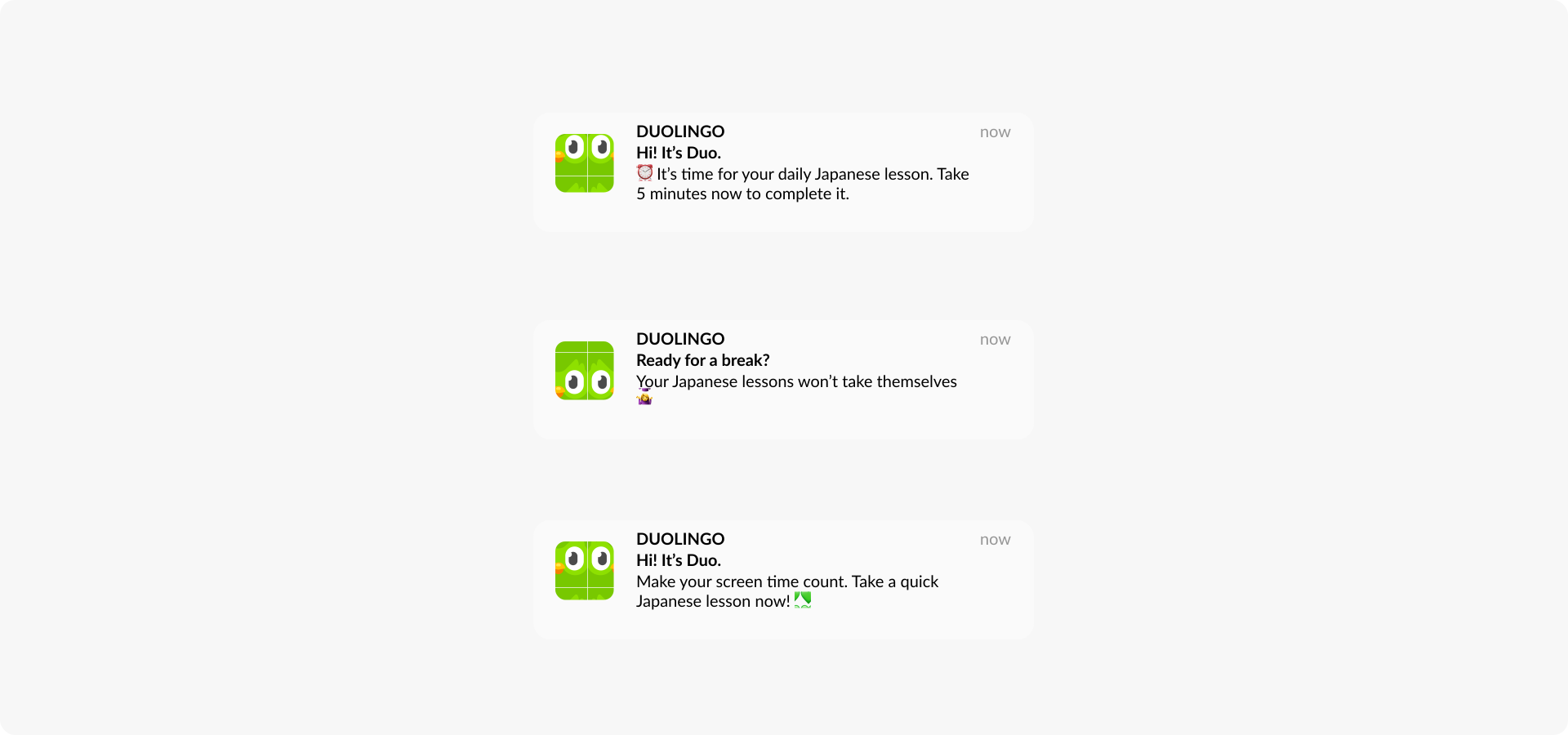
You can use notifications to help users build their daily habits, complete their courses on time, and achieve their goals. An admirable application, don’t you agree? However, Duo is teaching us another valuable lesson: ensure the tone of voice of your messaging matches your audience’s vibe.
That’s why push notifications may not be enough if your communications tend to be more official and consequential – they can easily get lost or ignored. For example, your platform offers paid certification programs. Then, the learner needs to be able to follow the syllabus and complete their modules on time. If that’s the case, SMS might be a better option:

You can use SMS to deliver time-sensitive information and drive necessary action, while push notifications can address real-time learning needs and inform students of new updates to the courses you offer.
By leveraging both, you ensure that every student feels included.
📘Discover more cases and inspiring examples of lifecycle messaging for educational apps
4. Event-based triggers
Another effective way to use SMS and push notifications in your strategy is to set up automated workflows that would trigger such communications based on user behavior. Let’s take a look at an example from the banking industry.
You can start by advising users to have mobile push notifications set up for all card transactions. Here is an example from Revolut that does just that:

You can bet on customization and ask the user if receiving such communications via push notifications or SMS is more convenient and stick to the preferred format.
Regarding push notifications vs. SMS security, both channels can be secure. However, pay attention to regional regulations and policies as some require to only use SMS for sensitive data communication.
 📘With
Pushwoosh, fintech & banking apps can rest reassured in the
safety & security of their messaging
— read the blog post to learn more
📘With
Pushwoosh, fintech & banking apps can rest reassured in the
safety & security of their messaging
— read the blog post to learn more
5. Appointment reminders & confirmations
Another prominent use case of SMS and push notifications is ensuring all appointment reminders reach your visitors on time. Here is a quick example from the healthcare industry that could be sent either as a mobile push notification or as a text message, depending on the user’s personal preferences and reachability score:
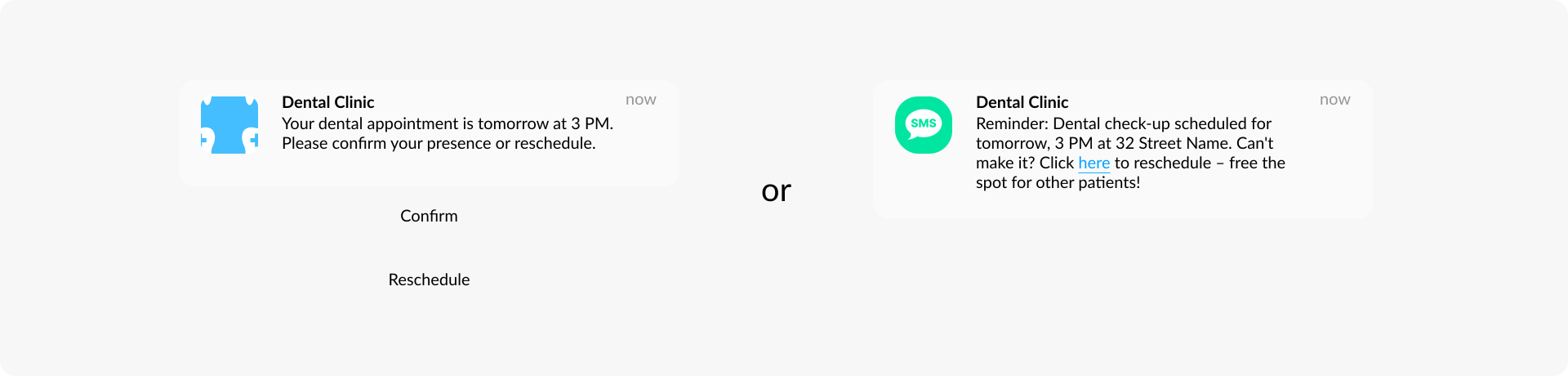
You could send out both the push and the SMS, yet it may come across as intrusive and will likely result in additional costs for your business without any additional gain. Your ultimate goal should always be to reach the customer through the most convenient channel, not to spam them across every platform imaginable.
To achieve this,
⏰Set a Dynamic Time Delay to deliver a personal reminder to each client within a specified time period before their upcoming appointment.
📲 Do a Reachability Check to see whom you can send push notifications instead of SMS reminders. By doing so, you can decrease your expenses on SMS sending.

6. Transactional communications
Order confirmations, delivery updates, one-time passwords, etc. – these are all prominent examples of transactional communications. Their primary goal is to convey information, not to convert or engage a user. That’s why they are a little bit different from other forms of marketing messages.
SMS would work almost every time, with another popular transactional service being email. But try to reserve pushes for more everyday communications and avoid them when passing secure information to ensure that extra layer of data security.
Best practices for your omnichannel communication strategy
Here are a few tips that will help you ensure the use cases from above not only come to life but also work in the most effective way possible for your users:
Always check user reachability first
Push notifications can only take you so far. In fact, users will only receive your pushes if they install the app and express consent for these notifications. What if that never happens? That’s where SMS steps in, ensuring you can still connect with your audience even if they don’t have your app installed.
On the other hand, if a user is inactive or has poor mobile reception, a push notification might be more effective than a text message.
Always check user reachability before deciding your messaging strategy! And when choosing your sender partner, ensure the platform supports both formats. At Pushwoosh, we recognize the importance of omnichannel presence and allow our users to send push notifications, SMS, or both!
✅Learn more about Reachability Check in Pushwoosh
Track user engagement and segment recipients
Here’s a friendly reminder: Segment your contacts into cohorts according to their demographics and behavior based on the user data you have.
Learn whether this specific user prefers one communication channel over another and stick to it. Optimize your send times. Tailor unique content based on their on-site behavior and favorite products. Opportunities are limitless!
And when choosing the best platform for running your messaging campaigns, look for one that enables content personalization for each type of notification.
Remember to always personalize your SMS. Just like you segment users for targeted push notifications, it’s vital to segment for SMS. Segmentation ensures that the right message reaches the right person, reducing the risk of message fatigue and enhancing user experience.
A/B/n test different variations to resonate with your audience
Don’t limit yourself to just two options (and don’t allow your messaging provider to do that, either!) Conduct A/B/n testing to determine which method, be it push notifications or SMS, resonates with different audience segments better and experiment with the content of your messages to achieve the best results.
Such a data-driven approach will help you easily optimize your campaigns and drive even higher customer engagement!
Enhance your messaging strategy with automated personalized messaging – run SMS and push notification campaigns with Pushwoosh!