If you’re after improved user engagement rates, personalized push notifications can be an absolute game changer. After all, where else can you achieve up to 92% CTRs and triple your DAU/MAU?
But how do you achieve a result like this? Don’t worry—in this post, we’ll focus on real-life examples and proven and tested scenarios from marketers like yourself.
Ready? Let’s dive in!
Why personalized push notifications are your key to user engagement
Personalized push notifications are targeted messages sent to users based on their specific behaviors, preferences, and past interactions with an app or website. These notifications are not one-size-fits-all! They are meticulously tailored to app users, which later directly translates into higher user engagement and retention rates.
How personalized push notifications work
Of course, you can leverage all kinds of users’ personal data to create an engaging engagement campaign. However, there are two types of personalization that tend to work best:
1️⃣ Behavior-based personalization, where communications are triggered by specific actions that a user takes within an app or on a website. For example, if they haven’t been to your game app in three days or more, you can send a tip on how to pass a level they seem to be stuck on.
2️⃣ Attribute-based personalization,where your push notifications are sent whenever a user meets certain predefined criteria based on static characteristics. For example, you can ask the player early on which events they’d like to receive notifications about and personalize from there or invite them to a tournament near them based on location.
We’ve used mobile gaming as an example, but you see where we’re going with this. Personalize based on user behavior and experience with your app, not just demographic data!
How push campaigns drive engagement: key benefits
Personalized messages are more likely to catch a user’s attention and prompt interaction with your product, directly translating into increased user engagement. But there’s more!
Let’s approach it from the point of specific app engagement metrics and KPIs:
• Increased click-through rate: Push notifications crafted with the user’s current context in mind result in a remarkable uplift in your CTR—as high as 91.9%! Engage your audience with relevant content that grabs attention and compels action.
• Higher conversion rates: By providing relevant offers and reminders, personalized mobile push notifications can effectively nudge users toward making a purchase or completing an action they started.
• Improved user retention: Regular, relevant communication through personalized notifications helps keep existing users interested and engaged with your app, reducing churn rates by up to 16%!
• Enhanced user experience: Tailoring messages to the individual user’s preferences and needs makes them feel understood and valued, enhancing their overall experience with your brand.
• Fewer opt-outs: When users see the value in each notification, whether it’s through personalized content, timely information, or exclusive offers, they are less likely to opt-out from getting more. AvaTrade’s success story is evidence of that, with the app’s opt-in rates exceeding the average.
• Better ROI on marketing efforts: With higher engagement and conversion rates, the return on investment for personalized push messages is typically superior to generic messaging campaigns.
• Improved average revenue per user: By sending personalized offers and promotions based on user activity and purchase history, you can push your revenue from each user to as high as 4.58%!
• Reduced uninstalls: Regular, relevant communications keep users invested in your app, significantly decreasing the likelihood of uninstalls. Personalize your notifications based on the users’ current context and they’ll be too satisfied to leave!
With that in mind, let’s move on to the anticipated examples of user engagement campaigns led by push notifications.
10 ways to leverage push notifications for unparalleled engagement
1. Onboard new users
Make a good first impression by providing tailored messages that guide and encourage new app users to explore and interact with your product right after the download.
While in-app messaging guides users within the application, mobile pushes help you drive them to the app.

This notification is designed to excite and get new users to interact with your app. It encourages immediate engagement by offering a tangible reward and guiding them smoothly into their first interaction, setting a positive tone for their app experience.
A case in point: Omada
Omada achieved a remarkable 67.4% conversion rate with their push-driven onboarding campaign, leaving less than 4% of users inactive by the end of it.
2. Set up scheduled reminders
Another effective way to keep users engaged with push notifications is via timely reminders that will keep your app on users’ top of mind.
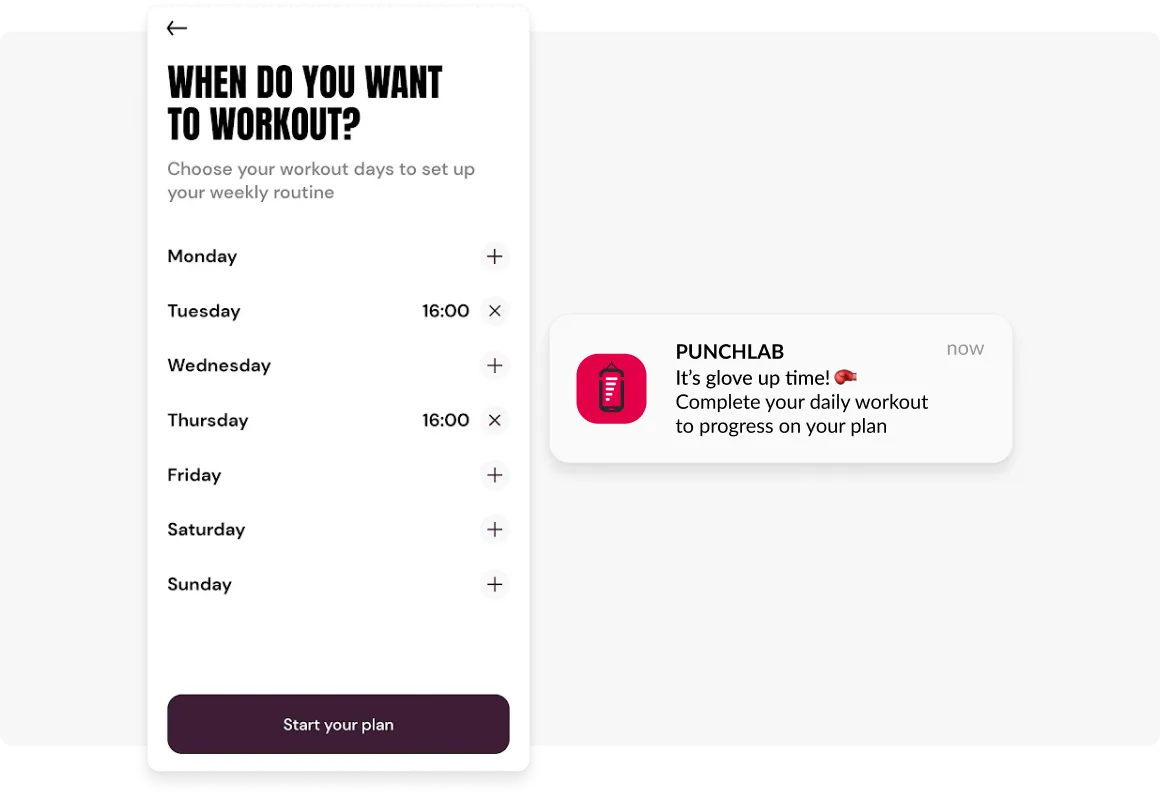
Live example: Punchlab suggests users pick the time to recieve push reminders
Here, it’s not as much about the content of your message as the convenience of it—you don’t want to be too pushy (pun intended) in your communications as it hinders user satisfaction. Instead, keeping users engaged often means being in the right place at the right time.
Ideally, allow users to choose their preferred notification reminder time. If user customization is not feasible, send reminders 24 hours after the user’s last engagement. Personalize and keep messages short, with a clear call to action for optimal effectiveness.

This is also a good moment to remind you that push notifications (as well as any other marketing communications) work only when the user willingly opts in to receive them. You can’t skip this step because of GDPR and CCPA anyway, so why not ask them to specify the best time to reach them?
This way, you create a seamless user experience and achieve personalization even if the content of your push alerts remains the same.
3. Deliver the content users subscribed for
Two previous cases explained how to engage new users, but what about engaging your existinguser base? Personalized messaging can keep your audience happy and engaged, while also retaining them in the long term.
A case in point: Wetter.com
Take Wetter.com, for example. The weather app successfully sends at leastround 70 million push notifications each month, maintaining a stellar CTR of 7–9% through personalized pushes alone.
How? By taking their push segmentation to the next level, ensuring target users only get notifications they personally find important:
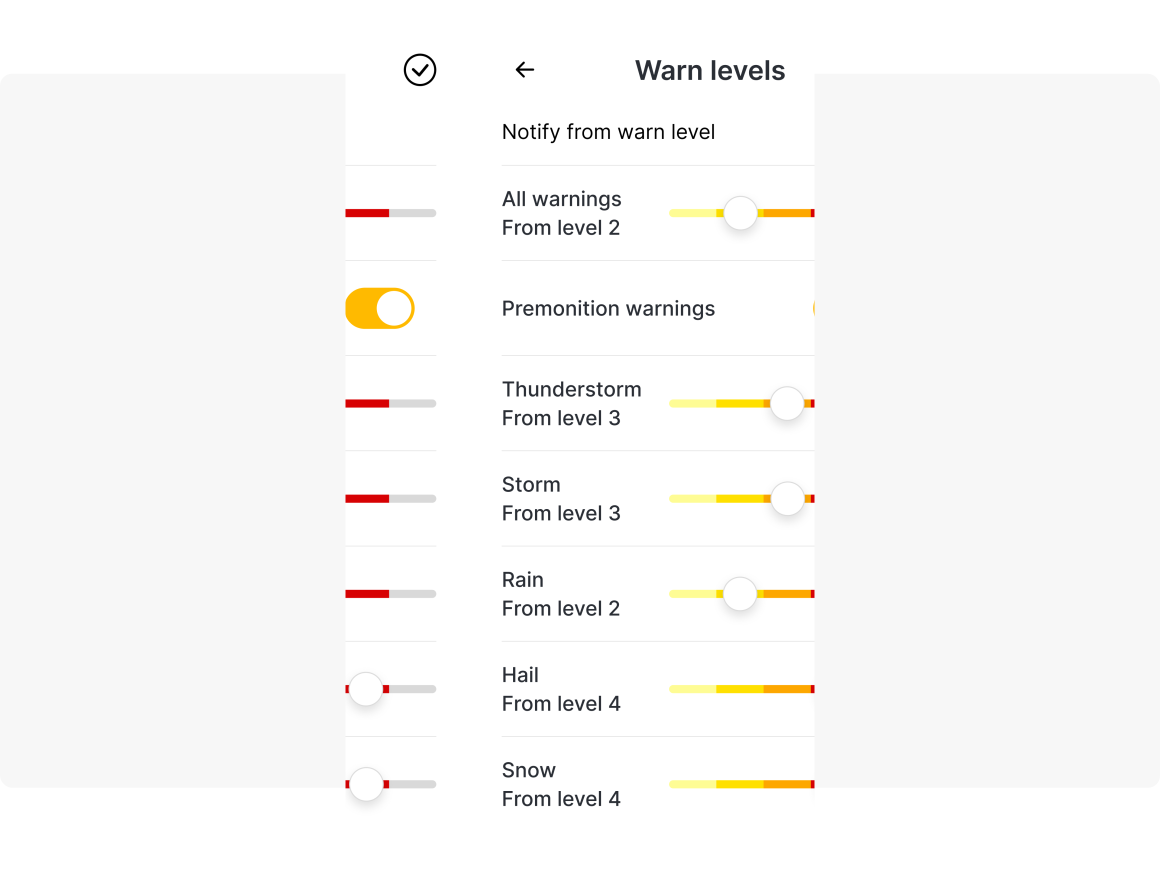
Live example: Push alerts subscription screen in Wetter.com app
This is the strategy Wetter.com chose to achieve sustainable growth through user retention: instead of chasing potential new audiences in costly acquisition campaigns, they focus on catering the best experience to current subscribers.
4. Be the first to notify your user base
Another crucial way to increase mobile app engagement is speed. In competitive industries like news & media or sports betting, your push notifications need to be more than just timely, personalized, and segmented. You also need to be the first on your users’ screens to truly drive engagement.
If you pair Pushwoosh’s High-Speed Delivery with segmentation, you can achieve incredible results, like ONE.co.il did. Send up to 500,00 notifications per second for the peak demand times, grow your subscriber base, and stay the most relevant news source for your audience!
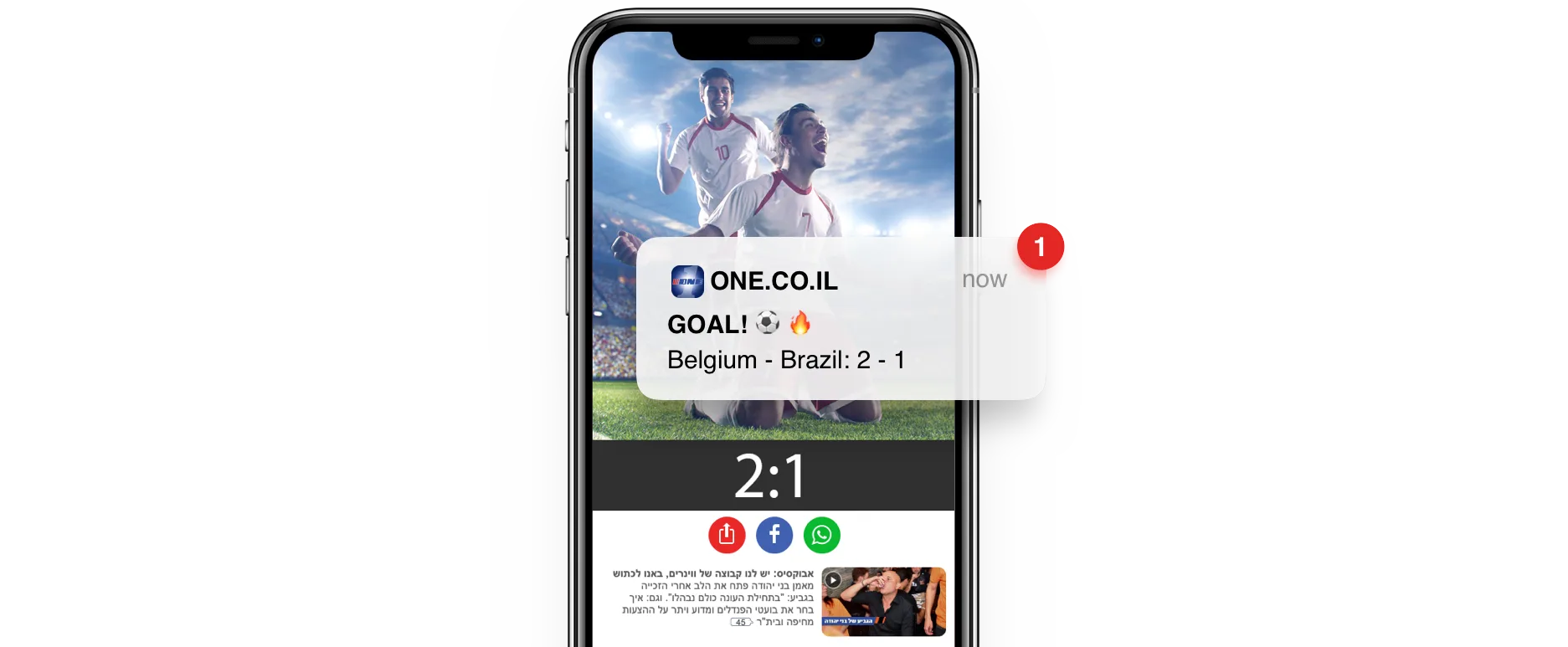
Live example: ONE.co.il delivers high-speed push notifications with Pushwoosh
5. Share personalized discounts and promotions
Now let’s move on to the later stages of customer engagement. Say your audience is onboarded, yet user retention fades over time. Push notifications can be an excellent non-invasive way to draw your audience’s attention back.
You can personalize discounts based on user behavior (e.g. their previous purchases), special dates (e.g. their birthday or anniversary with your app), location, etc. The important bit is that in order to increase user engagement, your offer needs to feel custom and special.

6. Drive customer retention with freebies
On top of discounts, you can prolong your users’ lifetime and increase retention by offering some in-app goodies for free. For example, you could give out a free trial of your premium version for a week or send them a free gift to help pass the level they were stuck on prior to going dormant.
But how would they know about the in-app freebies if they are, well, not in the app? With push notifications, of course!

Live examples: Push notifications from a popular game app
This would be an excellent example of a trigger-based notification that could be set off after a certain period of inactivity on the user’s end.
7. Promote new product features with ease
One of our favorite app engagement strategies is to notify users about the latest updates to your product. These types of communications can work well on both active and dormant audiences, promoting conversions and revenue in the first case, and re-engaging potentially lost opportunities in the second.

Live example: Revolut promotes a new feature via push notifications
But don’t just send these types of notifications to everyone!
- Make it a behavior-based personalized campaign targeted at the users who’ve used similar features in the past
- Cross-match two types of behavior (e.g. using a similar feature + another relevant interaction) to truly reflect the user journey
For example, here, a bank app targets a new cashback offer at those who’ve got cashback on, in the first place, and have ordered from the partner named Fresh Corner in the past:

With Pushwoosh Customer Journey Builder, you can easily automate your communications to create a sticky user experience across the entire funnel. Check it out!
8. Deliver personalized new content
While discounts, freebies, and new product features seem to work like a charm on most active users, there are more techniques you can deploy with push notifications to drive engagement and promote feature usage.
For example, you can engage the audience by sending them relevant content they’re interested in. Here, we have a media app sending out a new article about racing to those who’ve subscribed on the topic:

For media publishers, the best way to obtain necessary data for segmentation is to directly ask users what categories or topics they are interested in the most.
For other industries, you can always request an opt-in for your blog or newsletter content, where notifications would lead users to your website.
Such robust personalization allows you to engage active users and improve your ROI. But what about contacts that have gone dormant?
9. Re-engage dormant users with FOMO
Personalized messaging to the rescue once more! Use segmentation to deliver your pPush notification specifically to those who haven’t opened your app for a while.
Even more importantly, work on your push’s content: it will be particularly effective if you invoke FOMO or the sense of urgency to get users back to the app.

Live example: a re-engagement push notification from a popular game app
Here, it’s more about the creativity behind your message’s content rather than strict personalization, so use any means to ensure that a user opens your push.

A car rental service could send a push notification with a personalized offer
Be bold in your tone of voice, withhold some information, or experiment with creatives—now is not the time to be shy! And if you need a little help to get your creative juice flowing—try AI Push Composer:
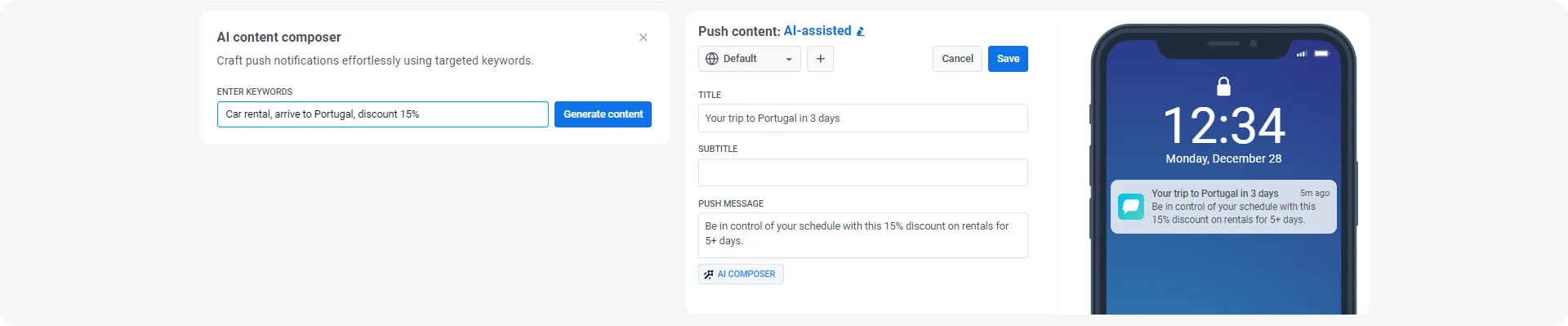
Write push notification copy with Pushwoosh’s AI assistance
Best practices for getting the highest engagement with push notifications
Now that you’ve seen some examples of using push campaigns for user engagement, let’s quickly recap the do’s and don’ts in setting them up.
• Always segment your audience: Tailor your messages to fit different user profiles based on their behaviors, preferences, and history. More relevant messages mean higher engagement!
• Get people to opt-in for your pushes early on: Introduce the value of your notifications upfront. A cheerful, transparent invite like, “Join our alert club for exclusive updates 🌟” can do wonders!
• Engage users from day 0: Start with a warm welcome message or an introductory offer. Make their first day memorable, and they’ll come back for more!
• Diversify your channels: Don’t put all your eggs in one basket. Mix up mobile pushes with SMS, in-app, or web notifications to catch users where they prefer to engage.
• Don’t be afraid to get creative: Use FOMO, humor, or intriguing questions to spice things up. “Missed what happened? See here!” can pique curiosity and prompt clicks.
• A/B/n test your options: Try different messages and see what sticks. This not only improves effectiveness but also keeps your content fresh and engagement metrics high.
• Optimize sending frequency: Find the sweet spot between being informative and intrusive. Too many notifications can be overwhelming, too few might make them forget you.
Most importantly, remember that customer engagement is your gateway to direct revenue and push notifications are one of the best engagement drivers! Our clients report 2-3x growth in DAUs and MAUs, 8-12% CTR, and more—check out all the success stories!
And if you want the same results for your app—