A loyalty card is a card, physical or digital, that a business issues to track a customer’s purchases and reward the ones who come back. Spend enough or visit enough, and the card pays it back, usually a discount, sometimes a free item or a bump in status. It carries no money and settles nothing at checkout; it’s a running tally the business keeps on your behalf, built for one purpose, giving you a reason to choose them again.
Most loyalty cards today take one of three forms, plastic, an app, or a wallet pass, and increasingly, that choice decides whether the card gets used at all.
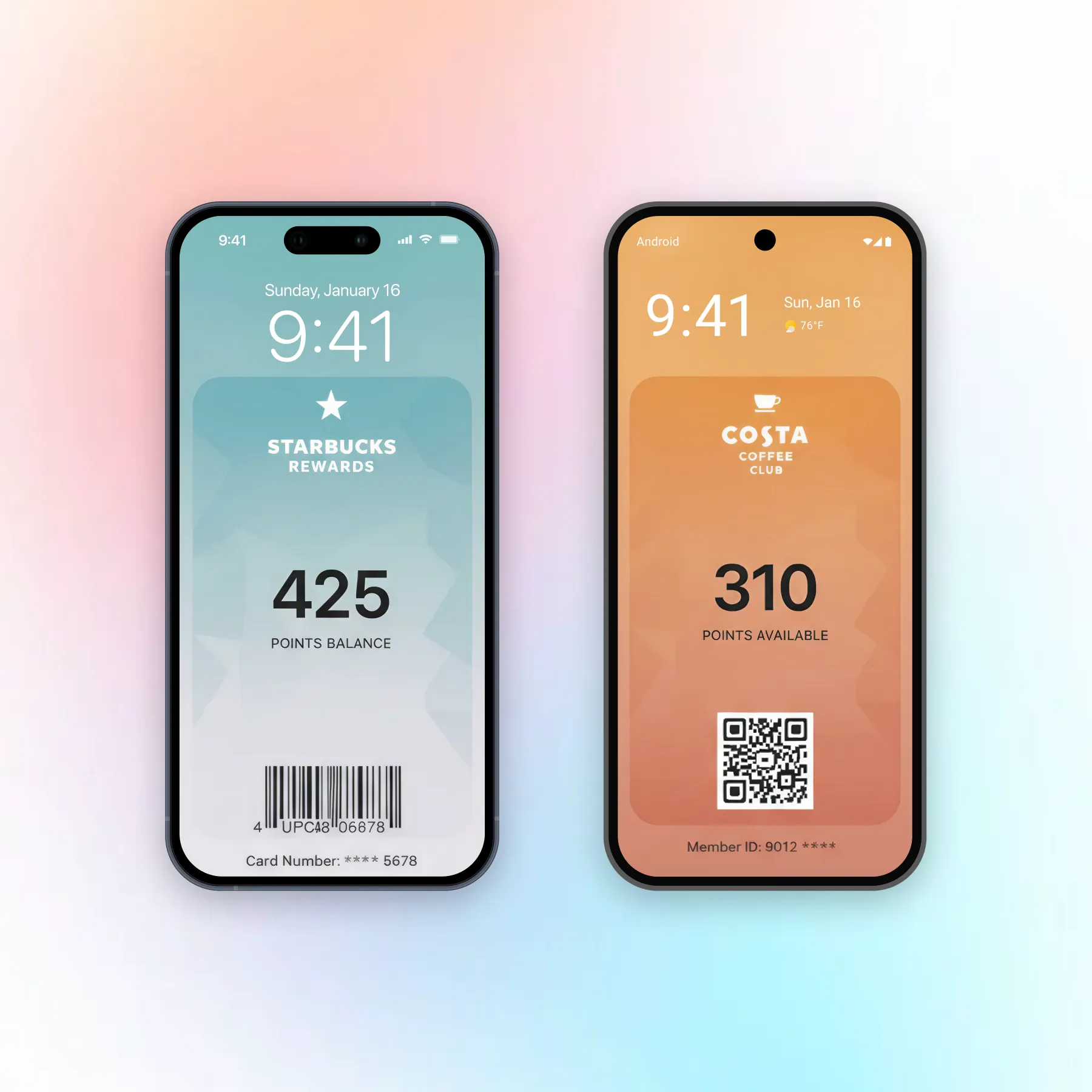
How to use a loyalty card (customer side, briefly)
Using a loyalty card takes almost no effort from the customer. They sign up once, in store or online, and get a card or a digital equivalent tied to their name or phone number. From there:
- They show or scan the card at checkout, whether that’s a barcode, a QR code, or a phone number typed into the register.
- Points, stamps, or spend accrue automatically against their profile.
- Once they cross a threshold, a reward becomes available, either applied automatically or redeemed on request.
The friction, when there is any, comes from the format the card takes, not from the mechanic itself.
Types of loyalty cards: Plastic, app, and wallet pass
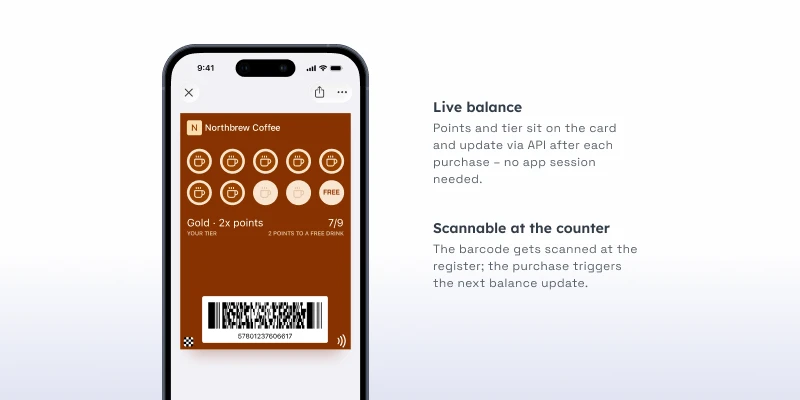
A loyalty card comes in three practical formats, and they are not equally good at the job.
Plastic is the original format, and still the cheapest to print. It’s also the easiest to lose, gives the business zero data on who’s actually using it, and has to be manually punched or scanned with no way to update it remotely.
An app can do the most, technically, with push notifications and a rich profile behind every visit. But it also asks for a download most customers won’t finish, and a large share of the ones who do finish delete the app within a month.
A wallet pass lives in Apple Wallet or Google Wallet, the app already installed on every customer’s phone. It adds in one tap from a link or QR code, updates itself when points change, and needs nothing built or downloaded beyond what the customer already has.
Why wallet-based loyalty cards are replacing plastic and apps
The shift comes down to what each format asks of the customer versus what it gives the business back.
A wallet pass asks for one tap, not a download, and it never ends up lost at the bottom of a bag the way plastic does. It updates over the air, so a new points balance or a changed reward shows up on the card without the customer doing anything or the business reprinting anything. And because it lives on a device with a location sensor, it can surface on the lock screen when a member is near the store, a nudge no plastic card or forgotten app can deliver.
For the business, that adds up to real purchase data instead of guesswork, plus a channel back to the customer that a punch card never had. And none of it carries the build cost of a native app.
Getting started
If you’re deciding what to issue, skip plastic and skip a custom app. A wallet pass gets you the data and the reach of an app with the one-tap simplicity of a card. With Pushwoosh Wallet passes, you design the card once, distribute it with a link or QR code, and manage points and tiers from a dashboard. For the fuller picture of what a program built this way looks like, see loyalty cards for business.
Grow loyalty from the first tap
A loyalty card only works if customers actually carry it and businesses can actually act on the data. Pushwoosh Wallet passes replaces the plastic and the app with a card that lives where the customer already is.