For most loyalty programs, the wallet pass works best as the card, the app as the full experience, and SMS as the channel for people you can’t reach any other way. You rarely have to pick one. You have to know which job each one does well and stop asking 1 of them to do all 3.
In Pushwoosh, all 3 live on 1 user profile, so you can issue a digital loyalty card and reach the same customer by push or SMS from a single journey.
The 3 channels side by side
| Wallet pass | Loyalty app | SMS | |
|---|---|---|---|
| First step for the customer | Tap Add to Wallet from a link or QR | Download the app, create an account | Share a phone number, opt in |
| Cost per message | No carrier fee for updates | No carrier fee for push | Carrier fee per message |
| Live updates | The card redraws when data changes | Full control in-app | None, every message is new text |
| Visibility | Lock screen by time and location | Push notifications, if enabled | Messages inbox |
| Customer data | Tied to the profile you issue it to | Rich in-app behavior | Phone number and link clicks |
| Promotional messages | Not allowed, utility only | Yes, with push opt-in | Yes, with consent and local rules |
When an app wins
An app wins when the program needs depth. Ordering ahead, browsing a rewards catalog, choosing between offers, managing a profile: none of that fits on a card. If your best customers already open your app every week, put the program there.
The cost is the install. Plenty of people will never download an app for 1 coffee shop or 1 grocery chain. An app-only program leaves most of your buyers anonymous, and you can’t reward someone you can’t see.
When SMS wins
SMS wins on reach. Every phone gets it. There’s nothing to install, and it works for customers who will never add a card or download an app.
It costs you in 2 places: per-message fees and regulation. In the US, business texting needs carrier registration (10DLC) and explicit consent, so an SMS loyalty program needs compliance work before message one. And SMS can’t update itself. The points balance in last week’s text is already wrong.
When a wallet pass wins
A wallet pass wins at a specific moment: the till, the gym turnstile, the event gate. It combines 3 things no other channel does.
It stays put: the card is in Wallet until the customer removes it. It stays current: when the balance changes, the card redraws. It shows up in context: on the lock screen near your store or on event day.
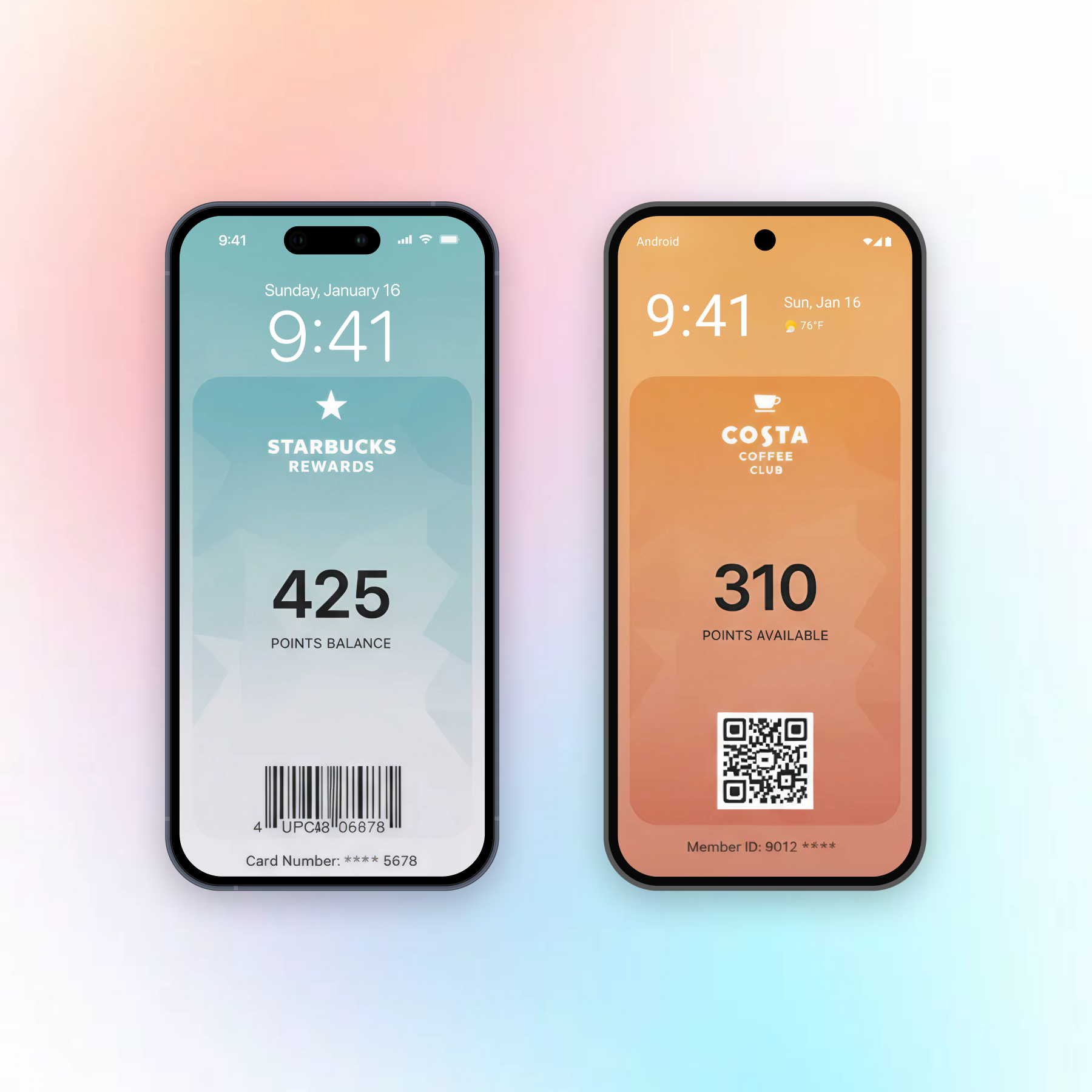
The limit is that it isn’t a marketing channel. Apple and Google only allow notifications about the pass itself, like a new balance or a gate change.
Using all 3 in 1 journey
The strongest programs don’t choose. They connect. A typical flow:
-
Issue the pass at sign-up
A customer signs up online or at the till. A journey issues the loyalty pass and sends the Add to Wallet link by email or push.
-
Update the balance on every purchase
Each purchase updates the balance on the pass. No message needed.
-
Flag expiring points
When points are about to expire, the pass shows a change message, and app users also get a push.
-
Win back lapsed customers
Customers who stop coming get a win-back SMS or push, because the pass itself shouldn't carry promotions.
Each channel stays inside its rules and every customer stays reachable. It’s also cheaper: SMS only goes to people with no cheaper channel.
A quick worked example
Take a bakery chain with 20 shops. Most customers visit twice a week and few will download an app. About a third already use the chain’s app to pre-order.
Our pick: the wallet card is the program for everyone, scanned at the till. App users get it inside the app as well, with pre-order and offers there. SMS goes only to customers who haven’t added the card after 2 visits, as a one-time nudge with the link.
The point isn’t the bakery. It’s that the channel mix follows the customer, not the other way round.
Decision checklist
5 questions before you choose the lead channel:
- Do most customers already use your app at least monthly? Then the app leads and the pass is the card at the till.
- Is the program used at a physical point, like a counter, gate or turnstile? Then issue a wallet pass.
- Do you need to reach people with no app and no email? Add SMS, with consent and registration in place.
- Does the balance change often? A wallet pass shows it without sending a message.
- Do you plan promotional messages? Send them by push, email or SMS, not through the pass.
Grow loyalty sign-ups with Pushwoosh
Pushwoosh puts the wallet pass, push, in-app, email, SMS and WhatsApp on 1 customer profile and 1 journey builder. You issue native Apple and Google Wallet cards with no separate pass vendor, and you reach each customer on the channel the moment calls for.
Loyalty sign-ups don’t grow because you found the one perfect channel. They grow when each channel does the one job it’s best at.