A next-visit coupon, also called a bounce-back coupon, is an offer a customer earns on this order and can only use on the next one. It gives a reason to come back within a set window. Put it in Apple Wallet or Google Wallet and it stays with the customer, shows its own expiry and can surface near your restaurant.
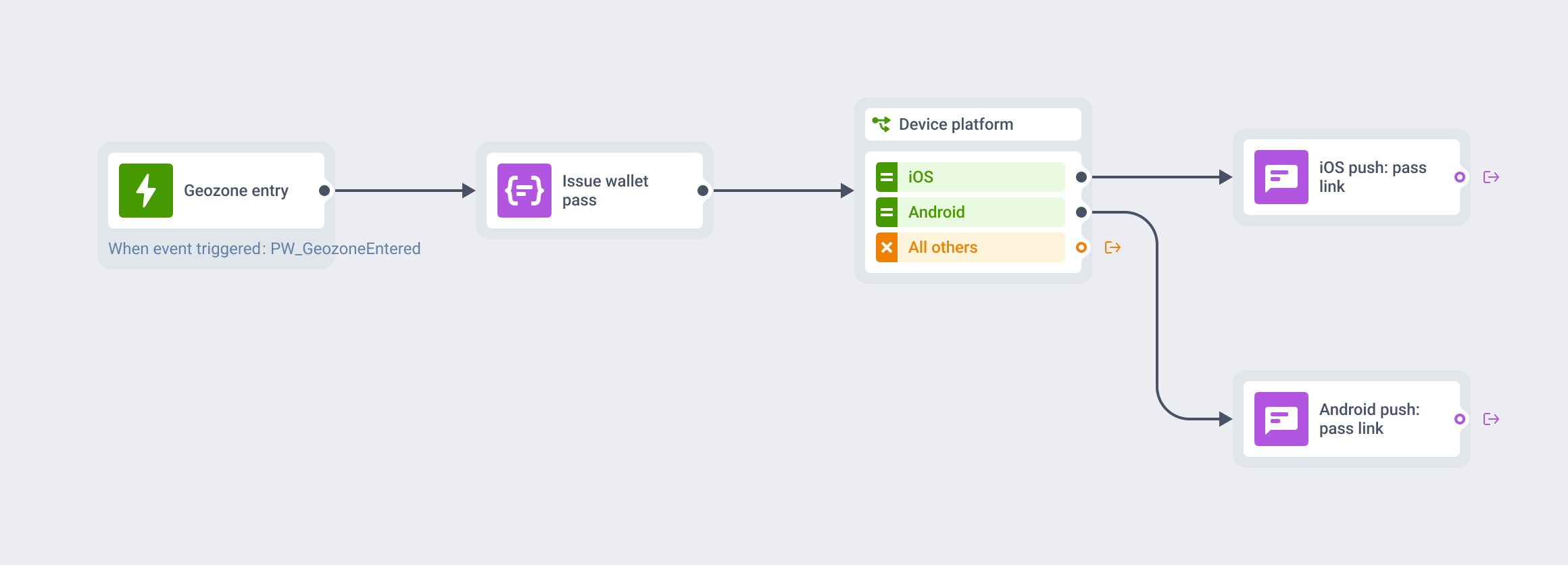
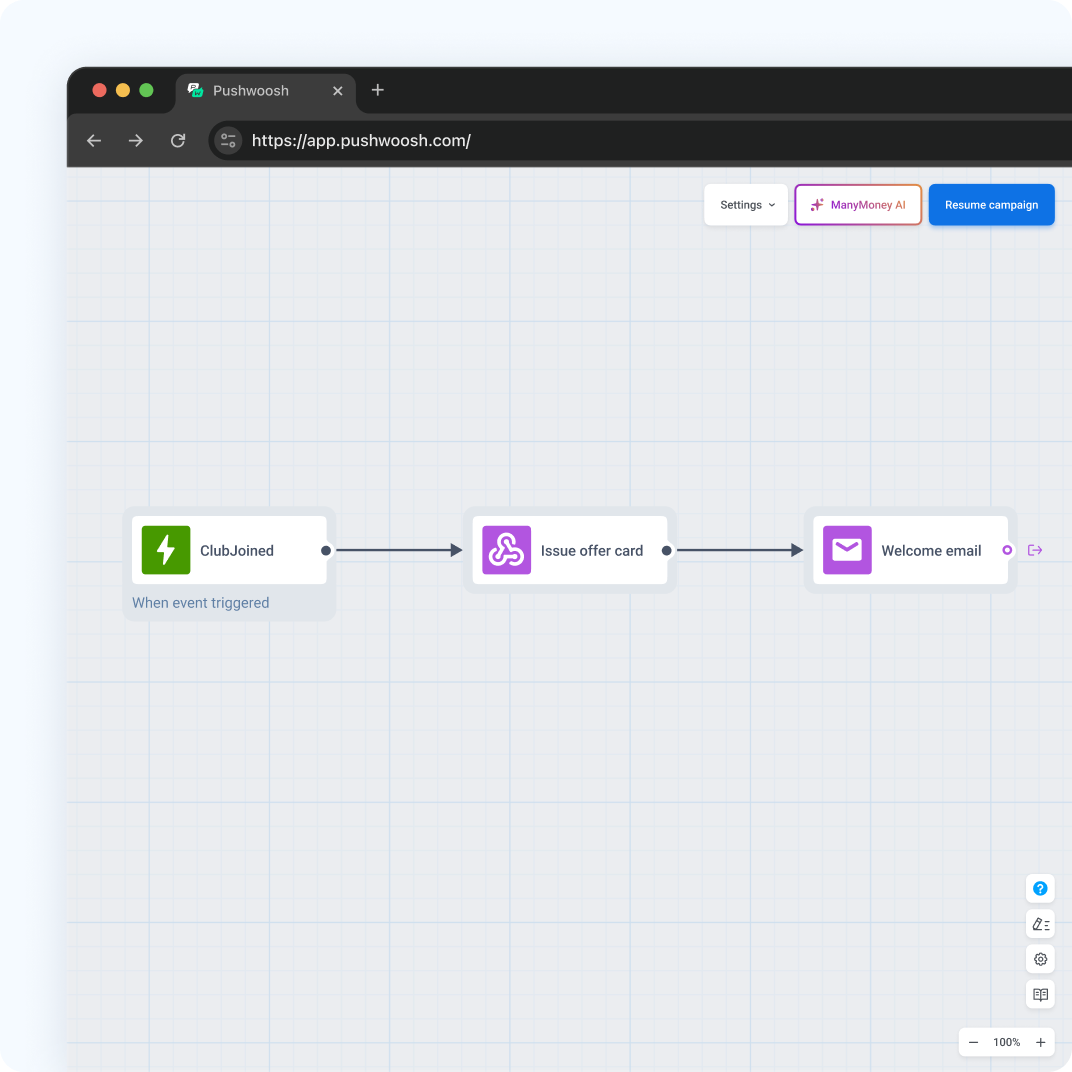
In Pushwoosh, coupons, push and email share 1 customer profile, so you can run wallet passes for restaurants inside your QSR journeys.
Bounce-back mechanics
The mechanic is simple: buy today, get an offer valid from tomorrow until a set date. It works because the customer just had a good meal and already knows the way back.
Every bounce-back program comes down to 3 choices.
| Choice | Options | What it changes |
|---|---|---|
| Trigger | Any order, order above a threshold, first order | Who gets the coupon |
| Offer | Discount, free item, double points | Margin cost per redemption |
| Window | Start date and expiry | How fast customers return |
Paper bounce-back coupons on receipts have 1 fatal flaw: the receipt goes in the bin with the napkins. A wallet coupon stays on the phone with its expiry in plain view.
Coupon passes in Apple and Google Wallet
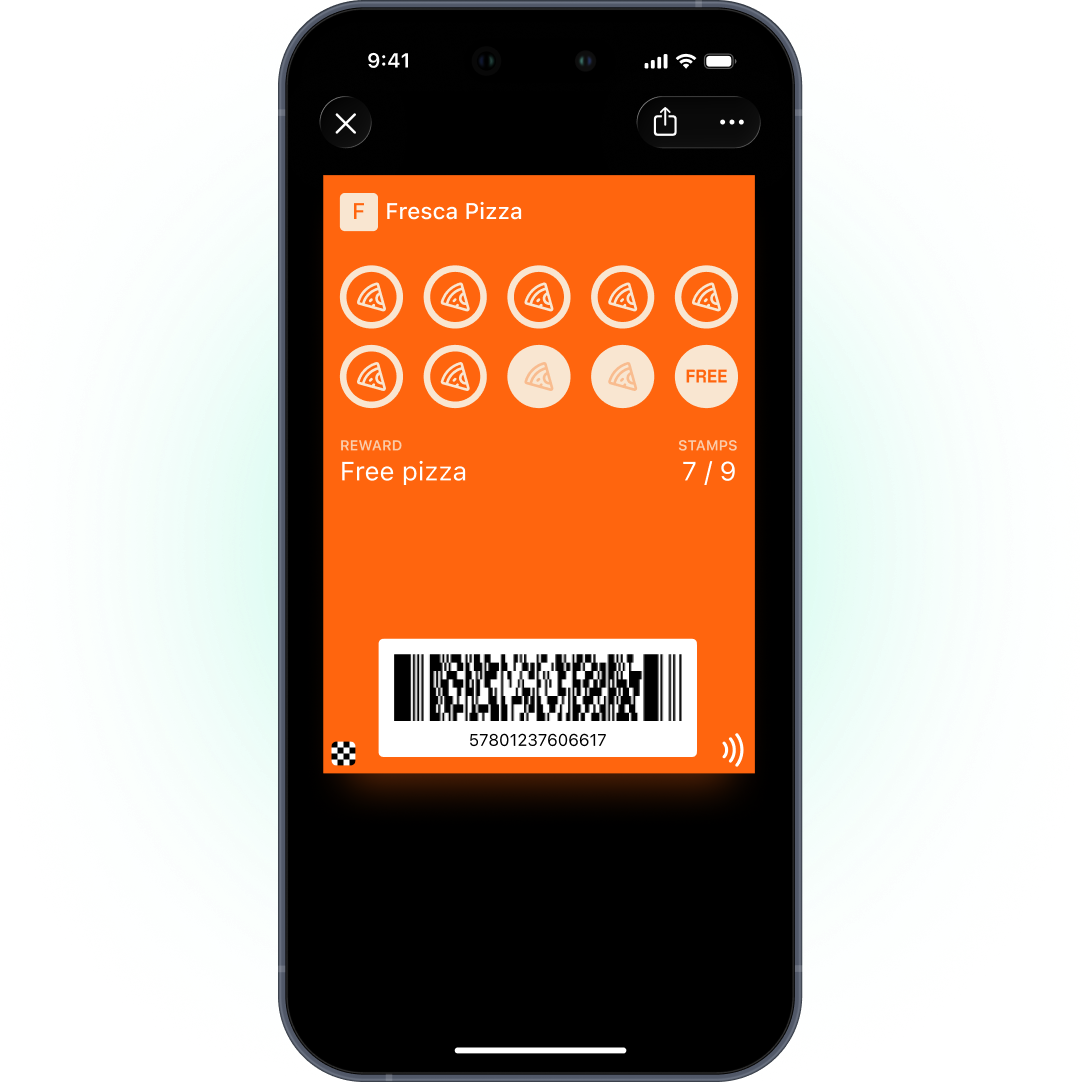
On Apple, use the Coupon style. On Google, use the Offer type. Each coupon is issued to a User ID with its own code and expiry, so you always know who got which offer.
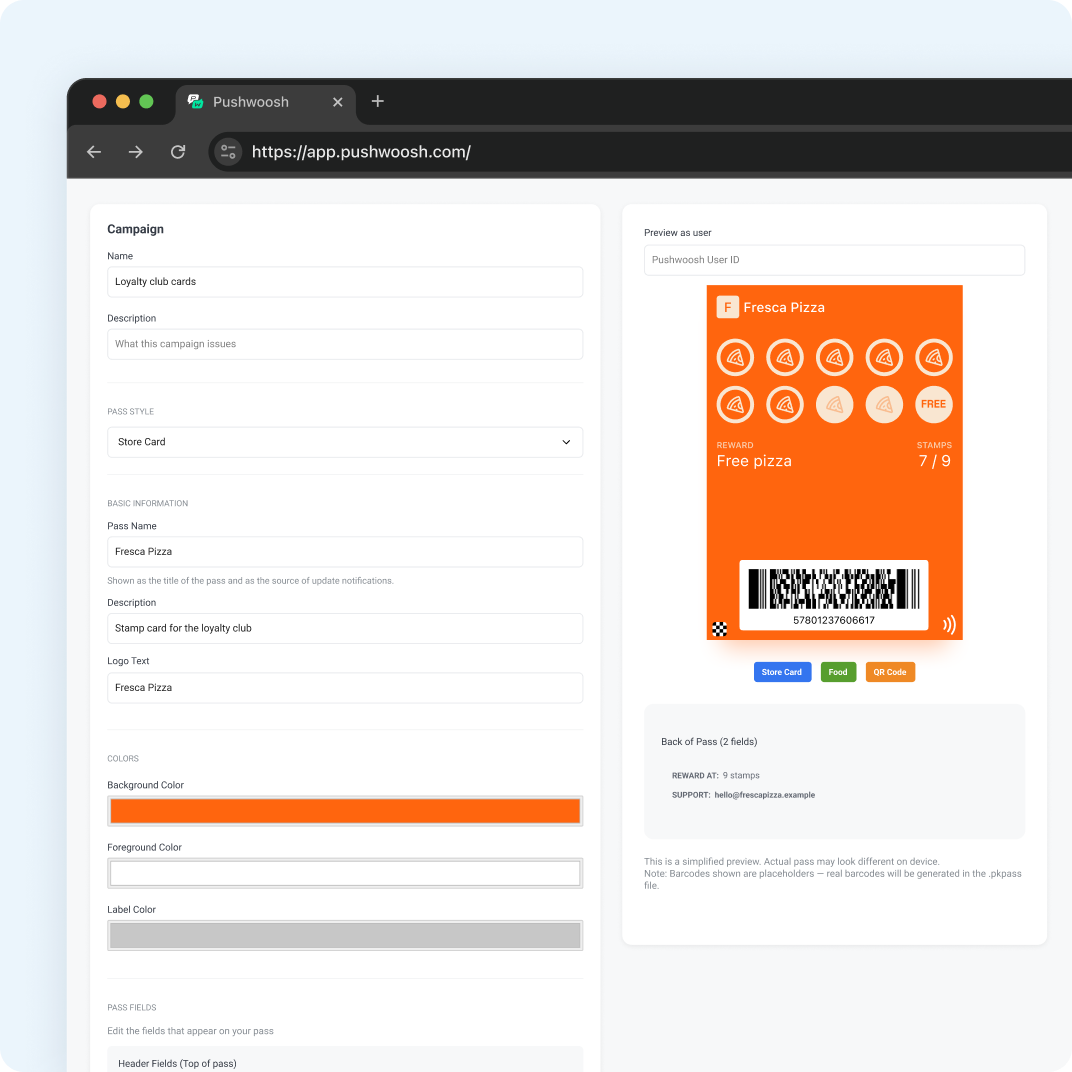
Alerts differ by platform. On Apple, update a field that has a change message, say “Expires %@”, and the reminder shows on the lock screen. A Google Offer gets no automatic change alert, but the API update can carry a custom notification text.
Getting the timing window right
The window is where most bounce-back programs win or lose. Too short and customers can’t fit a visit in. Too long and the coupon stops creating any urgency.
Start from your own visit frequency. If regulars come back every 10 days on average, a window that opens tomorrow and closes on day 14 pulls the next visit forward. Then test 2 windows against each other on matched segments before you roll 1 out.
Set a start date as well as an end date. A coupon valid from tomorrow stops people redeeming it at the same counter 5 minutes later, which is a discount on a visit you already had.
Reminders near the restaurant
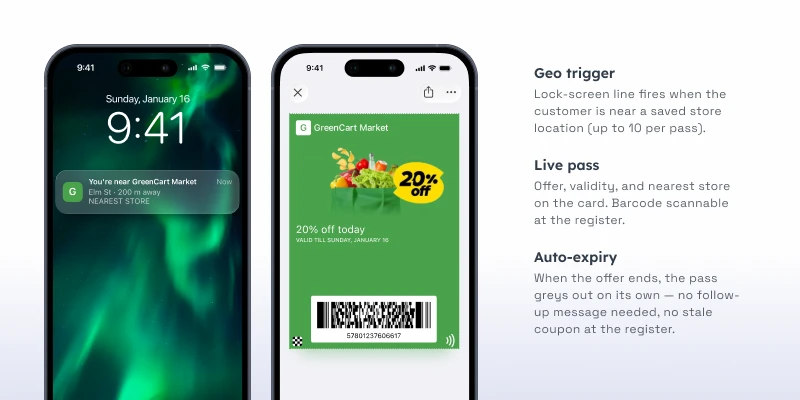
Add your nearest locations to the coupon, up to 10 per pass, and it can appear on the lock screen when the customer is close. For app users, pair it with a geozone push in the same journey.
Location offers have a track record in QSR, though not through wallet passes. Burger King’s Whopper Detour unlocked a one-cent Whopper inside a 600-foot geofence around rival restaurants and drove 1.5 million app downloads (competitor case, geo campaign). Taco Bell’s 2-week campaign with GroundTruth drove 170,000 restaurant visits (competitor case, location-based ads). Both show what a well-timed offer near the door can do.
Measuring redemption
A bounce-back coupon is only as good as the data behind it. Track 3 numbers:
- Add rate. The share of eligible customers who added the coupon to their wallet.
- Redemption rate. The share of issued coupons scanned at the POS before expiry.
- Incremental visits. Return visits within the window, compared with a holdout group that got no coupon.
The holdout is the one that matters. Without it, you may be paying a discount to customers who would have come back anyway, and the redemption rate will look great while margin quietly leaks.
To close the loop, send the redemption event from your POS to Pushwoosh so the journey stops reminding that customer, and void the pass through the API (on Google, set it to inactive).
Keep the coupon about the coupon
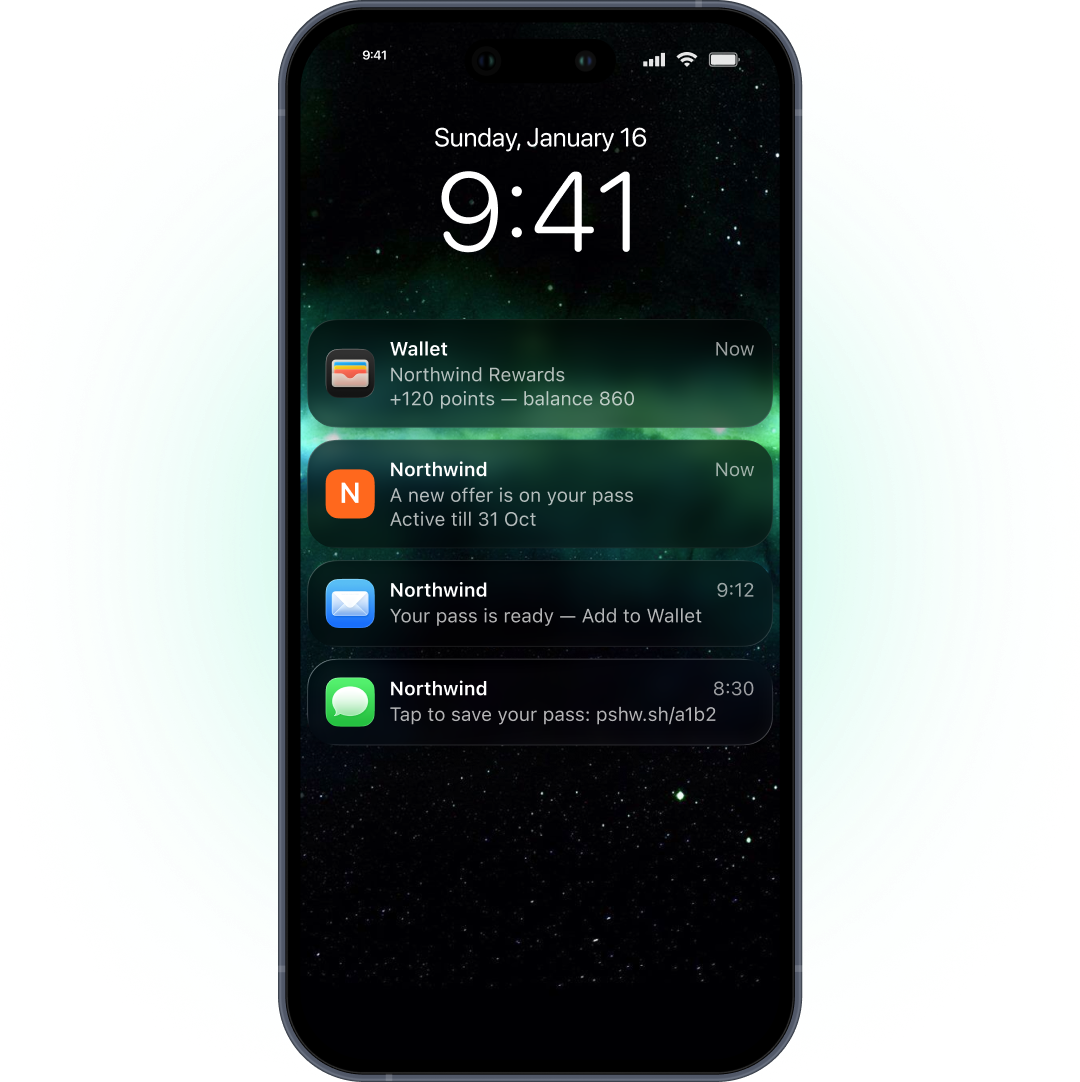
The coupon pass can remind about itself: it expires soon, it’s valid nearby. It shouldn’t carry new promotions. Apple and Google only allow notifications about the pass, so this week’s deal goes out by push, email or SMS, and the coupon stays the offer the customer earned.
Bring guests back sooner with Pushwoosh
Pushwoosh issues native Apple and Google Wallet coupons by User ID, sets expiry and locations per pass, and runs reminders by push, email or SMS from the same journey. A redemption at the POS can void the pass through the API and close the loop.
Guests don’t come back sooner because the discount got deeper. They come back because the offer is hard to lose and the deadline is easy to see.